Upgrade your tactical helmet with these ballistic helmet accessories
If Hollywood has taught us anything, it’s that heroes in shiny helmets can shrug off bullets like mosquito bites.
Spoiler alert: real life doesn’t work that way.
A ballistic helmet isn’t a magic force field, and it won’t turn you into Captain America. But here’s the good news: modern helmets can stop certain bullets – just not all of them. The truth is somewhere between “invincible juggernaut” and “expensive bike helmet.”
So…
Can a ballistic helmet stop a bullet?
The answer is yes… sometimes. It all comes down to the type of helmet, the round being fired, and the situation you’re in. Let’s break down the myths, the science, and the facts – without the Hollywood filter.
We could start this article by write paragraphs about specs and NIJ ratings… or we could just let ColoradoGunFighter send a dozen rounds straight at our PGD ARCH GEN3 helmet. Sit back, this is the fun kind of science. Watch the video, see the results, and decide if your head deserves the same level of protection.
Using multiple handgun calibers – including 9mm (115gr, 124gr, 147gr) and .45 ACP JHP 230gr – they unload 12 rounds in total directly into the helmet.
Result?
Zero penetrations. The helmet stops every single round, proving its NIJ Level IIIA protection and real-world reliability against common handgun threats.
That’s pretty badass. Helmet held the line. Let’s keep it moving.
Today, ballistic helmets are critical gear for military, law enforcement, and security professionals. But one of the most common questions remains: Can a ballistic helmet stop a bullet? The answer is nuanced and depends on the helmet’s rating, the type of projectile, and the context of use. Understanding these variables is vital to making informed decisions about head protection in hostile environments.
Ballistic helmets are designed to stop bullets, but their real-world effectiveness depends on the helmet’s protection level and the type of bullet involved. Most law enforcement and military helmets, rated to NIJ Level IIIA, can reliably stop common handgun rounds like 9mm and .44 Magnum, but not high-velocity rifle rounds. While helmets like the PGD ARCH GEN3 offer proven protection against handguns and fragments, even a non-penetrative hit can still cause significant injury due to blunt force trauma.
Ultimately, a ballistic helmet is a vital tool for military and law enforcement personnel, but it is not an absolute shield against every ballistic threat.
Modern ballistic helmets represent decades of research and evolution to maximize head protection on the battlefield and in law enforcement scenarios. Their performance relies on the right materials, intelligent engineering, and internationally recognized testing standards.
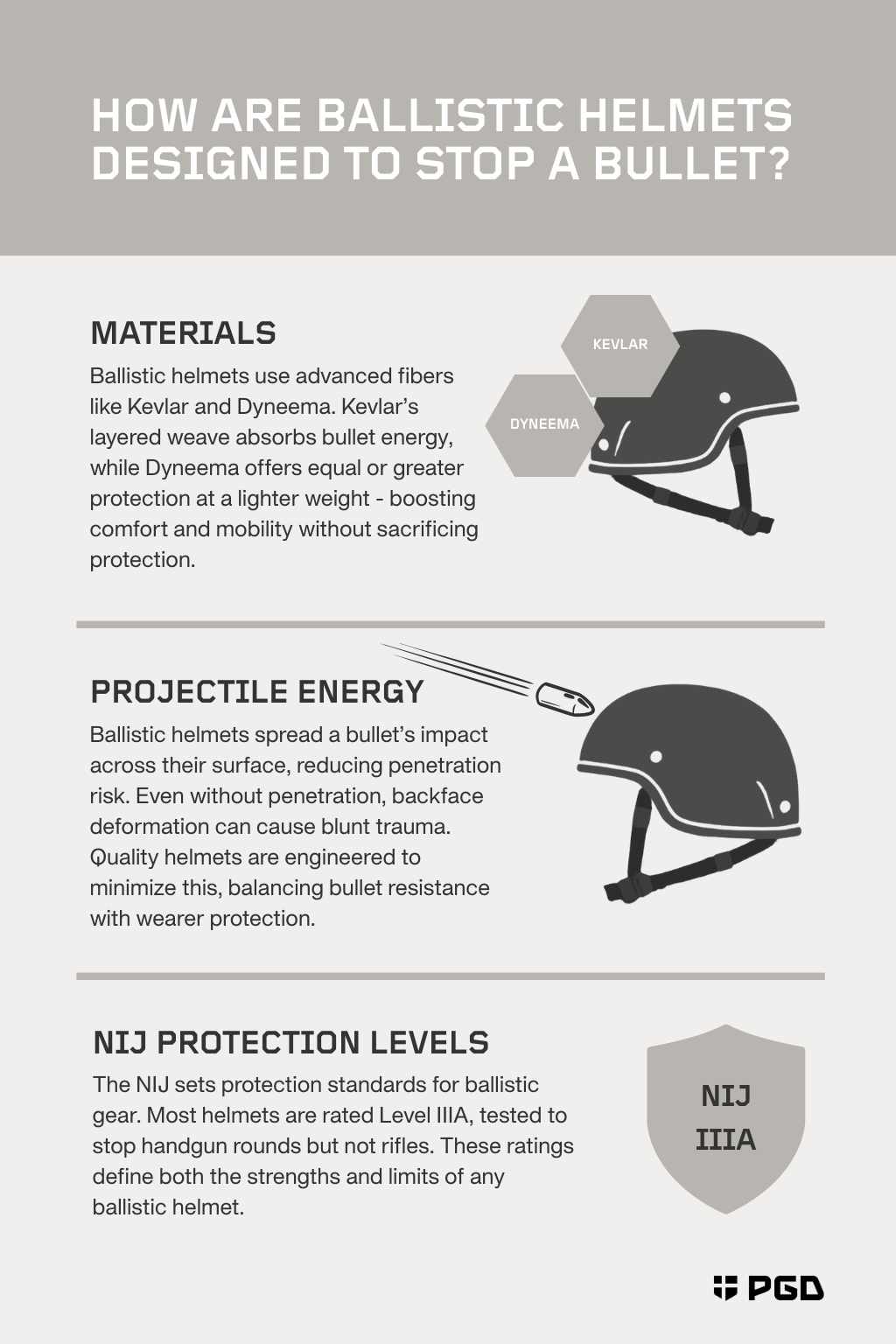
At the core of ballistic helmets are advanced fibers and composites. Historically, the most recognized material is Kevlar, a para-aramid synthetic fiber famous for its exceptional strength-to-weight ratio. Kevlar’s woven layers are engineered to catch, deform, and absorb the energy of a bullet.
Dyneema, one of the most advanced ultra-high molecular weight polyethylene (UHMWPE) fibers, has emerged as a lightweight yet extremely durable option for helmets. Dyneema helmets can achieve equivalent or superior protection to Kevlar at reduced weight, increasing wearer comfort and mobility.
While ceramics are a mainstay for body armor plates against rifle rounds, they are rarely integrated into helmets due to bulk and practicality considerations. Instead, helmet design focuses on layering multiple high-strength fibers to maximize protection against handguns and fragmentation.
Ballistic helmets do not only stop a bullet by blocking its path. When a bullet strikes the helmet, energy is transferred rapidly, spreading over the helmet’s surface. The fibers within the helmet flex and strain, distributing kinetic force and reducing the risk of penetration.
Notably, even if penetration doesn’t occur, helmets can deform inward – a phenomenon known as backface deformation. Excessive deformation can transmit enough energy into the wearer’s skull to cause serious blunt force trauma, concussions, or worse. Quality helmets are engineered to limit this deformation, balancing bullet resistance with wearer safety.
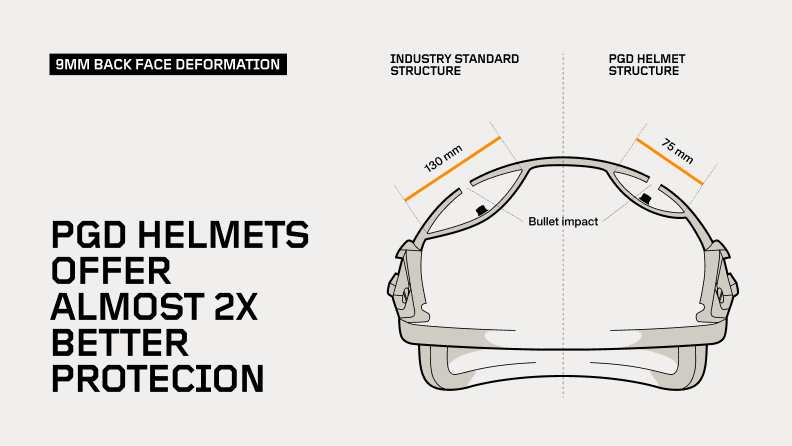
Curious about backface deformation and why it matters? Check out our full article for a deeper dive “The critical role of backface deformation in ballistic helmet protection” on our PGD blog.
The National Institute of Justice (NIJ) sets standardized protection levels for ballistic equipment, enabling professionals to match gear to anticipated threats. Helmets are typically rated to the NIJ Level IIIA standard, meaning they are tested primarily against handgun rounds, not rifle bullets. The NIJ rating system is crucial to understanding both the capabilities and the limitations of any ballistic helmet.
The true value – and limitation – of a ballistic helmet lies in what threats it can feasibly counter. For law enforcement, security, and military users, the real-world performance of a helmet against common firearms is a deciding factor.
One primary consideration is whether helmets can halt prevalent handgun calibers such as 9mm or .44 Magnum. High-quality, NIJ IIIA-rated ballistic helmets, such as the PGD ARCH GEN3 Ballistic Helmet, reliably stop bullets from these rounds under standardized test conditions. Real-world shooting data and lab tests confirm that 9mm Full Metal Jacket and .44 Magnum lead semi-wadcutter rounds fired at typical velocities are defeated by these helmets.
However, it is crucial to be aware that while penetration is prevented, the wearer may still experience significant impact. Blunt force trauma, headaches, or even mild concussions are possible outcomes after a close-range handgun hit, despite the absence of bullet entry.
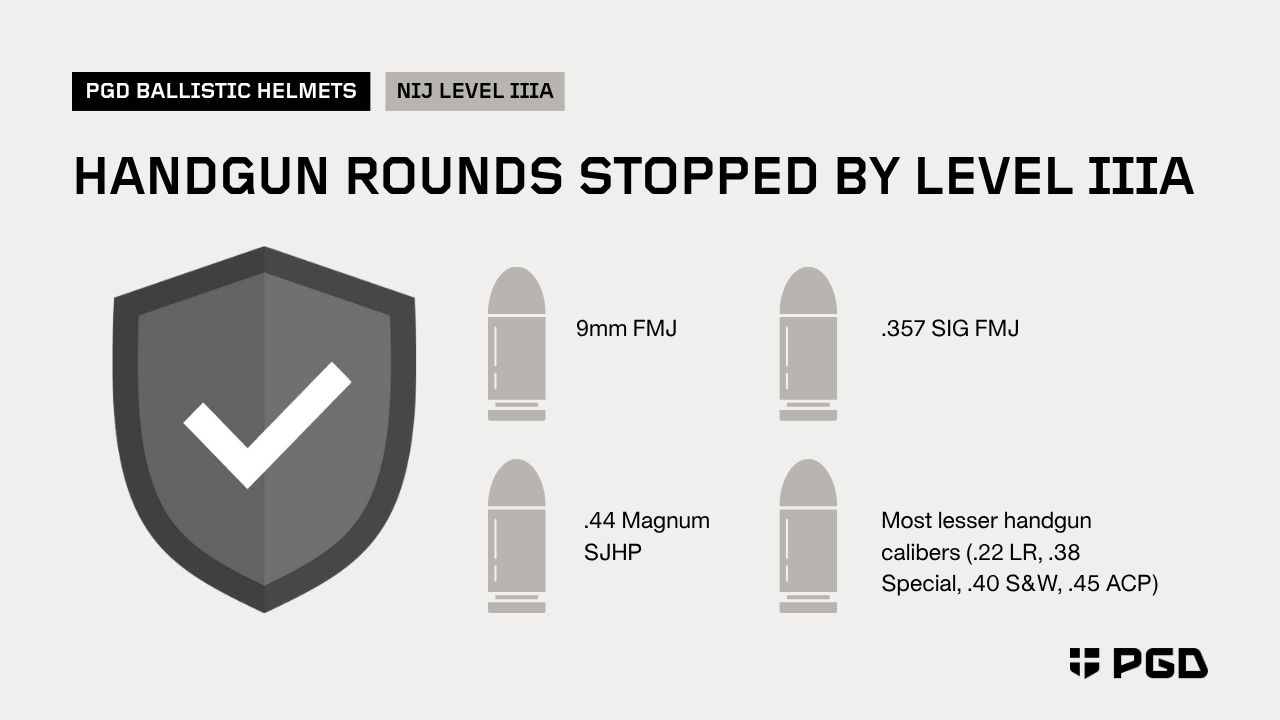
Strictly speaking, no equipment is truly “bulletproof.” Instead, ballistic helmets are engineered to be “bullet-resistant” to defined levels. The term “bulletproof” can be misleading and may foster a false sense of invulnerability. Helmets are stress-tested against specific threats, not all conceivable projectiles or conditions. NIJ IIIA helmets reliably resist most common handgun rounds but do not protect against high-velocity rifle fire, armor-piercing ammunition, or specialty rounds.
Understanding these limits is vital for user safety and informed operational planning.
Below is a summary of what bullets typical ballistic helmets can and cannot stop, based on their NIJ rating:
| NIJ Level | Common Rounds Stopped | Does NOT Stop |
|---|---|---|
| II | 9mm FMJ (lower velocity), .357 Magnum JSP | .44 Magnum, most rifle rounds |
| IIIA | 9mm FMJ (higher velocity), .44 Magnum, .357 SIG | Rifle rounds (5.56x45mm, 7.62x39mm, etc.) |
| III / IV* | Not typically available/applicable for helmets | Rifle threats; these are body armor plate standards |
*Note: Level III and IV are primarily body armor plate ratings. Standard helmets do not achieve these.
For many operational contexts, especially military deployments, the threat of rifle fire is a foremost concern. The question, “do ballistic helmets stop rifle rounds?” is critical for protection planning.
Here’s the blunt truth: helmets aren’t magic. Even the best Kevlar or Dyneema lids aren’t built to shrug off rifle rounds like 5.56, 7.62×39, or 7.62×51. Those suckers are screaming fast and pack way more punch than a Level IIIA helmet can handle.
When they hit, expect penetration – or at best, a bone-rattling blast that can crack skulls. So no, rifle bullets don’t “bounce off” helmets like in the movies. That’s a myth best left in Hollywood.
There do exist specialized helmets with rifle-level protection, but these are extremely rare, significantly heavier, and less practical for extended field use. Integrating rifle-level ballistic plates into helmets demands substantial weight, which can result in neck fatigue, reduced situational awareness, and decreased agility. Current helmet technology prioritizes balance between protection, weight, and functionality. For most users, a helmet offering protection against handguns and fragments – like the PGD ARCH GEN3 Ballistic Helmet – remains the gold standard.
In operational realities, military and law enforcement professionals must accept that helmets protect against the majority of urban threats – handguns and fragmentation – but not direct rifle fire. In engagements where rifle threats are expected, teams adjust tactics: using cover, maneuver, and enhanced coordination rather than relying on head armor to defeat all projectile types.
The only way to ensure a ballistic helmet delivers its promised protection is through standardized laboratory testing and verified performance records. Choosing “tested, recorded, and proven” helmets ensures trust in the field is justified by rigorous science.
U.S. laboratories test ballistic helmets using NIJ protocols for penetration and trauma. Helmets are fixed to a headform and shot with specific rounds at controlled velocities and distances. Having stopped the bullet, testers measure the helmet’s backface deformation: the extent to which the material bulges inward. Limits are set to prevent dangerous blunt force trauma.
Advanced helmets undergo multiple impact tests, environmental conditioning (cycles of temperature/humidity), and fragmentation resistance assessments. Only those passing all stages are rated to a particular NIJ level.
Helmets with “tested, recorded, and proven” field records offer professionals reassurance that performance claims have been validated repeatedly. Real-world after-action reports, ongoing batch testing, and transparent certification are hallmarks of trustworthy equipment. Selecting helmets solely on marketing claims or aesthetics can expose the wearer to unacceptable risk if the product’s true capabilities are unproven.
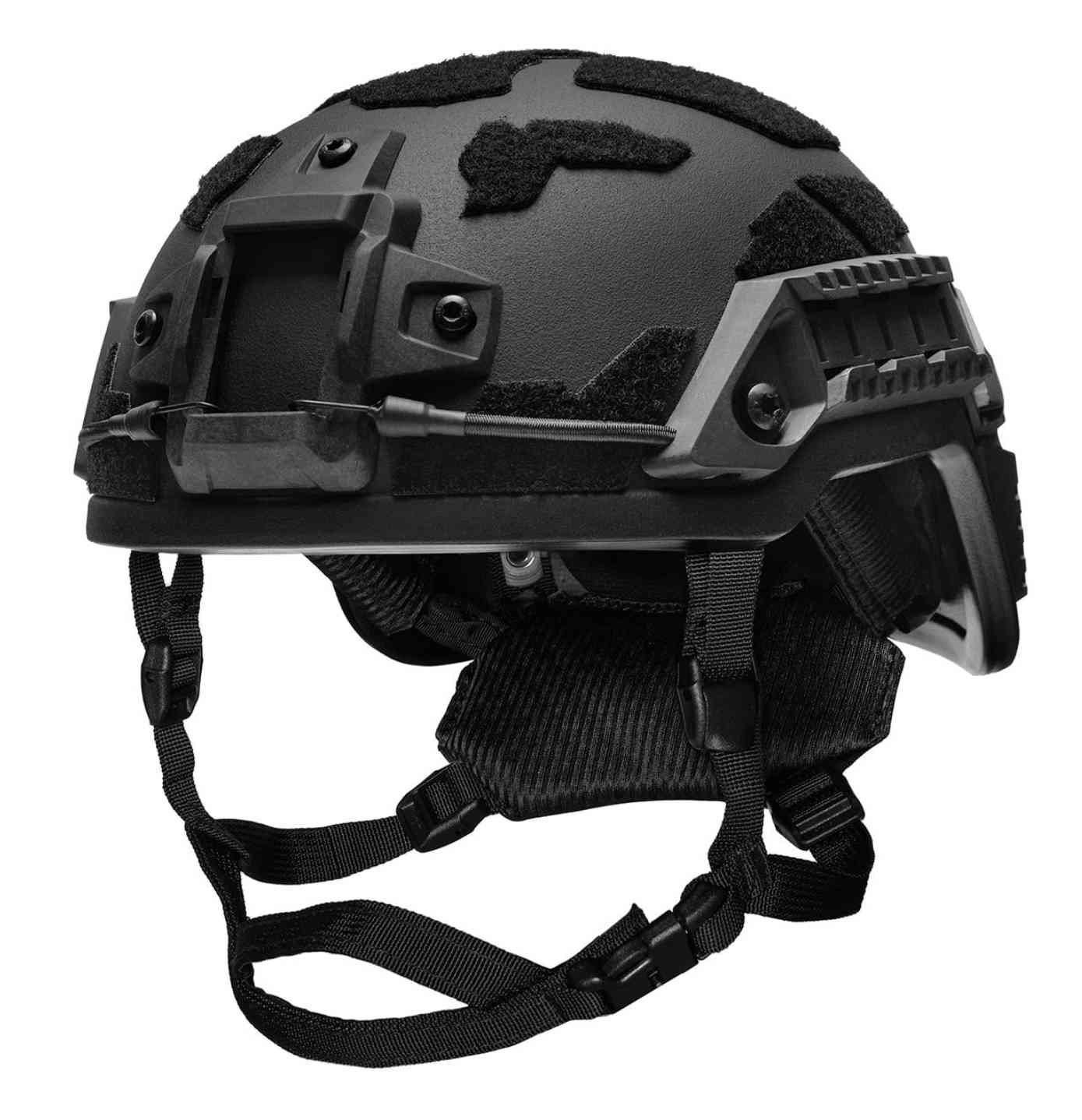
A standout example is the PGD ARCH GEN3 Ballistic Helmet, engineered to the latest NIJ IIIA standards. This helmet combines Kevlar aramid construction with superior ballistic performance, repeatedly tested and verified against 9mm and .44 Magnum rounds. Its carefully designed shell minimizes backface deformation, reducing the risk of blunt force trauma compared to lesser products. The PGD ARCH GEN3 is a trusted choice for professionals seeking proven protection without unnecessary bulk.
Specs and test data are great – but nothing beats hearing from the people who actually wear the gear. If you want to check out real-world experiences with our PGD ARCH helmet, head over to the “What They Say” section and see what users are saying for yourself.
Knowing what a ballistic helmet can – and can’t – do helps professionals pick the right gear to stay alive and get the job done.
The first step is matching helmet protection level to the actual threats encountered in your operational environment:
For typical law enforcement and security work, a NIJ IIIA helmet, such as the PGD ARCH GEN3, offers optimal protection and practicality. In environments where rifle fire is the dominant risk, prioritize tactics, positioning, and use of cover – no current helmet provides assured rifle-level head protection without major trade-offs.
Repeated wear, especially over long shifts or missions, magnifies the importance of helmet weight and comfort. Lightweight helmets – often made with Dyneema – minimize fatigue without sacrificing ballistic resistance against handguns. Adjustable suspension systems, venting, and ergonomic liners further improve mission readiness.
Be cautious of heavy add-ons or unsupported claims of “rifle-stopping” helmets – these often compromise comfort or have not been verified through standardized testing.
Always select helmets backed by transparent test data and real-world performance results. Review verified models from established suppliers, and seek direct guidance from safety experts. For those interested in tested, proven products such as the PGD ARCH GEN3 Ballistic Helmet, or needing further advice, visit Protection Group Denmark to consult with knowledgeable professionals and access a portfolio of authentically certified protection solutions.
High-quality, NIJ IIIA-rated ballistic helmets, such as the PGD ARCH GEN3 Ballistic Helmet, reliably stop bullets from these rounds under standardized test conditions. Real-world shooting data and lab tests confirm that 9mm Full Metal Jacket and .44 Magnum lead semi-wadcutter rounds fired at typical velocities are defeated by these helmets. However, it is crucial to be aware that while penetration is prevented, the wearer may still experience significant impact. Blunt force trauma, headaches, or even mild concussions are possible outcomes after a close-range handgun hit, despite the absence of bullet entry.
Standard ballistic helmets, including most advanced Kevlar helmets and Dyneema helmets, are not designed to stop rifle-caliber bullets such as 5.56x45mm NATO, 7.62x39mm, or 7.62x51mm NATO. These projectiles travel at much higher velocities and possess increased energy, far exceeding what NIJ Level IIIA helmets are built to handle. Upon impact, a rifle round will typically penetrate the helmet, causing catastrophic damage. Even if the projectile does not fully perforate the helmet due to an oblique angle or loss of velocity, the blast of energy can lead to severe blunt force trauma, skull fractures, or fatal outcomes. The notion of a rifle-caliber bullet simply “bouncing off” standard helmets is a myth.
Ballistic helmets do not only stop a bullet by blocking its path. When a bullet strikes the helmet, energy is transferred rapidly, spreading over the helmet’s surface. The fibers within the helmet flex and strain, distributing kinetic force and reducing the risk of penetration. Notably, even if penetration doesn’t occur, helmets can deform inward – a phenomenon known as backface deformation. Excessive deformation can transmit enough energy into the wearer’s skull to cause serious blunt force trauma, concussions, or worse. Quality helmets are engineered to limit this deformation, balancing bullet resistance with wearer safety.
Protect what matters.
We’ve moved our U.S. sales
Protection Group Denmark products are now available in the United States exclusively through our official distributor, Colorado Gun Fighter. This store is no longer accepting new orders — please continue your purchase there.
Already placed an order with us? Don’t worry — all existing orders will be fulfilled as normal.
Shop at Colorado Gun Fighter