Police ballistic helmets: What do law enforcement officers really need to know?
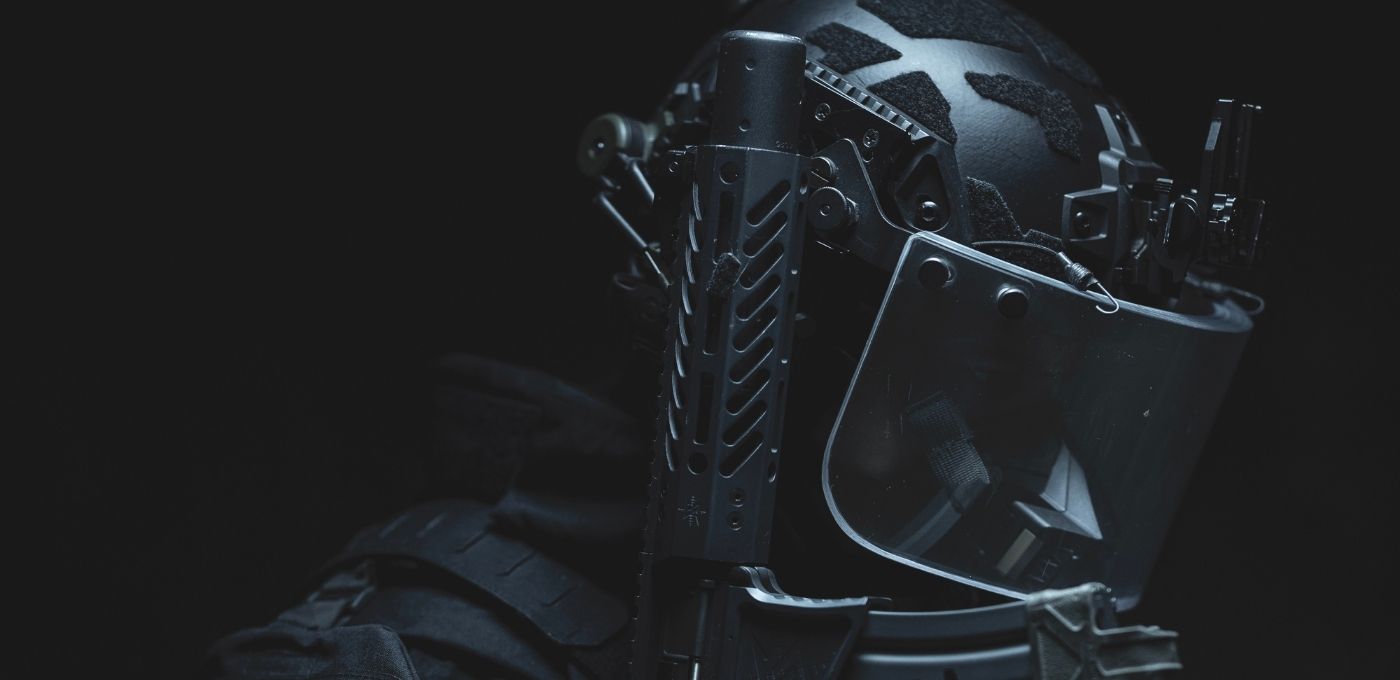
You don’t have to be kicking down doors in downtown Fallujah or standing on a riot line in Chicago to appreciate one simple truth: taking a brick, a blast fragment, or a bullet to the face is going to ruin your day. That’s why more and more operators are upgrading to a ballistic helmet visor. It’s not just a clear piece of plastic bolted to your helmet – it’s a purpose-built shield designed to stop handgun rounds, block fragments, and keep your eyes clear when everything else turns to chaos.
Unlike the clunky riot visors of the past that fogged up faster than a cheap gas station windshield, today’s ballistic visors are lighter, stronger, and engineered for clarity under pressure. They flip up when you need to go hands-on, lock down when rounds start flying, and integrate seamlessly with NVGs, comms, and respirators. In other words, they’re built for the realities of modern missions, not just for show.
Whether you’re military, SWAT, or private security working in high-threat environments, the visor is the missing link that turns a good helmet into a full-face ballistic solution. And when the worst happens – when debris, glass, or hot brass is flying – you’ll be glad you weren’t relying on luck or a pair of sunglasses.
So, what makes a ballistic visor more than just a fancy face shield? From the materials and certifications to the flip-up systems and anti-fog coatings, every detail is engineered with survival in mind. Let’s dive into the world of ballistic helmet visors and break down how they work, why they matter, and what to look for when choosing the right one for your mission.
Ballistic helmet visors are a crucial upgrade for tactical helmets, offering full-face ballistic protection for military, law enforcement, and security personnel. These visors, tested to NIJ Level IIIA, stop handgun rounds and fragments, and feature advanced anti-fog coatings for clear vision under pressure. Flip-up and modular visor options support easy integration with tactical gear while maintaining comfort and field of view. Users can customize setup for riot control, SWAT, and combat operations where both facial defense and situational awareness matter. With reliable attachment points and proven protection, the right ballistic visor helmet enhances operator confidence in high-risk scenarios.
That’s where the PGD Ballistic Visor steps in. Tested to NIJ Level IIIA, it keeps your face in one piece while giving you crystal-clear vision thanks to anti-fog and anti-scratch coatings. Flip it up, lock it down, and get on with the mission – because nothing ruins a day faster than catching fragments with your teeth.
Hit play below and witness this visor flex harder than a gym bro on Monday.
At PGD, we often get asked:
“What exactly is a ballistic helmet visor, and why does it matter?”
Simply put, it’s one of the most overlooked but critical upgrades you can add to your helmet.
A ballistic visor extends protection from your head to your entire face, shielding you against handgun rounds, fragments, and blunt threats that a regular helmet can’t cover.
In this guide, we’ll walk you through what a ballistic helmet visor is, how it works in real-world operations, and why it’s trusted by military, law enforcement, and security professionals worldwide.

A ballistic helmet visor is a transparent, armored shield that attaches to tactical helmets, providing critical face protection during high-risk operations. Unlike standard face shields, ballistic helmet visors are specially engineered to stop bullets, fragments, and blunt threats, making them indispensable in frontline military, law enforcement, and security operations.
The primary tactical role of a ballistic visor is to extend the proven protection of a ballistic helmet to cover the operator’s face. In scenarios like urban combat, close-quarters breaching, or riot response, this layered protection significantly reduces the risk of life-altering facial injuries and enhances overall mission survivability.
While the terms are sometimes used interchangeably, it’s critical to distinguish between a general “ballistic helmet face shield” and a dedicated ballistic helmet visor:
Choosing the right helmet visor for ballistic protection means selecting a product built, tested, and certified for meaningful defense against real firearms threats – distinguishing it from less robust riot or industrial face shields.
So, who actually needs a ballistic visor helmet? Well, if your daily commute involves dodging bricks, beer bottles, or the occasional 9mm round, you might want to consider one.
Jokes aside, these helmets aren’t made for Sunday bike rides – they’re built for professionals who face real threats head-on. From military operators to riot control units, a ballistic visor helmet is essential gear when “protecting your face” means a lot more than just wearing sunscreen.
Beyond operational needs, any agency or professional prioritizing facial protection alongside head armor should consider upgrading to a ballistic helmet with visor compatibility for maximum coverage.
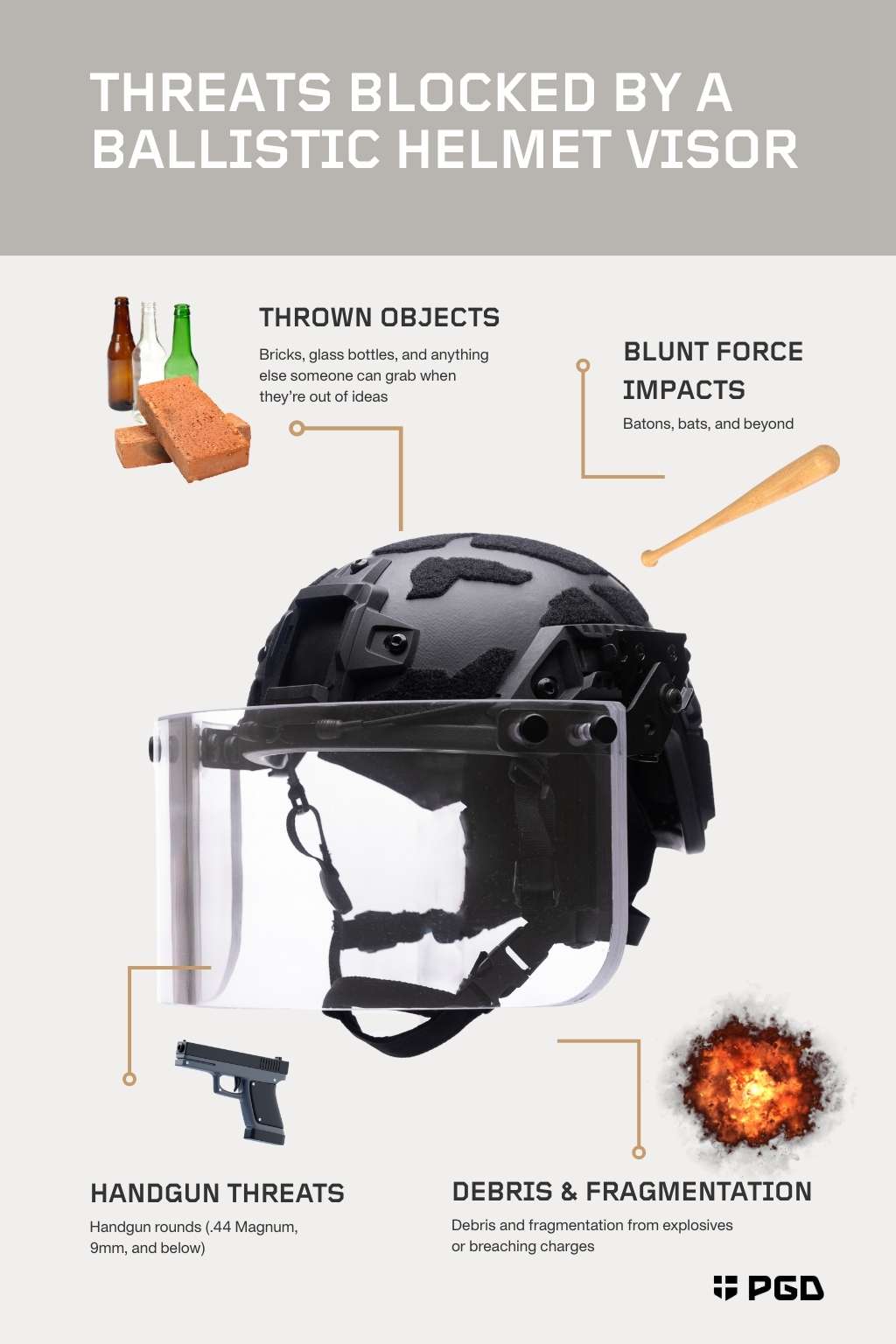
When it comes to helmet visors, the difference is in the details. Ballistic standards set the bar for what threats a visor can defeat. The gold standard for most tactical visors is NIJ Level IIIA, as defined by the National Institute of Justice. A level IIIA ballistic visor is tested to stop:
This protection covers nearly all handgun threats and significant blast/fragment scenarios faced in law enforcement and military work.
Additional standards like STANAG 2920 (NATO) and ASTM E3368 measure fragment resistance, expressed in V50 values (the speed at which there’s a 50% chance a fragment fully penetrates).
A ballistic visor helmet or ballistic helmet face shield typically blocks:
What a bulletproof helmet visor does not provide: Rifle-caliber bullet protection (this is beyond current face shield capabilities without significant weight, bulk, and compromised visibility). Remember that!
Trusted ballistic visors undergo rigorous, instrumented laboratory testing before field deployment. Let’s have a look:
A quality helmet visor for ballistic protection will come with independent tests to back its claims, so always look for published results or ask for it before buying. Think of it as the difference between body armor and bubble wrap – and you want the real deal… Trust us!
The foundation of a high-performance ballistic helmet visor is its multi-layer construction:
Designers engineer weight distribution to preserve helmet balance, reducing operator fatigue and boosting agility during extended use.
Face shield clarity can be a matter of life and death in tactical environments. Quality visors feature:
Not all products offer long-term anti-fog performance. Top solutions – such as our very own PGD Ballistic NIJ 3a visor – are recognized for excelling where many generic visors fall short, especially during protracted action or riot scenarios.
Modern flip-up ballistic visors offer major tactical flexibility:
Accessories like power fans or quick-release cables may complement high-end designs, addressing fog risk and emergency egress.
Integrating a ballistic helmet visor starts with compatible mounting systems:
Always ensure your visor attachment matches your helmet’s model and size for proper fit, coverage, and protection.
A common operator pain point is gear interference. The best ballistic visors support seamless integration with essential accessories:
These integration points let users field a true ballistic helmet with visor, not just improvised, sub-optimal coverage.
Field situations change rapidly. Top-tier visors use:
Consider these features when exploring visor upgrades or agency bulk purchases—your team’s flexibility and safety may depend on it.
We’ve already been shortly around this, but let’s go further into details – because knowing when to use a ballistic visor helmet is just as important as knowing what it is.
After all, you probably don’t need one for mowing the lawn (unless your neighbors are really intense).
But in combat zones, riot lines, or hostage rescues, seconds matter and projectiles don’t discriminate. That’s where a visor helmet turns from “nice-to-have” into “absolutely essential.”
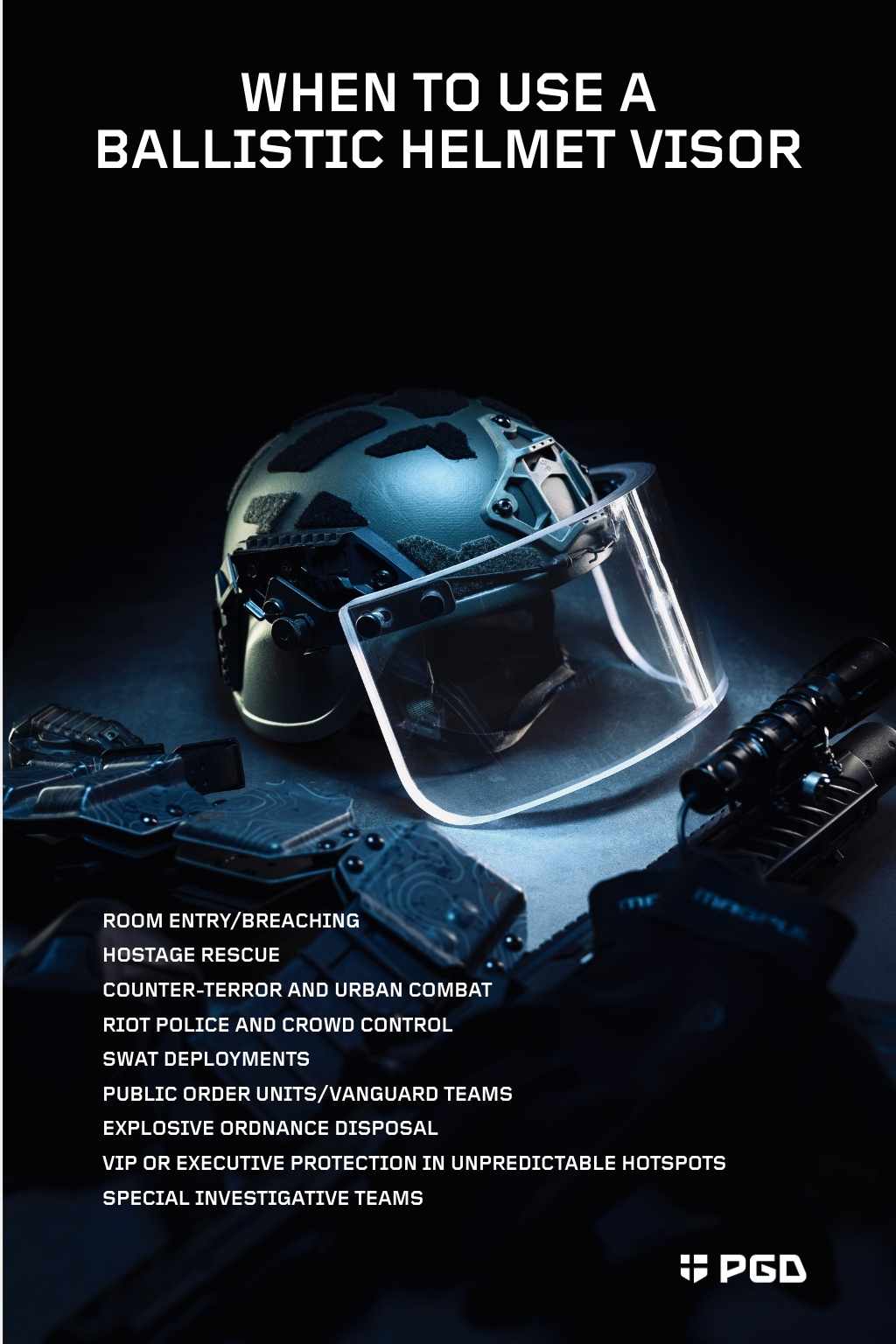
Full-face ballistic protection is vital in scenarios including:
Operators often report that a ballistic helmet face shield provides life-saving coverage during seconds of chaos when projectiles and debris fly indiscriminately.
A riot helmet with ballistic visor becomes essential for:
Visors with robust anti-fog and anti-scratch properties maintain mission readiness throughout extended standoffs or crowd movements.
Ballistic visor helmet systems are increasingly standard for:
As operational needs evolve, agencies must regularly assess their helmet visor for ballistic protection to meet new threat profiles in both conventional and asymmetric engagements.
Interested in diving deeper into the world of ballistic protection and tactical gear? Head over to the PGD Blog, where we break down everything from helmets and accessories to the latest standards and field insights. Whether you’re military, law enforcement, or just a gear enthusiast, our articles are packed with knowledge to keep you one step ahead.
Alright, now we’ve covered the nuts and bolts of ballistic helmet visors. Time for the shameless plug – because if we’re talking serious face protection, we’ve got to mention our own PGD Ballistic NIJ Level IIIA visor. It’s tough, it’s tested, and it’s way better than trusting your nose to luck and a pair of sunglasses.

Protection Group Denmark (PGD) stands at the forefront of ballistic protection, delivering solutions trusted by professional users worldwide. Unique selling points of PGD ballistic helmet visors include:
When fogging, weight imbalance, or poor fit can undermine protection, PGD’s anti-fog ballistic visor and ergonomic design deliver where it counts.
The PGD ARCH GEN3 Ballistic Helmet is engineered to work seamlessly with PGD’s advanced visor options, providing a streamlined helmet visor for ballistic protection upgrade path:
Operators and procurement specialists can configure the ultimate ballistic helmet with visor setup, knowing that all components are mutually tested and refined for real-world use.
All PGD ballistic visor attachments are subject to strict laboratory and field evaluation, including:
Whether your mission is crowd control, high-risk warrant service, or front-line combat, PGD’s bulletproof helmet visor solutions have earned their reputation for delivering operator-level confidence under fire.
Want to dig deeper into what NIJ Level IIIA really means? Check out our article “Level IIIA ballistic helmet explained” – packed with clear tables, sharp graphics, and everything you need to make sense of the numbers.
Upgrading to a ballistic helmet face shield or visor is a proactive move for any agency or professional exposed to dynamic firearms, fragment, or riot threats.
The PGD ARCH GEN3 Ballistic Helmet and visor lineup set the standard for protection and adaptability, whether you’re equipping SWAT, military, or public order teams.
For more details, agency support, or to explore the ideal ballistic visor helmet solution for your mission, visit Protection Group Denmark today. Empower your operators with protection that stands up to real threats – request a quote for bulk or specialized needs and step forward with confidence.
Ballistic helmet visors are tested to NIJ Level IIIA, as defined by the National Institute of Justice. A level IIIA ballistic visor is tested to stop .44 Magnum SJHP (semi-jacketed hollow point) rounds and 9mm FMJ (full metal jacket) rounds at high velocity. This protection covers nearly all handgun threats and significant blast/fragment scenarios faced in law enforcement and military work. However, a bulletproof helmet visor does not provide rifle-caliber bullet protection.
Integrating a ballistic helmet visor starts with compatible mounting systems. Many modern tactical helmets—like the PGD ARCH GEN3—feature pre-engineered rails or brackets for rapid visor installation. Some face shields use adjustable brackets to fit multiple helmet types, but for maximum security and field reliability, dedicated mounting is preferred. Always ensure your visor attachment matches your helmet’s model and size for proper fit, coverage, and protection.
Quality visors feature advanced hydrophilic or nano-ceramic anti-fog coatings to prevent vision-impairing condensation. PGD’s proprietary multi-layer coatings outperform typical fogging issues found in lesser visors, ensuring optical clarity in all climates and scenarios. Not all products offer long-term anti-fog performance, but top solutions—such as those by PGD—are recognized for excelling where many generic visors fall short, especially during protracted action or riot scenarios.
Designers engineer weight distribution to preserve helmet balance, reducing operator fatigue and boosting agility during extended use. Flip-up design flips without shifting helmet center of gravity, maintaining operator agility and comfort.
Protect what matters.
We’ve moved our U.S. sales
Protection Group Denmark products are now available in the United States exclusively through our official distributor, Colorado Gun Fighter. This store is no longer accepting new orders — please continue your purchase there.
Already placed an order with us? Don’t worry — all existing orders will be fulfilled as normal.
Shop at Colorado Gun Fighter