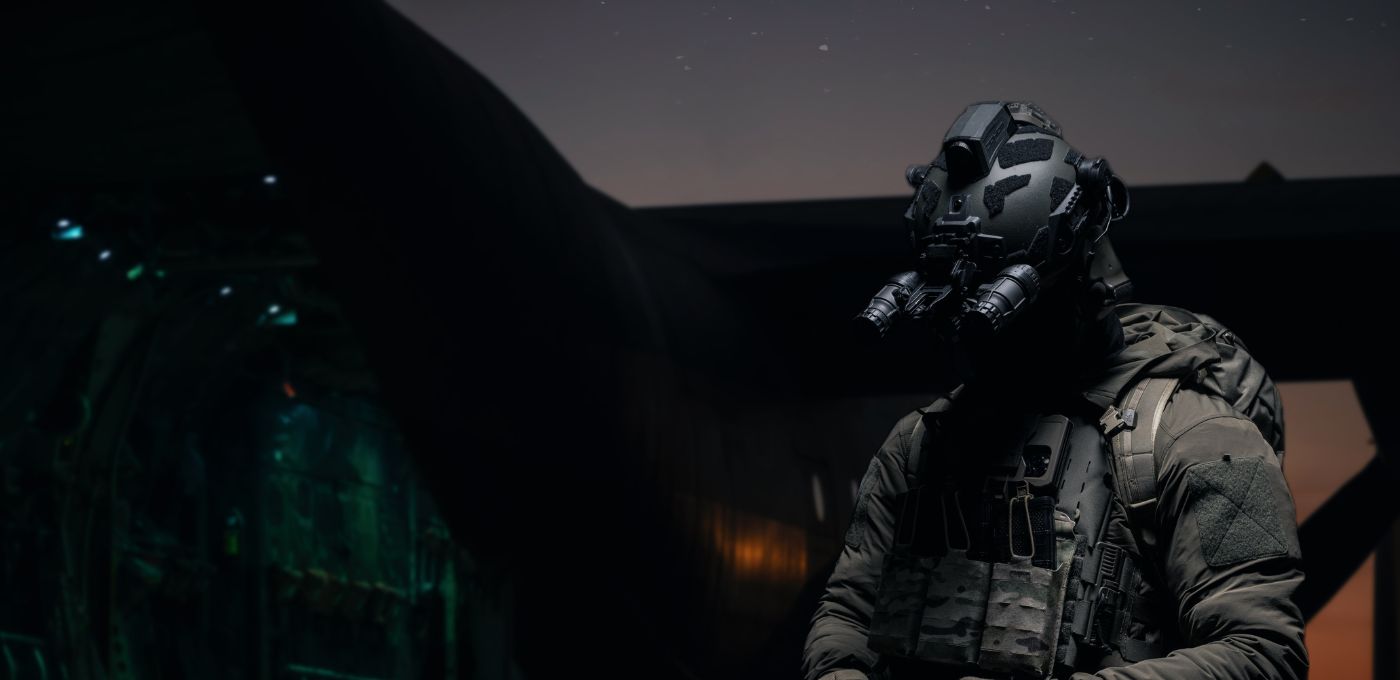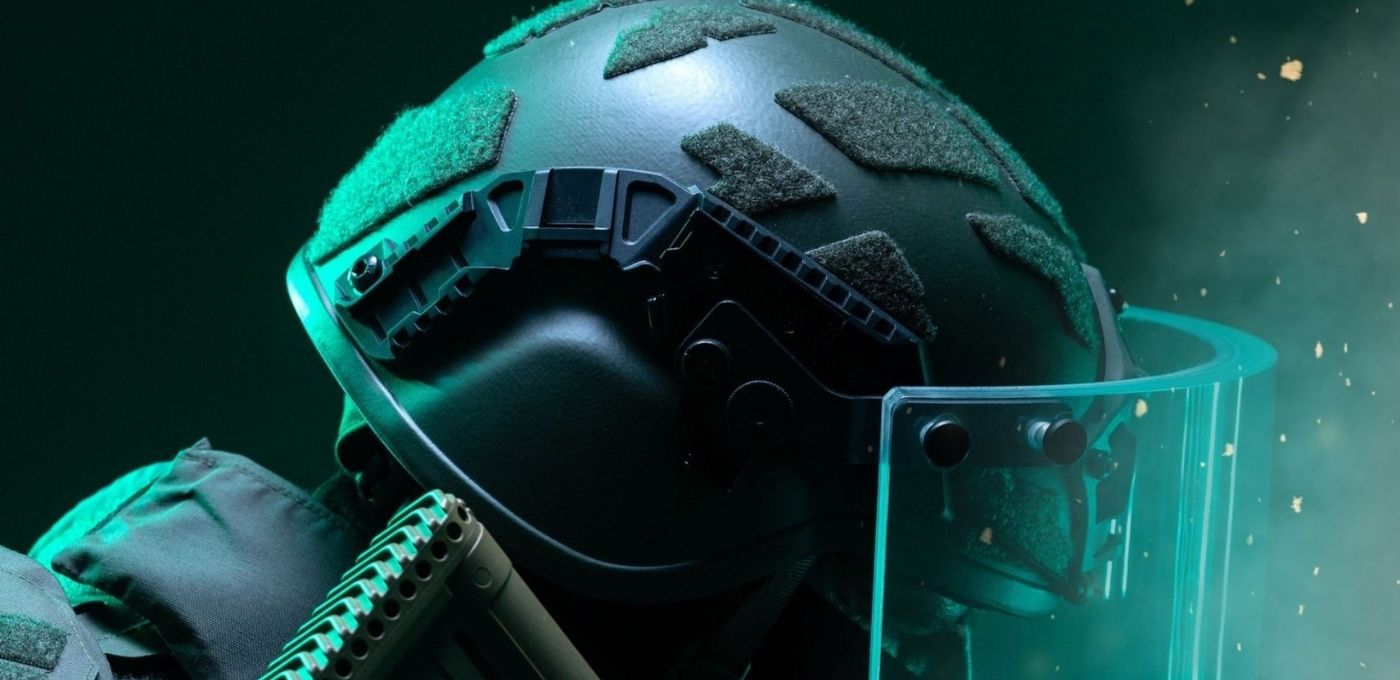
OD Green ballistic helmet: Why does olive drab remain a tactical favorite?
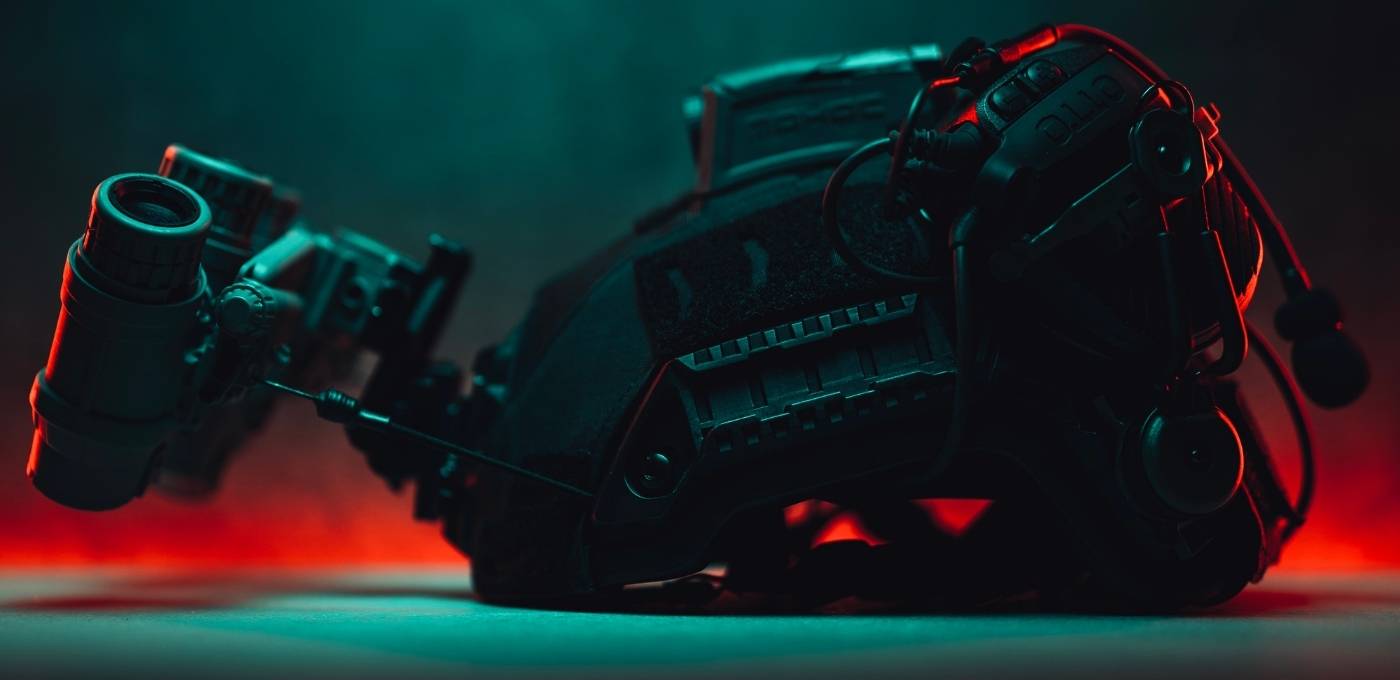
A level IIIA ballistic helmet protects against a wide range of handgun cartridges, including .357 SIG, .44 Magnum, and 9mm, while staying lightweight and comfortable.
So… If you’ve ever wished for a force field for your head, a Level IIIA ballistic helmet is probably the next best thing – minus the sci-fi glow. These helmets won’t make you invincible, but they can shrug off most handgun rounds, sneer at flying fragments, and save your neck – literally – without turning your patrol into a neck workout. Whether you’re a SWAT operator, a private security pro, or just someone who really, really likes their skull, IIIA helmets are the unsung heroes of modern protection.
These helmets use advanced materials and undergo rigorous NIJ 0106.01 testing for ballistic and fragment resistance. They’re standard issue for military, police, and tactical professionals who value protection without neck strain. The PGD ARCH GEN3 Helmet stands out by offering IIIA performance plus modern features. Level IIIA helmets remain the leading choice for mobility and modularity in high-threat environments.
Modern threats demand equipment that balances robust protection with comfort and practicality. The Level IIIA ballistic helmet – especially like the PGD ARCH GEN3 from Protection Group Denmark – answers this need. But what truly defines a “iiia ballistic helmet,” how are these helmets constructed, and how do they differ from other ballistic headgear?
A ballistic helmet is personal protective equipment engineered to minimize head trauma from projectiles and fragmentation. Traditionally used by military and law enforcement professionals, these helmets go beyond the basic bump protection of hard hats or riot helmets. They’re tested and classified by how well they stop specific ballistic threats, as defined by organizations like the National Institute of Justice (NIJ).
The most commonly encountered ballistic helmet classifications are:
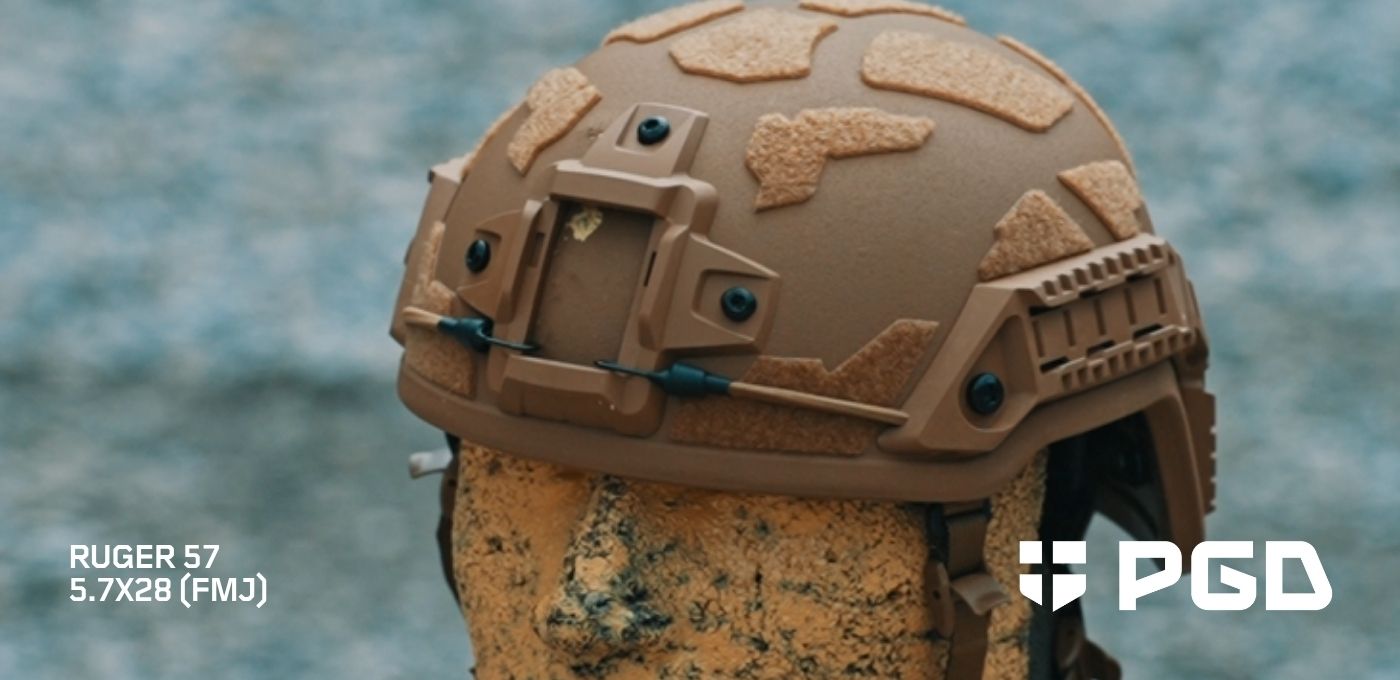
At Protection Group Denmark, we exclusively use a modified version of NIJ Standard 0106.01 for testing our ballistic helmets, ensuring alignment with the threat levels defined in NIJ Standard 0101.06 for bulletproof vests. This means our Level IIIA helmets are tested against .44 Magnum SJHP and .357 SIG FMJ rounds, reflecting the real-world threats operators face today.
The original NIJ 0106.01 protection levels are now considered outdated and insufficient by modern standards, which is why our enhanced testing protocol provides a higher degree of confidence and relevance for today’s tactical environments.
Check out the modified version below:

Always pick a ballistic helmet that’s passed the “grown-up” test – aka the modified NIJ Standard 0106.01.
Helmets that only meet the old-school Level II standard are basically wearing flip-flops to a gunfight – they might look the part, but they’re not ready for modern threats.
For real protection, your helmet should be tested to NIJ Level IIIA (3A) under the modified standard. This is where helmets prove they can shrug off rounds like .44 Magnum and .357 SIG instead of just giving them a stern look. Not only does this mean a serious jump in protection, but your helmet’s V50 value – its resistance to fast-flying fragments – will also be miles better. In short: Level IIIA helmets don’t just show up; they show up ready to party with modern threats.
The NIJ – America’s recognized authority on ballistic protection standards – sets the benchmark for helmet protection. The “ballistic helmet level IIIA” rating is based on NIJ Standard 0106.01, which certifies helmets to stop:
In essence, a Level IIIA ballistic helmet resists almost all common handgun ammunition used in urban and high-risk situations, without the excessive bulk and weight of higher-level rifle protection that could cause neck fatigue or limit mobility.
Modern NIJ level IIIA helmets use advanced composites for optimal strength-to-weight ratios. The two most common materials are:
By layering and shaping these materials, manufacturers produce helmets capable of achieving NIJ Level IIIA performance, making them well-suited for tactical scenarios where mobility and modularity are paramount.
Now, watch Terribly Tactical share his initial impressions of the PGD ARCH GEN3 Level IIIA ballistic helmet from Kevlar aramid fibers now that it’s out of the box and fully set up. He walks through the fit, comfort, and features of the helmet, giving you a quick, honest look at what it’s like to wear gear that can shrug off .44 Magnum rounds without giving your neck a workout.
We’ve already taken a quick look at it, but let’s dive a bit deeper into the threats a Level IIIA ballistic helmet can handle – and also the ones it can’t. 🫣
Picking the right helmet isn’t just about looking tactical in selfies – you need to know exactly what a Level IIIA “NIJ ballistic helmet” can stop, and just as importantly, what will still make your skull very, very unhappy.
Ballistic helmet IIIA models are proven to stop:
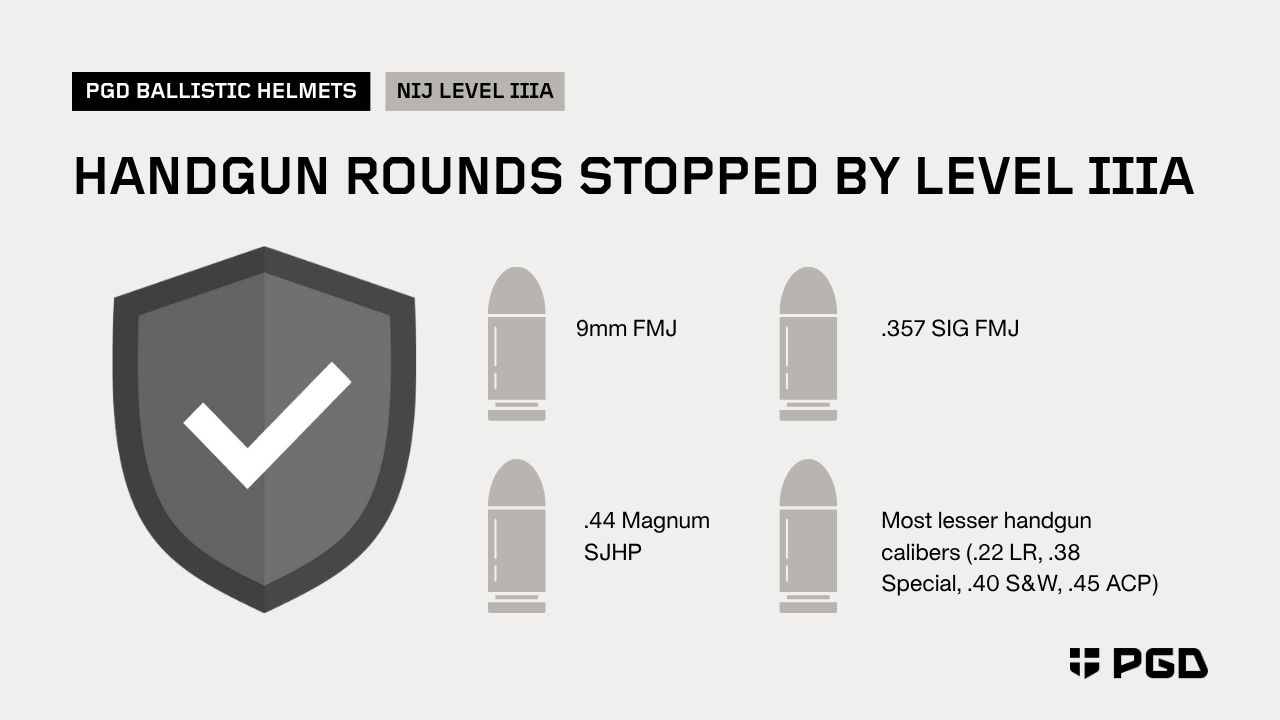
This makes Level IIIA helmets a logical choice for tactical officers, ERT, SWAT, and military users likely to encounter strong handgun threats.
Beyond bullets, fragmentation is a major concern in modern conflict zones. Level IIIA helmets offer substantial protection against shrapnel and secondary projectiles – from grenades, improvised explosive devices (IEDs), or explosive breaching.
V50 (Velocity 50%) testing measures the speed at which 50% of projectiles penetrate the helmet, typically using steel spheres or fragments per STANAG 2920 standards. A V50 value over 650 m/s (commonly 650 – 700 m/s in advanced helmets) means effective resistance against high-velocity fragments—part of the reason modern operators trust the ballistic helmet IIIA design.

Now, let’s move on and talk about what a level IIIA ballistic helmet can’t stop – because as amazing as these helmets are, they’re not magic force fields. Rifle rounds like 5.56 NATO or 7.62x39mm will still treat your head like a suggestion rather than a fortress. Same goes for high-velocity armor-piercing ammo – your helmet will wave politely as it zips through. Think of IIIA helmets as your loyal bodyguard against handguns and flying metal bits, but when the rifles come out, your best defense is still cover, distance, and a strong sense of not being there.
No ballistic helmet level IIIA (as per current materials science) can reliably stop:
If rifle threat protection is absolutely essential, helmet solutions quickly become impractically heavy and restrictive. For most urban, tactical, and law enforcement applications, the IIIA rating provides the best tradeoff of protection and usability.
All reputable ballistic helmet IIIA products undergo testing to ensure reliable performance, repeatability, and user confidence. Understanding these standards is key to making informed gear selections.
NIJ Standard 0106.01 outlines a laboratory procedure where:
Protection Group Denmark, for instance, tests its helmets using the modified NIJ 0106.01 standard – ensuring consistency with NIJ’s threat definitions while applying updated procedures for modern helmet profiles.
Fragmentation protection is verified through STANAG 2920 V50 testing. Helmets are subjected to steel fragment-simulating projectiles at increasing velocities until the V50 value – the speed at which 50% of fragments penetrate – is determined. A higher V50 value, typically in the 650–700 m/s range, confirms superior resistance against high-speed fragments. For this reason, professional users should always check the helmet’s V50 rating and NIJ test data before selecting a Level IIIA ballistic helmet.
When a helmet stops a bullet, energy transmits to the inner surface, potentially causing blunt trauma. NIJ testing mandates that backface deformation – the depth a helmet’s inner shell pushes inward upon impact – remain below a critical threshold to minimize head injury.
Further, IIIA helmets undergo blunt impact resistance testing to ensure they mitigate falls or blows in non-ballistic scenarios, adding another layer of operational safety.
Check out our graphic on PGD 9mm backface deformation below:
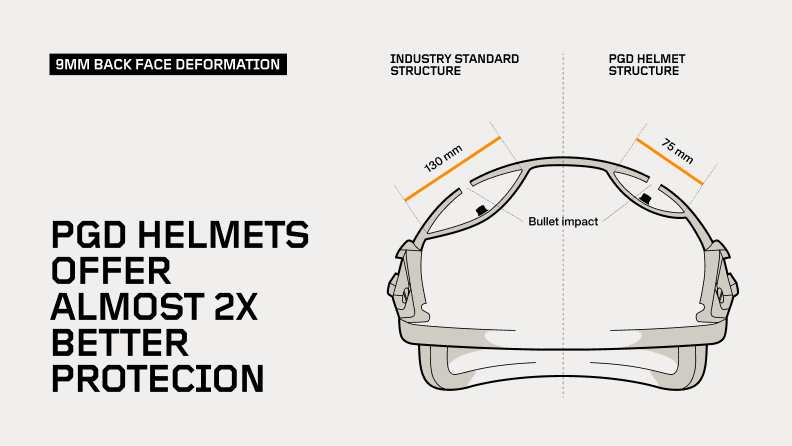
One of the key advantages of PGD ballistic helmets is their exceptionally low backface deformation (BFD). In testing with 9mm rounds, PGD helmets offer almost twice the protection compared to typical industry results. This means far less blunt force transfers to the wearer’s head. In simple terms: the bullet stops, and your skull stays a lot happier.
Wanna learn a lot more on backface deformation? Read our PGD article “The critical role of backface deformation in ballistic helmet protection“.
With so many options on the market, how do you select a ballistic helmet level iiiA that fits your mission, budget, and protection expectations? The PGD ARCH GEN3 Ballistic Helmet embodies the latest in protection, comfort, and real-world applicability.
The PGD ARCH GEN3 Ballistic Helmet delivers on all the demands of contemporary users:
This combination of features makes the PGD ARCH GEN3 the go-to solution for agencies. And individuals who need a helmet that balances protection, functionality, and wearability.
| FEATURE | PGD ARCH GEN3 high-cut level IIIA ballistic helmet |
|---|---|
| Weight (L) | 2.97 lbs (including everything) |
| NIJ Protection Level | Level IIIA (0106.01, modified) |
| V50 Fragment Protection | V50 STANAG 2920: 660 m/s |
| Retention System | PGD 10-pad helmet liner for comfort and PGD Dial & Duraflex buckles for a perfect fit |
| Rail / Accessory Mounts | Included |
| Shell Material | Kevlar Aramid |
Contact Protection Group Denmark for further assistance – whether you’re equipping a unit, seeking compliance insights, or need support on fitting and maintenance.
Ready to upgrade your mission gear? Review the PGD ARCH GEN3 Ballistic Helmet for details, or reach out with questions on helmet selection, export, or custom configurations. You can also download a spec sheet here.
Your protection, operational comfort, and performance are our priorities.
Ballistic helmet IIIA models are proven to stop:
– 9mm FMJ (up to 1,400–1,470 fps)
– .357 SIG FMJ
– .44 Magnum SJHP
– Most lesser handgun calibers (.22 LR, .38 Special, .40 S&W, .45 ACP)
This makes Level IIIA helmets a logical choice for tactical officers, ERT, SWAT, and military users likely to encounter strong handgun threats.
Level IIIA helmets offer substantial protection against fragments and secondary projectiles – from grenades, improvised explosive devices (IEDs), or explosive breaching.
No ballistic helmet level IIIA (as per current materials science) can reliably stop:
– Rifle rounds (.223/5.56mm, 7.62x39mm, 7.62x51mm)
– High-velocity armor-piercing rounds
– Rifle-caliber fragments above their tested V50 threshold
For most urban, tactical, and law enforcement applications, the IIIA rating provides the best tradeoff of protection and usability.
Level IIIA helmets offer substantial protection against fragments and secondary projectiles – from grenades, improvised explosive devices (IEDs), or explosive breaching.
V50 (Velocity 50%) testing measures the speed at which 50% of projectiles penetrate the helmet. Typically using steel spheres or fragments per STANAG 2920 standards. A V50 value over 650 m/s (commonly 650 – 700 m/s in advanced helmets) means effective resistance against high-velocity fragments – part of the reason modern operators trust the ballistic helmet IIIA design.
Fragmentation protection is verified through STANAG 2920 V50 testing:
– Helmets are subjected to steel fragment-simulating projectiles at increasing velocities
– The V50 value is the ballistic limit where 50% of fragments penetrate; higher V50 values (650–700 m/s) validate superior fragment protection
Ballistic helmets do have a defined service life. Usually 5–7 years depending on the manufacturer’s guidelines and frequency of use. Contributing factors include:
– Exposure to sunlight, chemicals, or moisture
– Physical impacts or damage
– Changes to suspension or harness system integrity
Do regular inspections of your ballistic helmet, and replace immediately if you spot surface cracks, delamination, or significant wear. While the shell’s ballistic properties degrade slowly over time, your safety is never something to gamble with. We provide a 10-year ballistic warranty on the helmet shell. But inspect it more frequently as it approaches the end of its service life.
Protect what matters.
We’ve moved our U.S. sales
Protection Group Denmark products are now available in the United States exclusively through our official distributor, Colorado Gun Fighter. This store is no longer accepting new orders — please continue your purchase there.
Already placed an order with us? Don’t worry — all existing orders will be fulfilled as normal.
Shop at Colorado Gun Fighter