Ballistic helmet patches: How to customize for identification, IR visibility & morale
Buying a bulletproof helmet isn’t like picking up a new pair of sneakers or grabbing a power tool on sale at Home Depot. The first thing most people notice is the price tag – and it’s usually enough to make you raise an eyebrow and mutter, “Seriously? For a helmet?”
But the truth is, what you’re paying for goes way beyond looks and straps. Ballistic helmets are built with advanced fibers that sound like something out of a sci-fi movie, they’re smashed, soaked, frozen, and shot at during testing, and they’ve got to pass government standards stricter than your high school math teacher. All of that costs serious money. We’re not kidding around here.
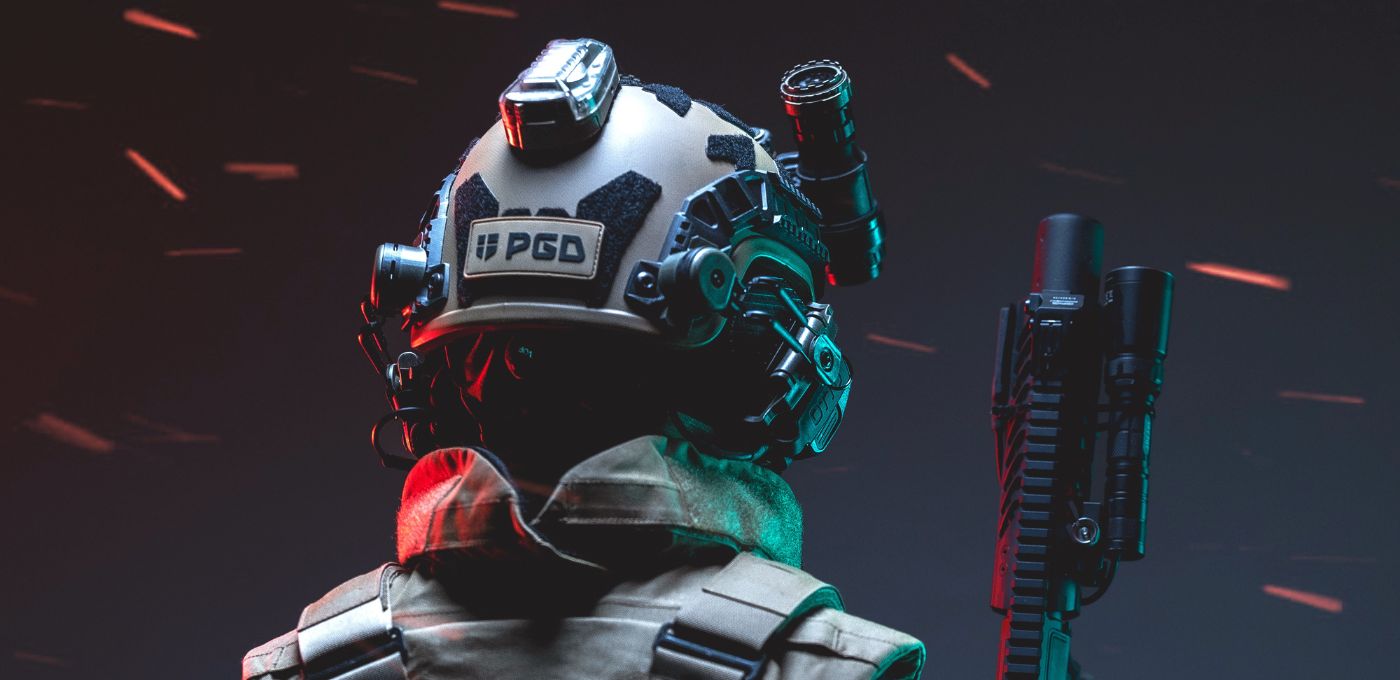
And yet, here’s the kicker: not every expensive helmet is automatically better. Legacy brands often tack on a premium because of their name, while newer players – like PGD with the PGD ARCH GEN3 ballistic helmet – manage to combine tested protection, comfort, and modular features without inflating the price. Whether you’re a procurement officer outfitting a department, a contractor gearing up for work, or a civilian just trying to protect your noggin, understanding what actually drives the cost of a ballistic helmet can save you a lot of cash – and maybe even some frustration.
So, yes… The price of bulletproof helmets is influenced by advanced raw materials, complex manufacturing, and stringent NIJ testing processes. Factors like protection level, modularity, and features also impact cost. Understanding the true cost breakdown helps you make smart decisions and secure reliable ballistic protection without overspending.
Understanding what actually shapes the cost of ballistic helmets can help you make a smarter purchase – whether you’re equipping a tactical unit, a police department, or investing personally in protection. The military helmet cost, for example, isn’t arbitrary; it reflects a blend of science, engineering, regulation, and market forces.
Several core factors affect the kevlar helmet cost or the price for any high-quality ballistic helmet:
Breaking down the sticker price of a bulletproof helmet reveals several hidden aspects:
Current industry trends play a significant role in determining the tactical helmet price.
Key market forces include:
Prices vary a lot between different helmets and brands. Watch the YouTube video from Thin Line Defense Co where they talk about price versus what you get for your money when looking at our PGD ARCH GEN3 ballistic helmet.
It’s not marketing hype: the realities of quality ballistic helmet production create high entry barriers. Here’s why that kevlar helmet cost or combat helmet cost seems steep – but reasonable given the context.

The backbone of every true ballistic helmet is its composite shell. These are almost always made of:
Why are these materials expensive?
Material cost – sometimes up to half the helmet price – is a major factor that affects ballistic helmet price year after year.
The cost of ballistic helmets is directly impacted by compliance with the National Institute of Justice (NIJ) standards, particularly for U.S. buyers. Here’s how:
All of this is baked into the retail price – ensuring that when you pay for a tested helmet, you’re truly investing in verified protection.
It is one of the biggest hidden costs. The sheer number of items that must be provided for testing. Under NIJ Standard 0101.07, the sample count is not small – for a single helmet or armor model in a single size, a manufacturer may need to produce anywhere from 36 to 48 complete units just for the initial test program. Each of these is a fully functional, production-grade product, not a stripped-down prototype. Once submitted, they are destroyed in the process: some are submerged in water, others are tumbled in mechanical drums, while others are exposed to cycles of extreme heat and cold before ever being shot.
From there, each conditioned sample is fired upon multiple times with precisely controlled ammunition. Separate samples are set aside for backface deformation measurement, where calibrated Roma Plastilina clay is used to assess blunt trauma, and others are used for penetration testing at specific impact locations. And the process doesn’t end with passing the initial certification – NIJ also requires follow-up or “lot testing”, meaning that manufacturers must regularly send additional units from production batches to accredited labs to confirm consistency over time.
For a small or mid-sized company, this requirement represents a massive upfront expense. If each helmet costs several hundred dollars to manufacture, simply providing the required number of units for testing can run into tens of thousands of dollars in lost product, before factoring in lab fees, ammunition, technician time, and certification paperwork. It’s a sacrifice that directly impacts the final retail cost – and one of the main reasons why the bulletproof helmet price on the market feels so high compared to non-certified gear.
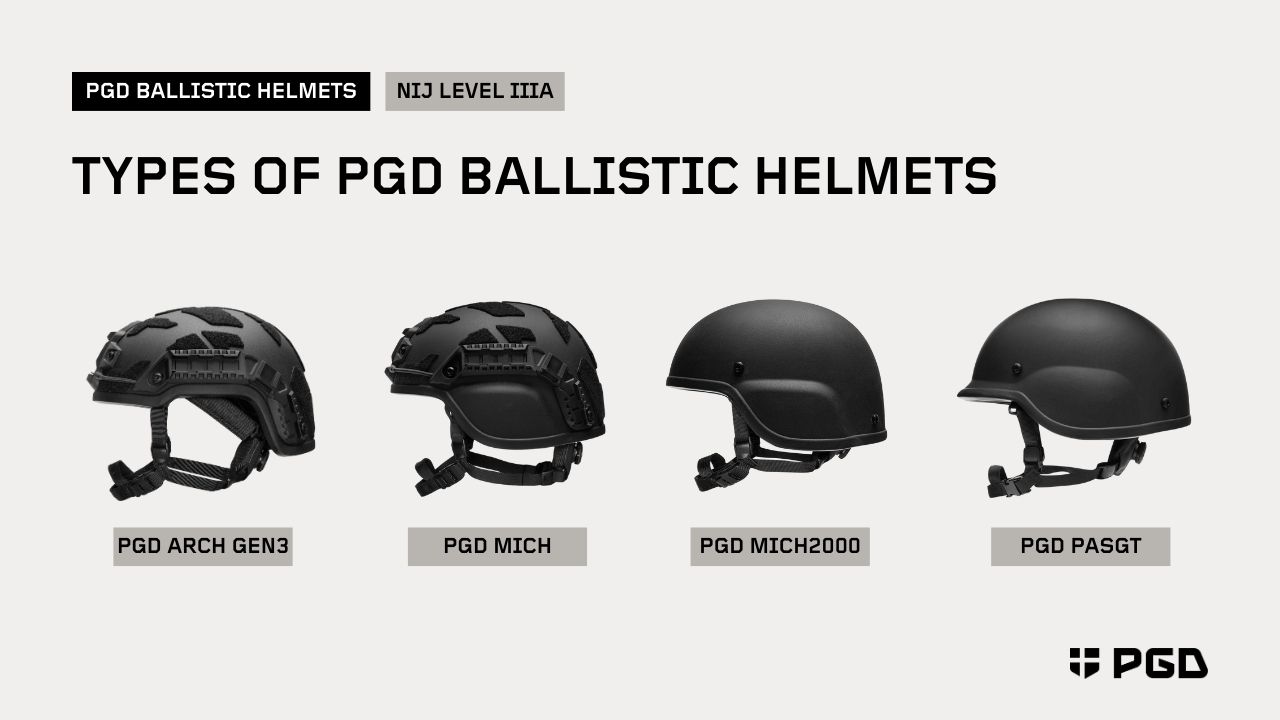
We offer four different ballistic helmets, all tested to NIJ Level IIIA, but each designed with a different user in mind.
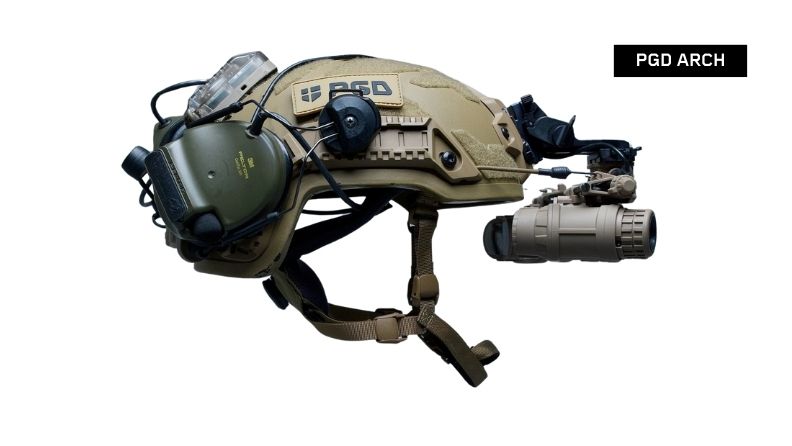
The PGD ARCH stands out as a modern high-cut helmet, built for modularity and outfitted with accessories such as side rails, an NVG mount, and Velcro panels – making it mission-ready straight out of the box. In contrast, models like the PGD MICH 2000 deliver the same reliable ballistic protection but in a more stripped configuration, without extra accessories, keeping the focus on core coverage and durability. This gives buyers the flexibility to choose between fully equipped, feature-rich setups or more streamlined, budget-conscious options – all without compromising ballistic performance.
Modern tactical helmets are more than just a shell; they’re modular platforms designed for adaptability:
Ultimately, these features not only justify a higher price by improving mission flexibility – they also ensure that the helmet can serve multiple roles over its lifespan.
Nobody likes dropping serious cash on gear, especially when it feels like you could buy a used car for the same price as a helmet. It’s the kind of purchase that makes you stop and wonder, “Am I paying for protection, or just an expensive head ornament?” But when bullets and fragments are part of the equation, the question of whether a ballistic helmet is worth the investment isn’t just about dollars – it’s about walking away from a bad day in one piece.
When budgets are tight, it’s fair to ask: is the higher cost of a quality ballistic helmet justifiable? Here’s how to weigh real-world benefits against upfront price.
The primary reason professionals and civilians accept a higher combat helmet cost is non-negotiable: operational safety and reliability. A ballistic helmet isn’t just a piece of gear; it’s last-resort protection against lethal threats:
In life-or-death situations, a price difference of a few hundred dollars becomes trivial compared to potential injury, fatality, or mission failure.
Saving money upfront can cost you more down the line if helmets wear out or become obsolete:
Legacy helmet brands often carry premium pricing, justified by long-standing contracts and brand reputation. But do these higher prices always bring commensurate value?
Modern manufacturers such as Protection Group Denmark are shifting the landscape:
Today, it’s entirely possible – and common – for agencies and individual users to acquire high-end, guaranteed protection without excessive spend, as exemplified by the PGD ARCH GEN3 Ballistic Helmet.
Let’s have a look at it!
Quality protection doesn’t need to break the bank. Procurement professionals and tactical buyers can leverage several proven strategies to cut helmet costs without sacrificing safety or compliance.
For regional or national organizations, partner with other agencies for joint tenders – demonstrably reducing the tactical helmet price.
With systems like the PGD ARCH GEN3, this modular approach becomes a practical core strategy for modern gear management and cost control.
Regularly explore vendor offerings to uncover seasonal deals or lifecycle upgrade incentives that may not be publicly advertised.
Cutting costs shouldn’t mean cutting corners. Here’s how to identify the best-value helmet – matching your operational, protection, and financial requirements.
Before committing to any ballistic helmet purchase, consider:
Answering these questions ensures you recognize true cost – beyond just the MSRP. Want to keep exploring? Visit the PGD Blog and discover more insights and guides.
For those looking for a proven, accessible alternative to legacy helmets, the PGD ARCH GEN3 Ballistic Helmet delivers genuine high-end features at an extremely competitive price point.
Here’s why it stands out:
Whether you’re equipping a department or an individual kit, the PGD ARCH GEN3 offers the rare mix of certified security, ergonomic utility, and accessible pricing.
Want to know what real users think of our helmets? Check out our “What They Say” page.
Trust is paramount: only buy from verified suppliers who rigorously test, stand behind, and warranty their products.
For agencies, procurement professionals, or civilian users, take the time to review specs, certifications, and supplier reputation before purchase. Request quotes, compare features, and contact the supplier for bulk pricing or agency programs.
We wrote another article “Discover the highest rated ballistic helmet: Independent lab tests & top brand reviews” that might be interesting to read when looking for some comparison between different helmet brands.
Ready to secure uncompromising protection at a sensible price?
Compare ballistic helmet options, request detailed quotes, or contact us today to discuss the PGD ARCH GEN3 Ballistic Helmet for your team or personal use. For full specs, current pricing, and expert support, visit Protection Group Denmark now.
It’s not marketing hype: the realities of quality ballistic helmet production create high entry barriers. Here’s why that kevlar helmet cost or combat helmet cost seems steep – but reasonable given the context.
Materials such as Kevlar, aramid, and UHMWPE are costly to manufacture due to limited supply chains, energy-intensive processes, and strict handling requirements. Material cost – sometimes up to half the helmet price – is a major factor year after year.
In addition, compliance with NIJ testing and certification standards incurs significant costs. Helmets must be randomly destroyed for testing, labs charge substantial certification fees, and thorough record-keeping adds to labor requirements. The upfront development costs for new models can also be very high.
Modern designs with modular features, upgraded pads, accessory rails, and ergonomic improvements further increase both material and manufacturing costs.
All these elements combine to make ballistic helmets expensive, ensuring that when you pay for a certified helmet, you’re truly investing in verified protection.
The cost of raw materials directly affects ballistic helmet pricing, as helmets are almost always made from Kevlar (aramid), UHMWPE, or proprietary aramid blends. These fibers are expensive due to limited global suppliers, energy-intensive processing, and strict environmental controls. Material cost can represent up to half of the helmet’s price.
NIJ testing and certification also add substantial expenses. Helmets must be destructively tested for certification and ongoing production – requiring larger manufacturing runs and absorbing the cost of wasted product. Accredited labs charge significant fees for each certification round and ongoing verification. Maintaining documentation and compliance records is labor-intensive. Achieving initial NIJ certification for a new helmet model can cost over six figures before any products are sold. All of these factors are incorporated into the final retail price of the helmet.
Departments can save on ballistic helmet purchases by using several strategies:
– Centralized and cooperative purchasing: Pooling purchasing power across departments or agencies to negotiate better bulk pricing and leveraging volume for lower per-unit rates.
– Shared specifications: Aligning technical requirements among teams enables standard orders and drives down costs due to manufacturing scale.
– Framework agreements: Establishing long-term contracts with vendors for more favorable pricing and flexible delivery.
– Standardization: Adopting uniform helmet models across units simplifies logistics and training, enabling bulk deals and easier inventory management.
– Modular replacement: Using helmet systems with replaceable parts (such as pads and retention straps) extends helmet life and reduces full replacement costs.
– Leveraging grants: Utilizing federal, state, or private grants designated for tactical equipment upgrades, many of which cover NIJ-certified helmets.
– Trade-in and vendor programs: Taking advantage of programs where old helmets can be traded in for credit towards new purchases or enrolling in preferred vendor programs for loyalty rewards, extended warranties, or support.
These approaches help departments cut costs without sacrificing safety or compliance.
Protect what matters.
We’ve moved our U.S. sales
Protection Group Denmark products are now available in the United States exclusively through our official distributor, Colorado Gun Fighter. This store is no longer accepting new orders — please continue your purchase there.
Already placed an order with us? Don’t worry — all existing orders will be fulfilled as normal.
Shop at Colorado Gun Fighter