From desert heat to arctic cold: Environmental durability of modern ballistic helmets
Ballistic helmets don’t get spa days – they get shot in the face with 9mm rounds, dropped onto anvils, and baked in ovens hot enough to roast a Thanksgiving turkey. It’s not glamorous, but it’s the only way to prove that a helmet will actually do its job: keeping the most important piece of equipment you own – your head – intact.
Unlike your childhood bike helmet, which might have been tested by a kid jumping off a curb, ballistic helmets are subjected to some of the strictest testing protocols on the planet. Bullets, fragments, blunt impacts, extreme temperatures – if it can happen in combat, the helmet has to survive it first in the lab. Because when the worst day comes, you don’t want your headgear to behave like a piñata.
So yes… Ballistic helmets undergo highly controlled testing to verify their protection against real-world threats. U.S. standards like NIJ and military protocols require helmets to withstand specific handgun rounds and strict testing procedures. Penetration and backface deformation measurements are critical, with pass/fail criteria grounded in objective, lifesaving principles. Detailed protocols ensure not just lab validation, but also survival in combat scenarios.
Understanding these procedures is essential for buyers and professionals wanting proof that their gear performs when it matters. Let’s have a closer look!
When your life or the lives of your team are on the line, choosing the right protective gear is essential. Ballistic helmets, the cornerstone of head protection for law enforcement, military, and security professionals, are put through testing procedures to ensure their reliability under extreme conditions.
But how are ballistic helmets tested?
Which standards are actually relevant, and what do all those numbers mean for survivability in the field?
Don’t worry, we got your back.
The primary purpose of ballistic helmet testing is to objectively confirm that a helmet can resist life-threatening threats encountered in the real world. Testing standards for ballistic helmets in the U.S. focus on withstanding specific ballistic impacts, minimizing blunt force trauma, and offering protection against fragmentation risks. Through controlled laboratory procedures, decision-makers gain confidence that the gear will perform when it matters most – during armed encounters, active shooter responses, and battlefield engagements.
Ballistic helmet testing standards are developed and maintained by authoritative organizations.
In the United States, the National Institute of Justice (NIJ) publishes widely recognized standards for ballistic-resistant equipment, particularly the NIJ Standard 0106.01. Globally, the North Atlantic Treaty Organization (NATO) standard STANAG 2920 and the ASTM International organization also define key benchmarks. These bodies emphasize independent laboratory validation, clearly defined testing protocols, and transparency in performance claims.
Professionals responsible for procurement often have pressing questions:
By digging into the processes and standards behind ballistic helmet testing, you can separate marketing claims from proven life-saving performance.
Before diving into the details, let’s see this helmet take some serious punishment.
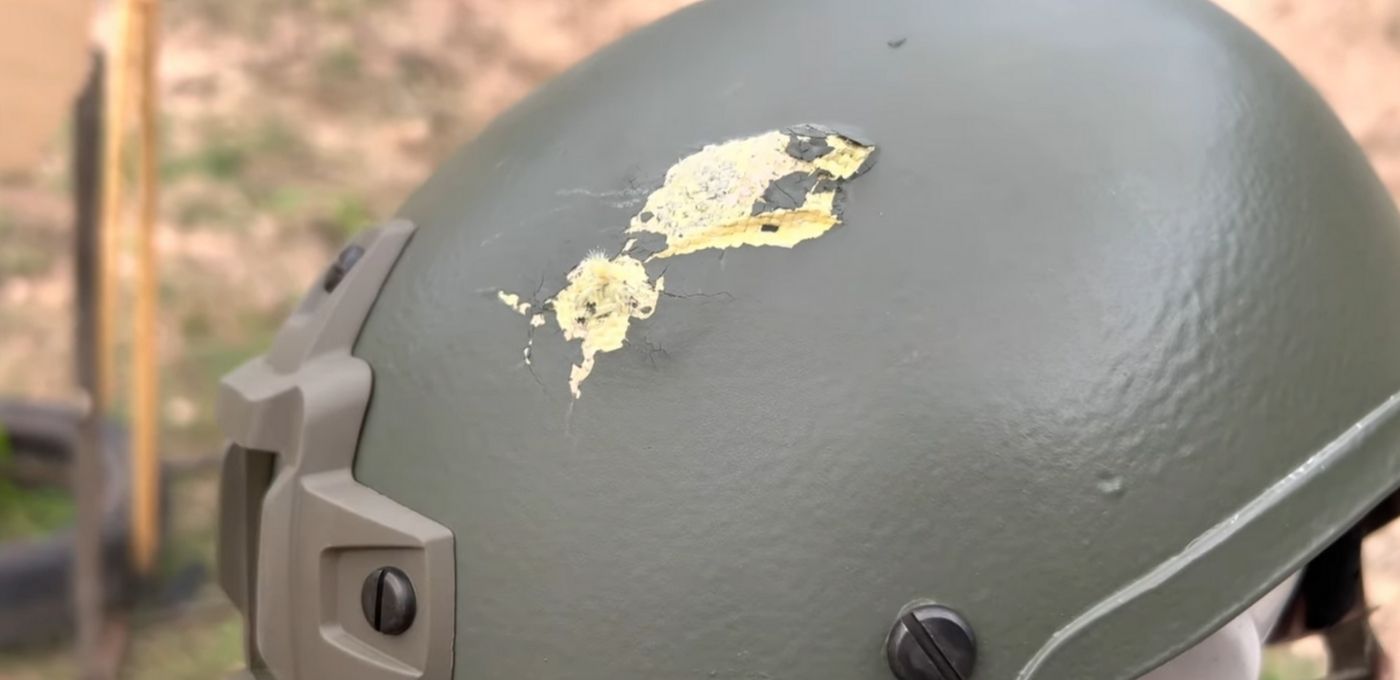
So imagine this: a group of folks at PVGIO have a brand new PGD ARCH GEN3 helmet and decide to see just how tough it is. Because – why not? If you’re buying something for your head, you want to know it truly laughs in the face of danger (or at least flinches very little).
Watch the video below.
.22 LR Supersonic & Subsonic Shots
9mm (1-9×21 / 1-9×19)
.300 Blackout (SuperSonic)
The testers are clearly impressed. They call the helmet “really fantastic” (yes, we can see the spark in their eyes). More surprisingly, they think it’s even more comfortable than an OpsCore helmet. If you know OpsCore, that’s giving high praise. It’s like comparing a well-broken-in moccasin to a cloud.
Overall: “Great helmet for your money.” Which in ballistics talk means: decent price, solid protection, you won’t feel like you bought a plastic bucket diplomas your head.
If helmets were pets, the PGD ARCH GEN3 just proved it’s not only the guard-dog you trained, it’s the one that took karate lessons in its spare time. The .22s are like someone flicking it with small pointed sticks – “meh.” The 9mms are more serious but still just firm pushes. The .300 Blackout is the one big punch that draws blood (well, half-penetration), but the helmet still stands tall, maybe muttering, “You really thought you’d get through?”
So if you’re considering wearing one of these into a situation where bullets might RSVP “yes,” this helmet seems to reply, “I’ll bring a shield (and maybe some comfortable padding).”
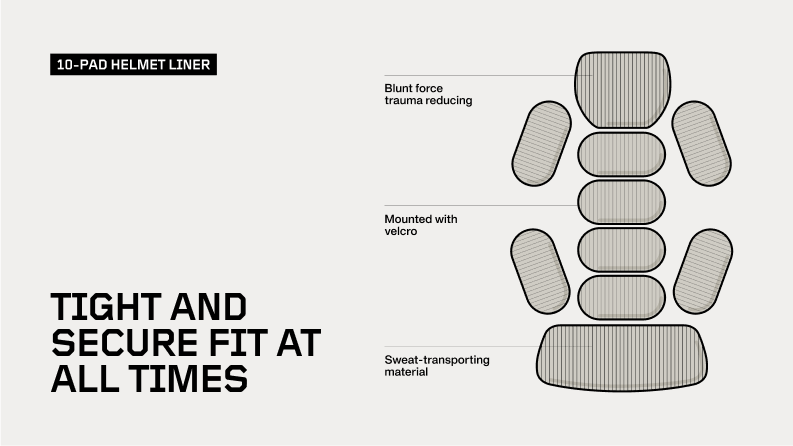
The padding responsible is none other than our widely used PGD 10-pad helmet liner.
And from the range, we shift to the lab – let’s talk testing standards.
The credibility of a ballistic helmet rests on its adherence to robust standards. Understanding these standards – and how they compare globally – helps buyers and operators make informed choices.
The National Institute of Justice (NIJ) sets the benchmarks for ballistic resistance in the United States. The current relevant specification for helmets is NIJ Standard 0106.01, with the highest protection level for soft armor being Level IIIA. Ballistic helmet penetration testing under NIJ IIIA aims to replicate real-world handgun threats using two critical ammunition types:
The helmet is mounted on a standardized headform and shot at specified locations, including the crown, sides, back, and front. To pass, the helmet must:
NIJ IIIA testing procedures emphasize consistent, repeatable, and severe “worst case” scenarios, ensuring the helmet’s design delivers life-saving results, not just theoretical protection.

For military buyers, STANAG 2920 helmet testing is a key reference. This NATO standard specifically addresses fragmentation testing for helmets. Unlike NIJ, which centers on handgun threats, STANAG 2920 evaluates protection against fast-moving fragments typical of battlefield explosives:
STANAG 2920 helmet testing ensures that military helmets reliably reduce fatal head injuries from fragmentation, making it a critical reference point for any helmet worn in combat zones.
The most widely used ballistic helmet testing standards, such as NIJ and STANAG, differ in focus:
When comparing helmets, ensure that any product under consideration cites adherence to the appropriate ballistic helmet testing standards for your mission profile.
Understanding the precise steps used in testing clarifies what helmet test results really mean – and why they matter.
The heart of helmet validation is penetration testing. Here’s a breakdown of how these procedures work, with a focus on the NIJ IIIA standard:
To meet NIJ IIIA pass criteria:
This controlled approach gives buyers objective, verifiable assurances of a helmet’s protection level.
While preventing penetration is paramount, trauma from non-penetrating impacts is still dangerous. Through the ballistic helmet blunt impact test, labs evaluate how much energy transfers to the wearer’s head during a severe blow:
Repeated across various regions (front, back, sides), these tests ensure that helmets protect not just against bullets, but also against concussive forces – critical in assaults, vehicle accidents, or explosive blasts.
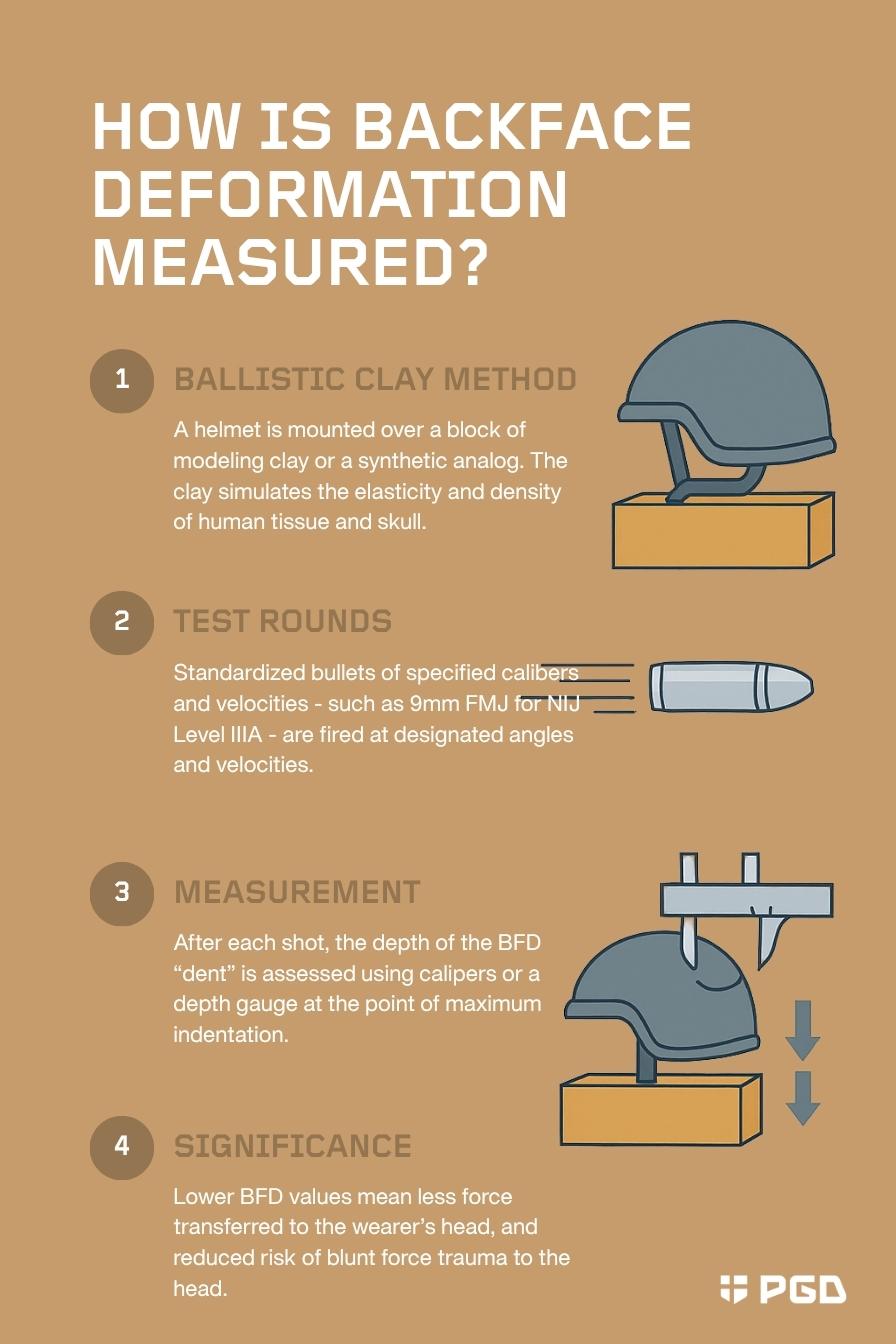
For those who want the technical specifics on backface deformation, see our dedicated article “The critical role of backface deformation in ballistic helmet protection” on our PGD Blog.
Beyond handguns, real-world threats include explosive fragmentation. That’s where fragmentation testing for helmets – including V50 testing – comes in:
V50 testing not only supports military helmet purchasing but also allows law enforcement agencies to benchmark product quality in the context of blast or shrapnel risk.
All other metrics aside, stopping a projectile from entering the skull is the defining standard in ballistic helmet testing.
Why is this stressed so heavily?
Data from decades of field experience shows a clear distinction in outcomes:
That’s why contemporary standards drive home penetration resistance as the ultimate pass/fail criterion:
In short: ballistic helmet penetration testing is why ballistic helmet testing matters most.
While penetration testing simulates the “worst day” handgun encounter, real-life threats will always vary. V50 results from fragmentation and STANAG 2920 helmet testing give buyers a way to compare helmets in terms of general resilience, especially for unpredictable blast and shrapnel exposure.
Using both penetration and V50 data, professionals gain a fuller picture of ballistic helmet protection.

Understanding test results requires precise definitions:
Savvy buyers scrutinize testing data for:
If a helmet manufacturer cannot provide full documentation, confidence in their product’s life-saving potential should be questioned.
Meeting the letter of a testing standard is only part of the story. Survivability in the real world – and responsible manufacturer validation – set proven helmets apart from mere marketing claims.
Validated ballistic helmet testing standards have real combat and law enforcement results to back them up. Considerable after-action data underscores that:
Modern procurement choices focus on helmets demonstrating both lab-proof and field-confirmed survivability.
Credible manufacturers always turn to independent, accredited ballistic labs for testing. What does this mean for you?
Before trust is granted, buyers should insist on reviewing complete, recent lab reports verifying a helmet’s compliance with all relevant ballistic helmet testing standards.
With so many products and claims on the market, prioritize these factors when making your selection:
In an environment where lives are at stake, only the most rigorously validated helmets should ever make it into the field. Here’s how to find them – and a recommendation for those seeking ultimate protection.
Protect yourself and your team by committing to review verified ballistic helmet test data before you buy. Scrutinize full laboratory reports, paying attention to:
Remember: transparency is the mark of a manufacturer with nothing to hide and everything to prove.
Among modern ballistic helmets, the PGD ARCH GEN3 Ballistic Helmet sets the benchmark for transparent, independently verified protection:
Demand a product that not only passes the lab but is also trusted by professionals in real-world scenarios. The PGD ARCH GEN3 exemplifies what it means to combine best-in-class ballistic helmet testing standards with complete transparency.

When you buy a helmet, you’re investing in survival – not just specifications. Protection Group Denmark is committed to:
Choose Protection Group Denmark for proven, independently validated, and truly combat-ready head protection.
The world of ballistic helmet testing can seem opaque, but the science behind it – and the results it delivers – are remarkably clear. Informed professionals and protective gear buyers should demand rigorous evidence of NIJ IIIA penetration protection, V50 fragmentation defense, minimal backface deformation, and complete transparency in testing protocols. Only helmets backed by such proven procedures can be trusted to save lives, whether in the line of duty or on the battlefield.
Review verified ballistic helmet test data before you buy.
Explore the PGD ARCH GEN3 Ballistic Helmet for proven performance.
The National Institute of Justice (NIJ) sets the benchmarks for ballistic resistance in the United States. The current relevant specification for helmets is NIJ Standard 0106.01, with the highest protection level for soft armor being Level IIIA.
Ballistic helmets undergo highly controlled testing to verify their protection against real-world threats. For NIJ IIIA standard, the helmet is mounted on a standardized headform and shot at specified locations with 9mm FMJ and .44 Magnum SJHP rounds. To pass, the helmet must resist complete penetration of the projectile and maintain a backface deformation of less than 25mm. Additional tests include blunt impact tests (drop tests measuring g-force and deformation) and V50 fragmentation tests (firing fragment-simulating projectiles to determine the velocity at which 50% penetrate).
Combat helmets typically undergo several tests, including: ballistic helmet penetration testing (using specified rounds at vulnerable points), blunt impact tests (drop tests to measure energy transfer and acceleration), and V50 fragmentation tests (determining average velocity at which 50% of fragments penetrate, as per STANAG 2920). These tests assess resistance to bullets, blunt force trauma, and fragmentation threats.
The V50 ballistic helmet testing process involves shooting replicate samples at progressively higher speeds to find the average velocity at which exactly 50% of fragments penetrate. The V50 value (in meters per second) is published as a key comparative figure. Higher V50 indicates better overall protection, especially for unpredictable blast and shrapnel exposure. Military and tactical teams favor a higher V50 (>650 m/s) for fast-moving fragment threats.
While preventing penetration is paramount, trauma from non-penetrating impacts is still dangerous. Through the ballistic helmet blunt impact test, labs evaluate how much energy transfers to the wearer’s head during a severe blow. The helmeted headform is dropped onto a steel anvil and sensors measure peak acceleration and deformation. These tests ensure that helmets protect not just against bullets, but also against concussive forces which are critical in assaults, vehicle accidents, or explosive blasts.
Protect what matters.
We’ve moved our U.S. sales
Protection Group Denmark products are now available in the United States exclusively through our official distributor, Colorado Gun Fighter. This store is no longer accepting new orders — please continue your purchase there.
Already placed an order with us? Don’t worry — all existing orders will be fulfilled as normal.
Shop at Colorado Gun Fighter