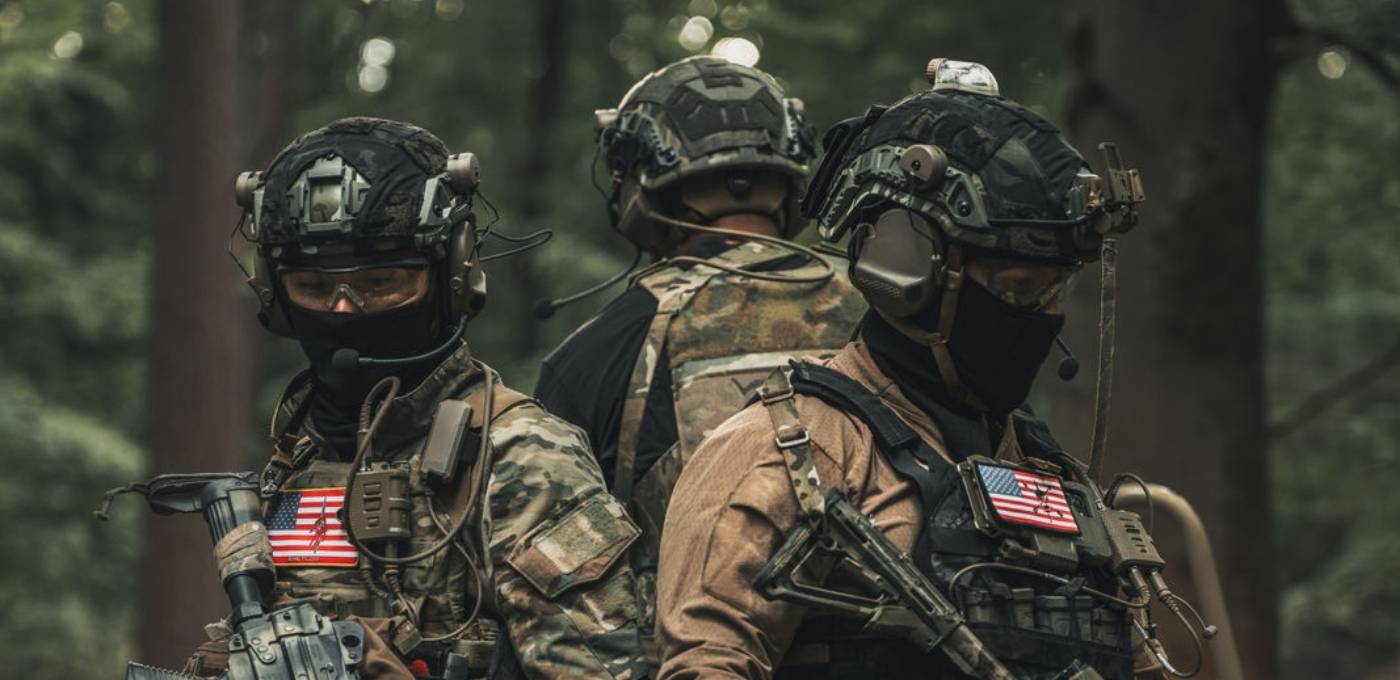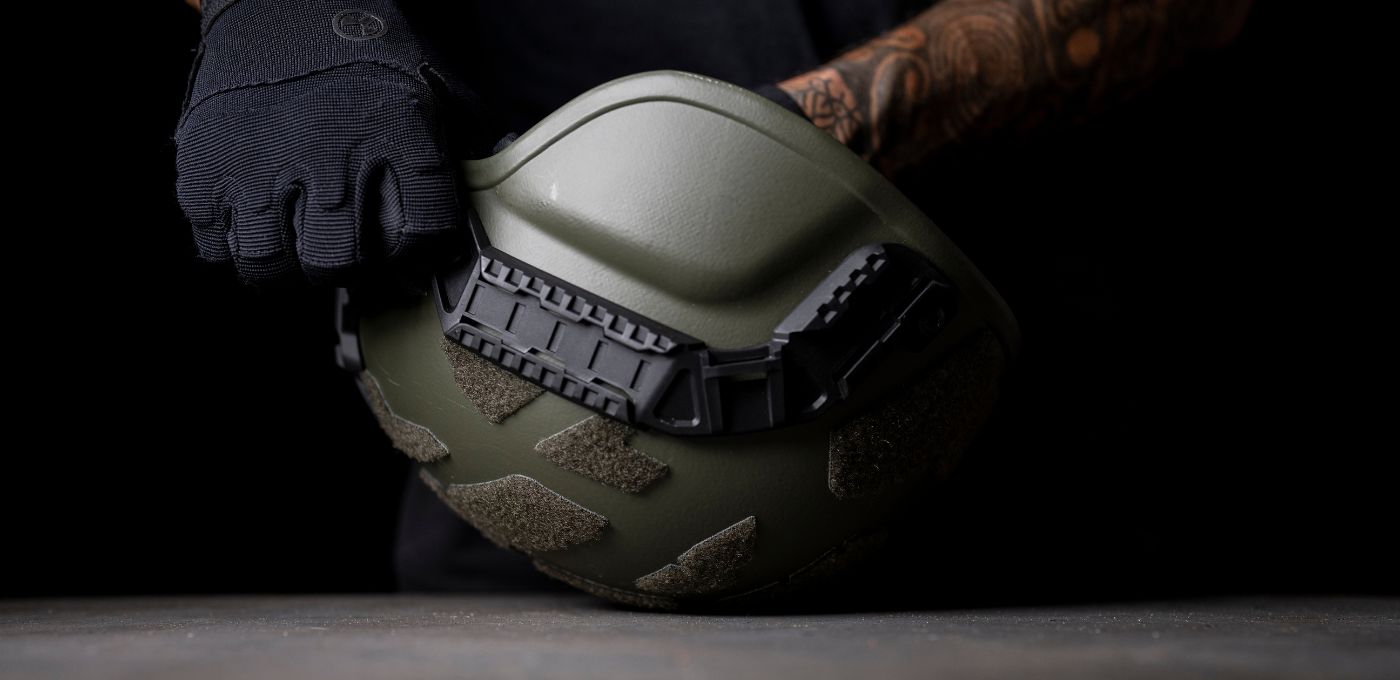
Let’s look at the PGD 10-pad system for tactical helmets
Listen, America… Not all helmets are created equal. Sure, a bump helmet will keep your noggin safe when you smack it on a door frame or take a tumble during training. But if someone starts throwing lead your way, that lightweight plastic bucket might as well be a colander. On the flip side, a ballistic helmet will shrug off pistol rounds and fragments, but it’s heavier, pricier, and probably overkill if your biggest daily threat is a GoPro falling off the mount.
Think of it like this: a bump helmet is your bicycle helmet for the tactical world, great for the ride but not for the gunfight. A ballistic helmet? That’s your body armor for the brain. Before you drop cash on either one, you need to know exactly what you’re up against – because choosing wrong could turn into a very bad day at the office.
If you’re here to get the facts, you’re in the right place – just read on.
Bump helmets and ballistic helmets both serve vital protective roles, but they have distinct purposes and construction. Bump helmets are optimized for impact protection, lightweight comfort, and training or recreational environments; they do not offer bullet or fragment resistance. Ballistic helmets on the other hand, are engineered to stop bullets and fragmentation, making them essential for military, law enforcement, and security roles. Materials, weight, certification standards, and modular features also differ sharply. Understanding when to choose each and the implications on weight, protection, and cost is crucial – especially for tactical users.
While we here at Protection Group Denmark focuses on thoroughly tested ballistic helmets like our PGD ARCH GEN3, users must match helmet type to their real mission threats. And we want to inform you guys!
When comparing a bump helmet vs ballistic helmet, it’s crucial to understand their core differences before making the right call for mission and safety needs. The discussion extends well beyond “impact vs bullet,” involving unique materials, ratings, and use cases.
We start this explanation with some YouTube time – courtesy of Blue Jean Operator, who doesn’t pull any punches when it comes to gear talk. In one of his most honest helmet takes yet, he dives straight into the bump vs. ballistic helmet debate with a bold opener: “Bump helmets kinda suck.”
And while it might sound harsh, he makes a solid point. See the video below – it’s 18 minutes, so get comfortable, grab a drink (or some popcorn), and enjoy the ride.
So yeah, let’s talk about it.
In his signature blunt and brutally honest style, Blue Jean Operator lays it out clearly in this video: “Bump helmets kinda suck.” More precisely, he explains that while bump helmets serve a purpose, they’re often bought for the wrong reasons. Designed to protect against blunt impacts – like hitting your head on a doorway or taking a spill during training – bump helmets are typically made from lightweight plastics, similar to skateboard helmets. In fact, early versions were skateboard helmets, retrofitted for tactical use by units like Delta during the Black Hawk Down era. Back then, it made sense. Ballistic helmets were heavy, expensive, and less accessible. But today, with modern high-cut ballistic helmets offering comparable comfort and full accessory compatibility, there’s little reason to settle for plastic.
As Blue Jean Operator points out, serious users often buy bump helmets just to run night vision or comms without dropping $1,000+ on a proper ballistic lid. He admits he did the same – until he asked the critical question: “If I actually needed this gear in a real threat scenario… wouldn’t I want something that stops bullets?” That thought process led him (like many others) to us here at Protection Group Denmark. Our PGD ARCH GEN3 ballistic helmet delivers verified protection against ballistic and fragmentation threats, while staying lightweight, modular, and affordable.
The video breaks it all down: real-world threats call for real-world protection. If your helmet is more than just a mounting platform, it should do more than stop a bump.
But, let’s move on and look at the differences.
Bump helmets are specifically designed to protect against blunt force trauma – think falls, bumps into hard objects, or accidental drops. Their primary use cases include:
On the other hand, ballistic helmets are engineered to provide protection against firearm projectiles and fragmentation. Common use cases for ballistic helmets include:
Know the difference: Impact vs bullet – choose confidently. In scenarios where there is any plausible risk of gunfire or explosives, a bump helmet simply is not an option.
The most fundamental distinction in the ballistic helmet vs bump helmet debate is the level and nature of protection. This difference is also strictly defined by test results and official standards.
Bump helmets:
Ballistic helmets:
| Feature/standard | Bump helmet | Ballistic helmet |
|---|---|---|
| Intended protection | Blunt impacts/bumps | Bullets + fragments + impacts |
| Certification/testing | EN 397, EN 12492 | NIJ Level IIIA, V50 fragmentation |
| Weight | 400 – 800g (typical) | 1.2 – 1.5kg (ballistic; varies by cut) |
| Cost range | $50 – $300 (typical) | $400 – $3,000+ |
| Typical users | Training, SAR, sports | Military, law, tactical security |
Bump helmets are crafted from lightweight plastics such as polycarbonate, ABS, or high-grade composites. The emphasis is on:
Ballistic helmets are built with advanced fibers such as aramid (Kevlar®), UHMWPE (ultra-high molecular weight polyethylene), or special composites. Their construction focuses on:
Each helmet type is engineered for mission requirement: bump for lightness, ballistic for real-world, tested protection from gunfire and explosion threats.
Weight, comfort, and the ability to attach accessories directly influence operational effectiveness – and these factors play out differently between bump vs ballistic helmet choices.
Bump helmets are notably lighter, typically weighing 400 to 800 grams (0.9 to 1.8 lbs). This makes them easy to wear all day for non-threatening environments and reduces fatigue during training, climbing, or recreational use.
Ballistic helmets, such as those offered by us at Protection Group Denmark, are heavier, usually ranging from 1.2 to 1.5 kg (2.6 to 3.3 lbs), depending on shell size and cut (high cut/ARCH, low cut/MICH). Despite their extra mass, ballistic helmets are optimized for operational comfort – required when gear must be worn for hours under stress.
Many modern bump and ballistic helmets share external features for accessory mounting, including:
However, ballistic helmets – especially from brands like Protection Group Denmark – are specifically built to retain ballistic integrity even after being drilled or fitted with rails and hardware. Bump helmets offer accessory options but lack the ballistic safety backbone – choose accordingly for your mission.
Bump helmets:
Ballistic helmets:
For both, the right suspension improves comfort, especially when mounting heavy devices or wearing hearing protection.
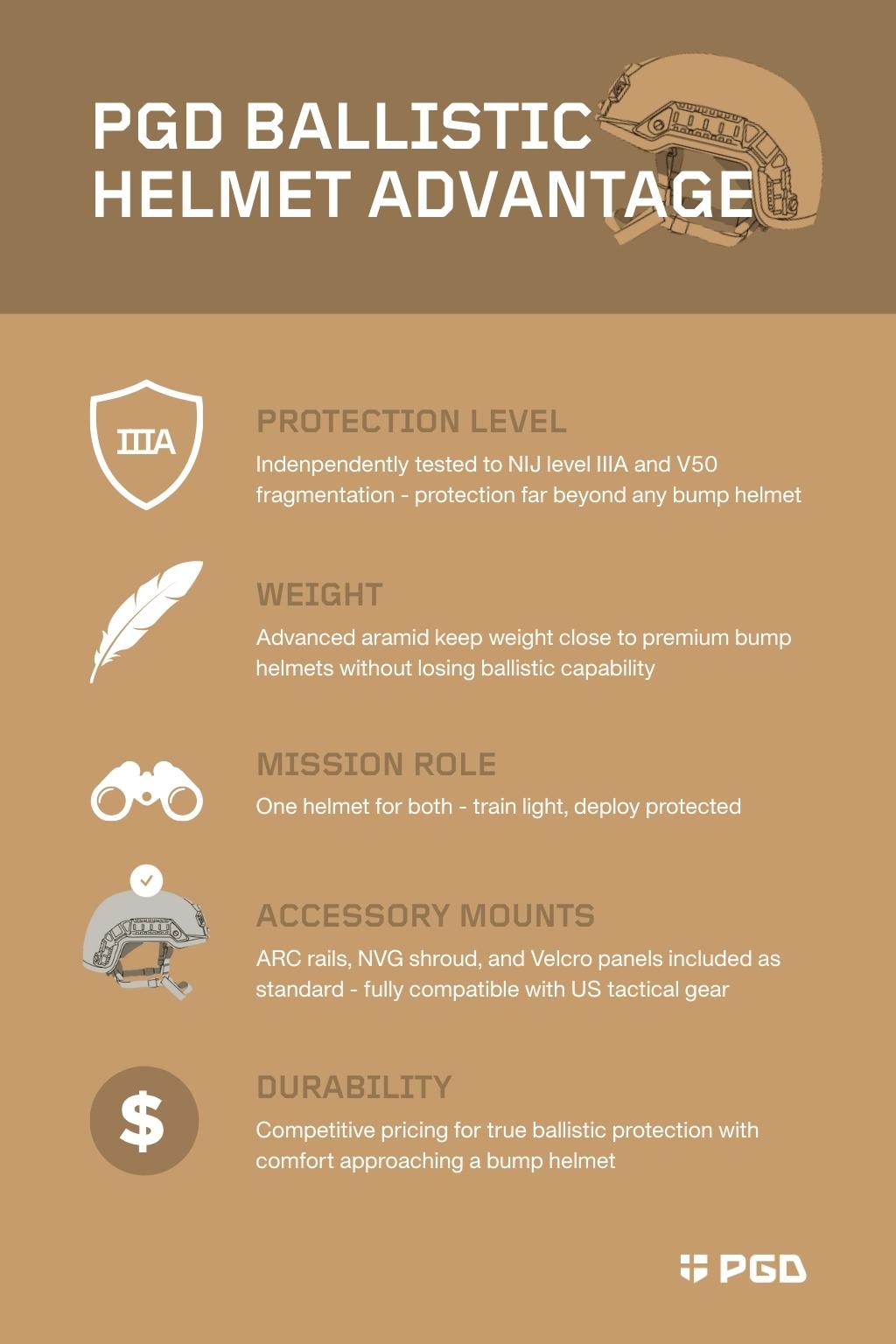
Take a look at the graphic below to see what sets us apart.
Now that we’ve covered the key differences between the two helmet types, let’s break down when – and why – you’d actually use each one.
With clear differences between ballistic vs. bump helmet options, the right choice really comes down to two things: the kind of danger you expect to face – and how much you’ve got in the gear fund after buying night vision and ammo.
If your biggest threat is bumping your head on the Humvee door or taking a spill during training, a bump helmet might do just fine. They’re light, they’re cheap, and they make you look cool at the range. But if there’s even a remote chance someone might be sending rounds your way, plastic just isn’t gonna cut it. That’s like bringing a Nerf vest to a gunfight. Sure, ballistic helmets cost more, but they also stop bullets – which feels like a fair trade.
Bottom line: if your mission involves live threats, you’ll want a helmet that can take more than just a hit from a tree branch. And if your mission doesn’t? Well hey, enjoy the breeze through those side vents and start saving up for the real thing.
Bump helmets are a practical fit for:
Ballistic helmets are mandatory for:
It’s not just about comfort: when bullets or explosives are possible, only a ballistic helmet will suffice.
When it comes to choosing between a bump helmet and a ballistic helmet, it all boils down to one core decision factor: what kind of threat are you actually facing? While both helmet types serve a purpose, they’re built for very different realities – and mistaking one for the other can have serious consequences. So before you buy, ask yourself:
If there’s even a slight chance of encountering ballistic threats – whether it’s gunfire, fragments, or blast pressure – the only acceptable answer is a ballistic helmet. Bump helmets simply aren’t made for that kind of punishment. They’re great for training, recreation, and low-risk environments, but they offer zero protection when rounds start flying.
On the other hand, if your day-to-day threats are more about hard knocks, accidental falls, or close-quarters clumsiness, a quality bump helmet gives you decent head protection, keeps your setup lightweight, and won’t drain your gear budget. In the end, it’s not about which helmet looks cooler or costs less – it’s about choosing the one that matches your mission and protects your life when it matters most.
Know the difference: impact vs. bullet – and choose confidently.
Now that we got those sorted out – protection, comfort, use cases, the whole shebang – let’s talk about the part that really stings: the damn price.
Because let’s be honest, nothing humbles a gear nerd faster than realizing that sweet high-cut ballistic helmet costs more than their first car. Bump helmets? Sure, they’ll save your wallet. You can snag one for the price of a dinner and a movie. But a legit ballistic helmet? That’s a “hide the credit card statement from your spouse” kind of purchase. Still, when the stakes involve flying lead and not foam darts, cutting corners on head protection starts to feel a little… dumb. So yeah, ballistic helmets are pricey – but so is brain surgery. Choose wisely.
Let’s look at it, shall we?
Bump helmet vs ballistic helmet cost: Bump helmets are much less expensive, often $50 – $300, reflecting their less complex (and non-ballistic) build. Ballistic helmets, with their cost-intensive materials and testing, range from $400 to over $3,000.
Consider these following things:
Weight your needs, risks, and mission profile honestly. See how the PGD ARCH GEN3 Ballistic Helmet delivers proven protection designed precisely for high-risk environments.
When you invest in a PGD ARCH Gen 3 ballistic helmet, you’re not just throwing money at another piece of tactical gear – you’re actually getting something for it. You’re getting a lightweight, high-cut helmet that’s been independently tested to NIJ Level IIIA and V50 standards – not just “claimed” protection, but verified performance. It’s modularity out of the box: NVG shroud, ARC rails, Velcro panels — all included, not add-ons. You’re getting European-made quality with all American powered materials, not a mass-produced mystery shell with questionable origins.
And most importantly, you’re getting real protection designed for real threats – bullets, frag, blasts – all at a price point that makes skipping the bump helmet entirely a pretty smart move.
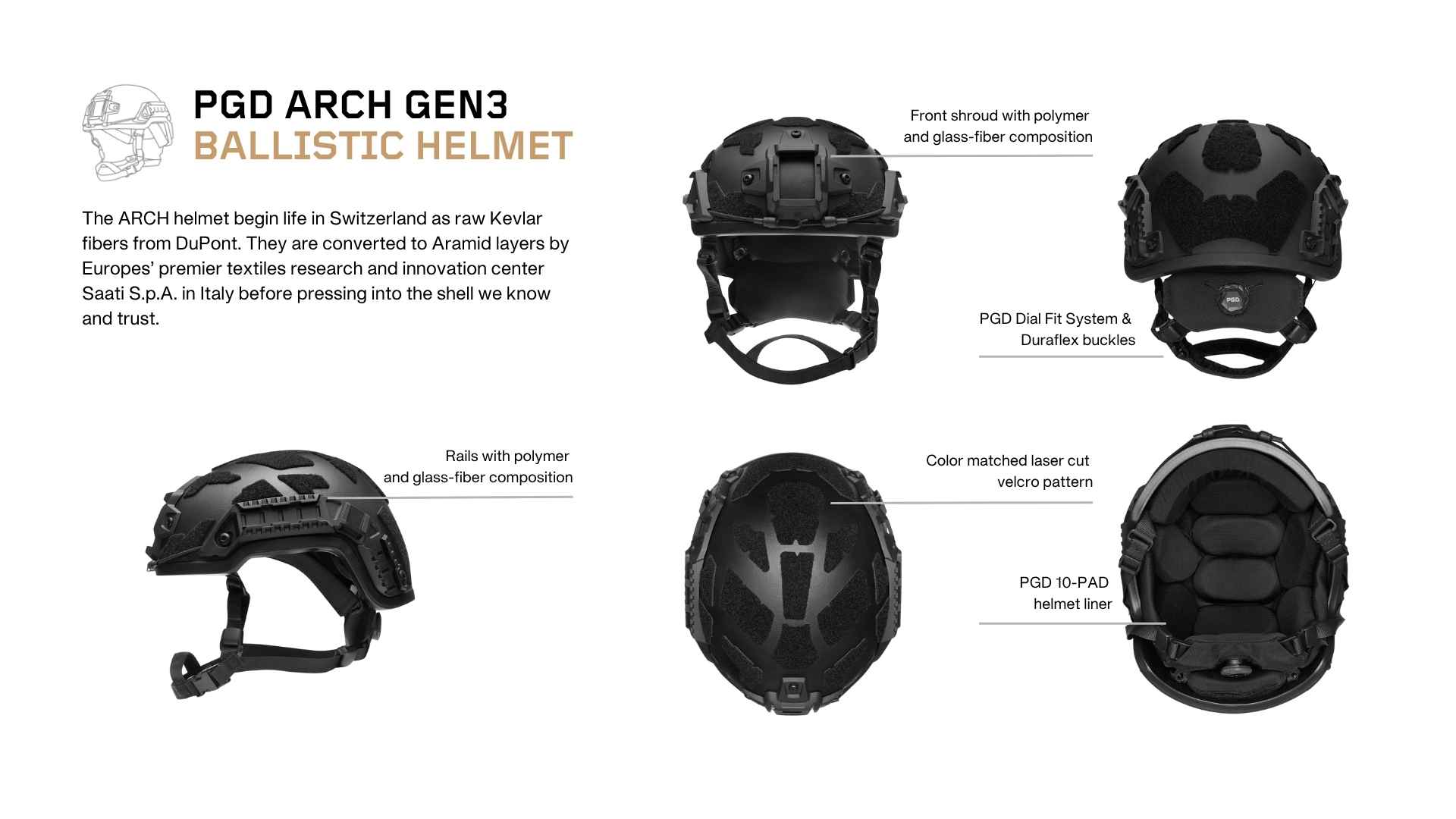
Not all ballistic helmets are created equal, and third-party testing makes all the difference. At Protection Group Denmark, we focus exclusively on producing independently verified, fully modular ballistic helmets – not bump helmets – with performance you can actually trust when things get real.
That said… we’re not denying we might develop a bump helmet one day. Let’s be honest – there’s clearly a market full of people who want to mount night vision, run drills, or just look cool at the range without catching frag in the face. So while our current lineup is all about serious protection, don’t be surprised if a PGD bump helmet shows up in the future – just don’t expect us to pretend it’ll stop a 9mm.
While we’re at it…. Jump on over and read “what they say” about our PGD ARCH GEN3 ballistic helmet.
The PGD ARCH GEN3 Ballistic Helmet exemplifies the standards that serious users should require. Unlike helmets marketed as “lab compliant,” every PGD helmet is tested by independent third parties.
If you’re seeking field-tested assurance, the PGD ARCH GEN3 is a real-world solution. Read our article where we explain what a level IIIA ballistic helmet really means.
Claims about “ballistic protection” are easy to make, but real helmet performance is dictated by international standards – and whether results are independently verified.
Protection Group Denmark ensures all ballistic helmets are third-party tested – never “lab-certified” by our own manufacturing lines.
If you need superior comfort, amazing protection, and one of the most modular platforms available, learn more about ballistic solutions from Protection Group Denmark.
If you’re looking for even more information, jump on over on our PGD blog where you can find a lot of articles on ballistic protection.
The most fundamental distinction in the ballistic helmet vs bump helmet debate is the level and nature of protection. This difference is also strictly defined by test results and official standards.
Bump helmets:
– Designed to pass impact resistance tests (such as EN 397, EN 12492, or similar)
– Offer zero ballistic (bullet or fragmentation) protection
– Typically rated for energy absorption from falls, hits, or dropped objects
Ballistic helmets:
– Tested to ballistic standards, including the National Institute of Justice (NIJ) Level IIIA or above
– Must stop designated rounds (commonly .44 Magnum, 9mm FMJ) and military-grade shrapnel
– Also go through V50 fragmentation resistance (measuring speed at which half the fragments will penetrate)
– Provide both ballistic and blunt impact protection
Bump helmets are a practical fit for:
– Clean training environments (simulations, low-impact exercises)
– Airsoft and paintball where only accidental bumps are a risk
– SAR teams working in urban/climbing contexts, not under threat of gunfire
– Cyclists, climbers, or construction trainers focused solely on head trauma from accident
Ballistic helmets are mandatory for:
– Military personnel facing live bullets or shrapnel
– Police/SWAT engaged in live tactical operations
– High-threat private security or bodyguards in hostile areas
– Journalists covering armed conflict zones
It’s not just about comfort: when bullets or explosives are possible, only a certified ballistic helmet will suffice.
If projectile threats are even remotely possible, the answer is always a ballistic helmet. If no such risk exists, a quality bump helmet saves weight and budget.
Bump helmets are notably lighter, typically weighing 400 to 800 grams (0.9 to 1.8 lbs). Ballistic helmets are heavier, usually ranging from 1.2 to 1.5 kg (2.6 to 3.3 lbs), depending on shell size and cut.
Bump helmets are much less expensive, often $50 – $300, reflecting their less complex (and non-ballistic) build. Ballistic helmets, with their cost-intensive materials and testing, range from $400 to over $3,000.
Bump helmets are notably lighter, typically weighing 400 to 800 grams (0.9 to 1.8 lbs).
Protect what matters.
We’ve moved our U.S. sales
Protection Group Denmark products are now available in the United States exclusively through our official distributor, Colorado Gun Fighter. This store is no longer accepting new orders — please continue your purchase there.
Already placed an order with us? Don’t worry — all existing orders will be fulfilled as normal.
Shop at Colorado Gun Fighter