What is a helmet retention system and why does it matter for ballistic protection?
If you’re here wondering “what ballistic helmet should I buy?”, congratulations – you’ve officially reached a point in life where head protection is more serious than just grabbing a baseball cap at Walmart. Whether you’re a law enforcement officer, part of a tactical team, or just that guy in the group chat who takes “preparedness” a little too far, choosing the right helmet isn’t about style points (though high cut helmets do look cooler). It’s about comfort, protection, and making sure the thing strapped to your skull doesn’t give up before you do.
The good news? Buying a ballistic helmet doesn’t have to feel like decoding alien technology. The bad news? You’ll quickly discover there are more cuts, materials, and acronyms than in a Pentagon PowerPoint. But don’t worry – this guide will break it all down so you can figure out which helmet actually fits your mission, your budget, and yes, your head.
Choosing the right ballistic helmet depends on your mission requirements, comfort preferences, and budget. Focus on NIJ ballistic rating, helmet cut, and accessory compatibility. Modern market trends point to high cut, lightweight helmets favored by US operators. Our PGD ARCH GEN3 stands out for its comfort, modularity, and proven protection. Compare fit systems, manufacturer testing standards, and warranty details before buying. For most law enforcement, military, and rescue professionals, a high cut helmet with NIJ Level IIIA is a solid choice, but assess your job demands carefully.
At PGD, we offer several helmet types to match every operational need.
Identifying what ballistic helmet to buy is crucial for law enforcement, military, and rescue professionals who depend on reliable head protection. This ballistic helmet buying guide breaks down the key factors: your mission profile, necessary protection levels, budget, and helmet cut. Understanding these elements ensures both safety and operational effectiveness.
First things first: figure out what you’re actually doing with this helmet. Are you kicking doors in CQB, running routine patrols, jumping into tactical response, or pulling people out of wrecks as a medic? If it’s high-threat stuff – think military combat or SWAT raids – you’ll want top-tier ballistic protection and room for all the accessories (NVGs, comms, lights, the whole toolbox).
But if your day job leans more toward patrols or paramedic runs, you probably care more about keeping the weight down so your neck doesn’t feel like you’ve been carrying a car battery on your head all day.
And yeah, let’s talk money. The reality is simple: helmets get more expensive the fancier and lighter they get. But here’s the kicker – you don’t need to remortgage your truck to get NIJ-rated protection. A solid helmet will keep you safe without maxing out your credit card, unless of course you want to explain to your spouse why the “mystery $1,200 charge” is now sitting on your head.
Consider the following:
If you’re weighing which ballistic helmet to buy for a mix of missions under budgetary constraints, focus on versatile, field-proven designs like the PGD ARCH GEN3 Ballistic Helmet that balance modularity, protection, and price.
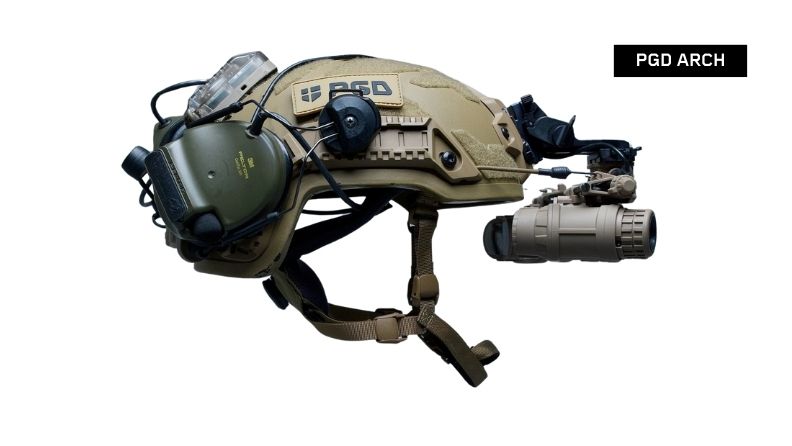
Ballistic helmets are tested and rated to standards such as NIJ level IIIA, which has become the professional minimum for handgun and fragmentation threats.
Key points to consider:
When researching how to choose a ballistic helmet, verify the certification is up to date and the manufacturer provides independent testing – critical for trust.
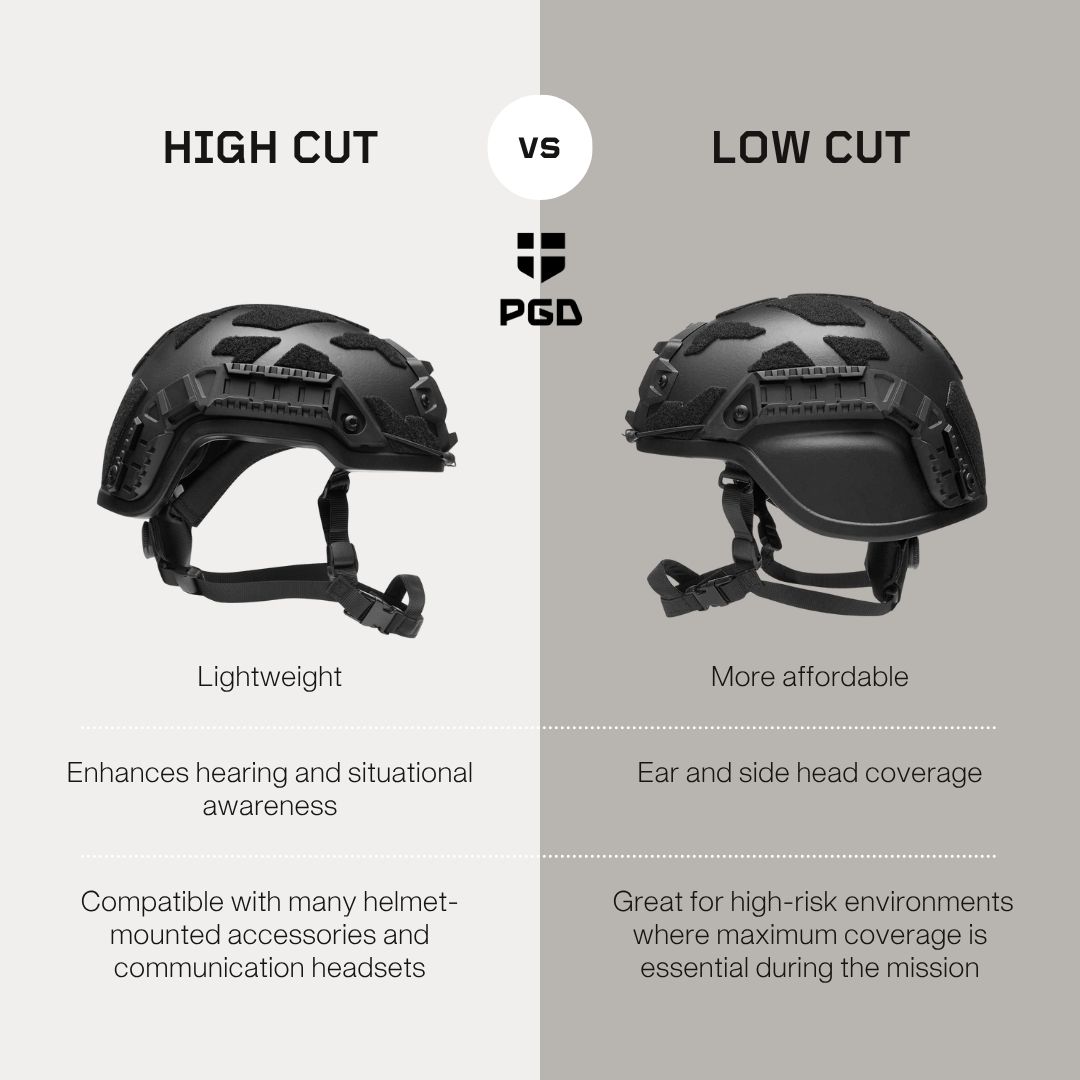
The helmet cut impacts protection, comfort, and compatibility with communication, eye protection, and hearing devices:
Many professionals investigating which ballistic helmet to buy now gravitate to high cut, accessory-ready designs like PGD ARCH GEN3 Ballistic Helmet to stay agile and mission-ready.
Ballistic helmets aren’t a one-size-fits-all deal. In fact, there are more cuts, acronyms, and designs floating around than there are energy drink flavors at a gas station. For modern operators, law enforcement, or agencies trying to outfit a team, understanding the main helmet types isn’t just helpful – it’s the difference between getting gear that actually works in the field or ending up with something that belongs in a Cold War museum display.
So let’s break down the big players and clear up the alphabet soup of PASGT, MICH, and FAST once and for all.
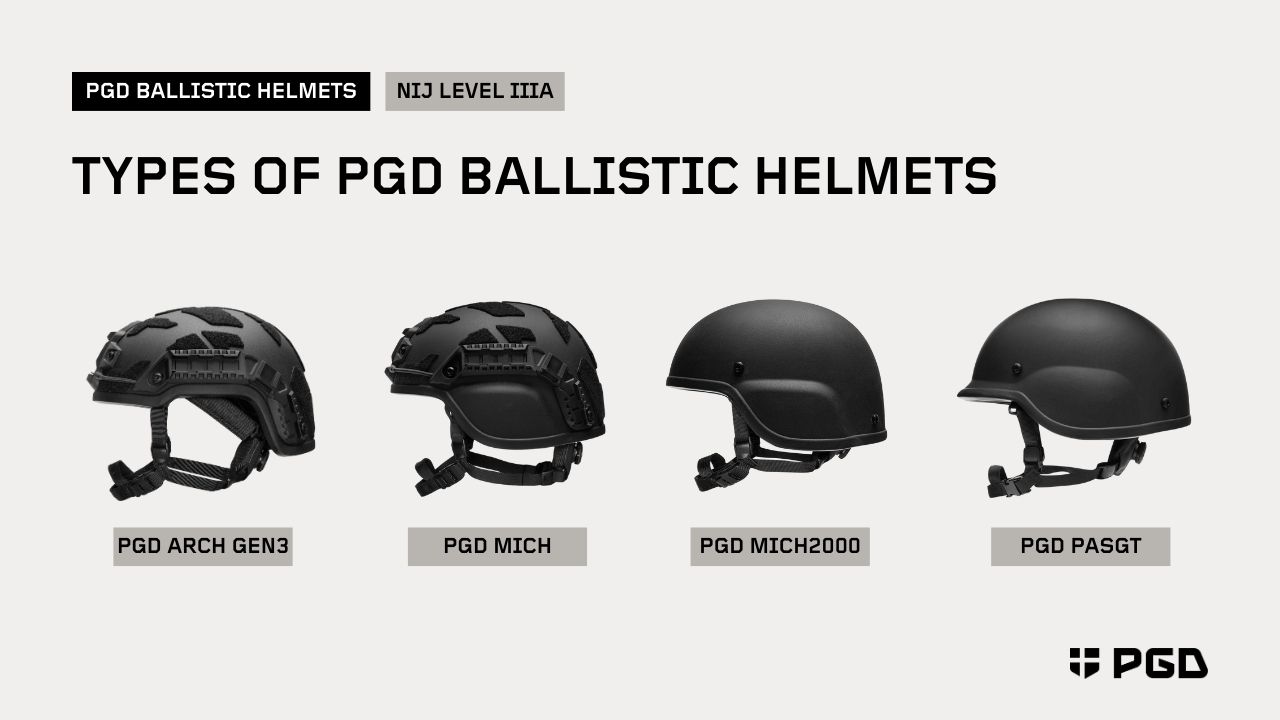
Four main ballistic helmet types dominate today’s market:
Options like the PGD ARCH, PGD PASGT, PGD MICH, and PGD MICH2000 allow professionals to select the different ballistic helmet designs that best meet their job requirements.
Check out the different types of PGD ballistic helmets:
Each helmet cut has its own pros and cons – kind of like choosing between a pickup, an SUV, or a sports car. They’ll all get you where you’re going, but one hauls gear, one balances comfort, and one is built for speed.
Current market data shows high cut helmets strongly favored for their balance of lightweight construction and adaptability – one reason the PGD ARCH GEN3 Ballistic Helmet is a top pick for agencies upgrading their head protection.
These days, a helmet isn’t just a bucket to keep your brain intact – it’s basically a tactical Lego set. Modern operators want their lids to do more than stop bullets; they need rails, shrouds, Velcro, and enough mounting options to make a Swiss Army knife jealous. When you’re shopping, don’t just think “will this stop a round?” – think “will this helmet play nice with the rest of my gear?”
Evaluate the following:
A helmet’s adaptability to your toolkit is a critical buying factor, especially for those researching which ballistic helmet to buy for multi-role capability.
Want the full scoop? Head on over to the PGD blog. That’s where we break down our article, ‘Best High Cut Ballistic Helmet: PGD ARCH GEN3 for Advanced Tactical Head Protection.’ Trust us – it’s got everything you need to know about why a high cut ballistic helmet isn’t just cool gear, it’s mission-critical. (And yes, it’ll make you look like you actually know what you’re doing.) Pretty sure you’ll stumble across some interesting reads over there – unless tactical gear and badass helmets aren’t your thing (in which case… are you lost?).
Now, moving on…
When you’re picking a ballistic helmet, the details matter. The shell material, the comfort features, the fit system, and even the weight can be the difference between feeling mission-ready or feeling like you’ve been headbutting bricks all day. A good helmet should protect you, sure – but it should also let you actually function without wishing for a chiropractor on speed dial.
Alright, let’s dive deeper into the pool of nerdy details – and yes, we’re going head-first with our helmets on. 😉
This is the part where we break down the science-y stuff like materials, and weight savings. It might not sound sexy, but trust me: knowing the difference between aramid and UHMWPE could be what keeps your brain housing group in one piece when it matters.
Ballistic helmets are now manufactured from advanced fibers and ergonomic liners:
Premium helmets, particularly the latest PGD models, integrate advanced liners (like the PGD 10-pad helmet liner) for sweat management, shock absorption, and pressure-point reduction.
Comfort and operational performance go hand in hand. Leading helmets, such as those from Protection Group Denmark, offer:
Measure your head according to manufacturer guides. An ill-fitting helmet provides sub-optimal protection – and can distract you in critical moments.

Every ounce matters for operators wearing a helmet for hours or for fast-moving CQB work. Consider:
When considering how to choose a ballistic helmet, always question weight versus true protection. The best manufacturers, like Protection Group Denmark, balance both – ensuring helmets like the PGD ARCH GEN3 Ballistic Helmet maximize comfort while exceeding protection norms.
And yes… we obviously think our PGD ballistic helmets are awesome. (If we didn’t, we wouldn’t be strapping them on our own heads.)
Not all ballistic helmets are created equal – some are built tough, others are built cheap, and a few are just built wrong. Protection Group Denmark stands out by actually doing the hard stuff right: innovation, independent testing, and real-world performance. That’s why military, police, and rescue professionals across the globe keep trusting PGD when it’s their heads on the line.
Each PGD helmet undergoes independent ballistic testing to meet and exceed NIJ, STANAG, and VPAM standards, ensuring real protection for live operational environments. Independent laboratories verify:
This transparent testing provides confidence for decision-makers and operators who must rely on their headgear in the most hostile scenarios.
Protection Group Denmark offers 4 different ballistic helmet types, covering diffenrent mission roles and operational preferences.
You’ve already seen these mentioned up top, but let’s break them down properly and walk through each one:
With every helmet series, you can select from various shell sizes, fit systems, and upgradable accessories.
PGD’s mission is clear: deliver advanced, affordable ballistic equipment – without compromise. Our vision is to protect people in the best possible way at a price where everyone can participate
This vision, paired with user-driven design improvements, puts reliable safety within reach for agencies and individuals needing to know which ballistic helmet to buy on any budget.
A systematic approach ensures your investment delivers genuine protection, long-term value, and mission-ready performance.
Before you buy, ask the following:
For those evaluating how to choose a ballistic helmet for professional use, transparent answers to these questions ensure you select a product that fits your real-world needs.
The right helmet is a long-term investment. Prioritize:
Top suppliers, including Protection Group Denmark, stand by their products with strong customer support, minimizing downtime and replacement costs.
And for a final touch we’ll just look at the popular bump helmet solution.
Bump helmets may resemble ballistic helmets but only provide impact protection – zero ballistic or fragmentation defense. For law enforcement, military, or high-risk rescue operations, saving on a bump model exposes users to unacceptable risks.
True ballistic helmets offer:
When operational risk is on the table, a ballistic helmet – like the PGD ARCH GEN3 Ballistic Helmet – is always worth the investment.
Choosing what ballistic helmet to buy means balancing specific mission demands, comfort, and value. Focus on real-world testing, helmet cut, accessory integration, and manufacturer reputation. Law enforcement, military, and rescue professionals looking for best-in-class protection consistently trust Protection Group Denmark for proven, affordable, and innovative headgear.
For most operational roles, the PGD ARCH GEN3 Ballistic Helmet delivers superior comfort, accessory readiness, and trusted ballistic protection. Explore the complete range at Protection Group Denmark and equip yourself with the clarity – and confidence – to protect what matters most.
Start by evaluating your typical deployment scenario. Will you be conducting CQB operations, routine patrols, tactical response, or rescue missions? High-threat environments, such as military combat or SWAT, warrant advanced ballistic performance and accessory integration. In contrast, patrol or paramedic tasks might prioritize weight and comfort over maximum ballistic protection.
Budget inevitably impacts options. While costlier helmets often offer advanced materials or lighter weight, you don’t have to overspend to get NIJ-rated safety. Consider the following:
– Determine risk level: Higher-risk roles (e.g., direct action, EOD) require maximum protection and modularity.
– Weigh frequency of use: Daily wearers should prioritize all-day comfort (fit systems, padding, ventilation).
– Factor in department/agency policies: Some units mandate helmet types or specific cuts/designs.
If you’re weighing which ballistic helmet to buy for a mix of missions under budgetary constraints, focus on versatile, field-proven designs like the PGD ARCH GEN3 Ballistic Helmet that balance modularity, protection, and price.
Before you buy, ask the following:
– Is the helmet independently tested/certified to NIJ Level IIIA or equivalent?
– What is the V50 fragmentation rating?
– Which materials are used (aramid, UHMWPE, hybrid)?
– What fit systems are available?
– Are rails/NVG shrouds/Velcro fields integrated or available?
– What is the warranty (shell, pads, harnesses)?
– Are spares readily available?
For those evaluating how to choose a ballistic helmet for professional use, transparent answers to these questions ensure you select a product that fits your real-world needs.
The right helmet is a long-term investment. Prioritize:
– Clear warranty periods (typically 5 – 10 years for shells)
– Return policies for fit/comfort issues
– Easy sourcing of pads, liners, and retention parts
Top suppliers, including Protection Group Denmark, stand by their products with strong customer support, minimizing downtime and replacement costs.
Bump helmets may resemble ballistic helmets but only provide impact protection—zero ballistic or fragmentation defense. For law enforcement, military, or high-risk rescue operations, saving on a bump model exposes users to unacceptable risks.
True ballistic helmets offer:
– Life-saving ballistic and fragmentation resistance
– Accessory modularity for mission and night vision communications
– Professional confidence – knowing your equipment exceeds modern standards
When operational risk is on the table, a ballistic helmet – like the PGD ARCH GEN3 Ballistic Helmet – is always worth the investment.
Protect what matters.
We’ve moved our U.S. sales
Protection Group Denmark products are now available in the United States exclusively through our official distributor, Colorado Gun Fighter. This store is no longer accepting new orders — please continue your purchase there.
Already placed an order with us? Don’t worry — all existing orders will be fulfilled as normal.
Shop at Colorado Gun Fighter