
Ballistic helmet materials: What are ballistic helmets made of?

If body armor is the star quarterback of personal protection, the ballistic helmet is the offensive lineman – not flashy, but absolutely essential when the hits start coming. The truth is, a helmet doesn’t look exciting until it saves your life, and then suddenly it’s the most important piece of gear you own.
That’s where Kevlar takes the spotlight. Discovered in a DuPont lab in the 1960s, Kevlar fibers turned out to be five times stronger than steel by weight, and they’ve been the backbone of combat helmets ever since the U.S. military rolled out the PASGT “K-pot” in the 1980s. From Iraq to Afghanistan to today’s high-risk police work, ballistic Kevlar helmets have been catching fragments, stopping handgun rounds, and keeping operators in the fight.
So why is Kevlar often still the go-to choice, even with all the new hybrid fibers and next-gen composites on the market? And what makes a Kevlar helmet more than just a tough-looking dome on your head? Time to dig into the science, the trade-offs, and the reason Kevlar still remains a hero of modern missions.
Ballistic Kevlar helmets are a mainstay for today’s military, law enforcement, and security professionals, balancing protection against small arms fire with all-day comfort and reliability. Modern threats and evolving mission demands have driven helmet upgrades, but Kevlar – an aramid fiber – remains at the core of trusted combat helmet design. Understanding how Kevlar works, its material strengths and limitations, and how helmets like our very own PGD ARCH GEN3 maximize both performance and longevity is crucial for users who count on protective gear in the line of duty.
Before anything else, let’s address the number one question.
A Kevlar helmet is, at its core, a ballistic dome made from woven layers of Kevlar – an aramid synthetic fiber dreamed up in a DuPont lab back in 1965. Kevlar quickly earned a reputation as the superhero of fibers: five times stronger than steel by weight, light enough to wear all day without wrecking your neck, and tough enough to shrug off heat and flames. Instead of cracking or denting like steel, Kevlar’s microscopic weave soaks up and spreads out the impact of bullets and fragments, turning what could be a lethal hit into something more like getting smacked with a very angry fastball.
The U.S. military first put Kevlar on soldiers’ heads in the 1980s with the now-iconic PASGT helmet – better known to grunts as the “K-pot.” It replaced the old steel M1 helmet, which had been around since WWII and was basically a mixing bowl strapped to your head. The Kevlar upgrade was a game-changer: lighter, tougher, and far better at catching flying metal without transferring all that energy straight into the wearer’s skull.
Fast forward to today, and nearly every serious military, law enforcement, or security helmet still uses Kevlar or its aramid cousins. Whether you’re talking SWAT operators, special forces, or private security contractors, Kevlar remains the backbone of head protection, delivering that sweet spot between reliable protection and wearability.
And just to make things fun, ballistic helmets go by about a dozen different names depending on who you’re talking to. Some call it a Kevlar helmet, others stick with combat helmet, tactical helmet, brain bucket, lid, dome, K-pot, or bump cover. Whatever nickname gets thrown around, they all point to the same life-saving piece of gear: the helmet that makes sure your head stays in one piece when the world starts throwing sharp objects at it.
In this test video, Milspec_Mojo takes a PGD ARCH ballistic helmet and puts it through an extreme live-fire session – essentially shooting the living daylights out of it with multiple rounds. Despite the punishment, the helmet holds up remarkably well, demonstrating impressive ballistic resistance and durability well beyond standard expectations.
The takeaway?
Even under conditions harsher than most operators would ever face in the field, the PGD ARCH helmet proves itself as a seriously tough piece of gear. Mojo and his team come away clearly impressed, calling out the helmet’s ability to take repeated hits while maintaining structural integrity.
Kevlar’s adoption by armed forces and police worldwide comes down to three tested qualities:
Field-proven, laboratory-tested, and trusted by professionals, Kevlar helmets have decades of real-world pedigree – making them the default for mission-critical protection.
Early combat helmets, like the WWII-era M1, were made of steel: heavy, prone to corrosion, and offering limited capacity against modern firearms. Kevlar brought immediate advantages:
Continuous improvement has led to aramid-rich and hybrid composite helmets, integrating advanced aramid blends or combining Kevlar with materials like UHMWPE for even finer-tuned performance. But for many, Kevlar remains the foundation – delivering the best balance between bullet and fragment resistance, weight, and field-worn durability.
Ever wonder how a flat roll of Kevlar turns into the helmet that might just save your skull? It’s not magic, and it’s definitely not something cooked up in grandma’s kitchen – though it does involve a lot of heat and pressure. At PGD, every ballistic Kevlar helmet goes through a carefully controlled build process that turns raw fibers into mission-ready protection.
The result? A helmet tough enough to handle today’s threats, and good-looking enough to make you forget you’re basically wearing science on your head.

So there you have it – that’s how a Kevlar helmet is born. Now the real question: how does it actually stop a bullet?
At the microscopic level, Kevlar fibers are spun into yarns, then woven into tight textile sheets. Multiple layers are stacked and pressed into composite shells, forming the ballistic helmet’s dome.
When a bullet or fragment impacts the helmet:
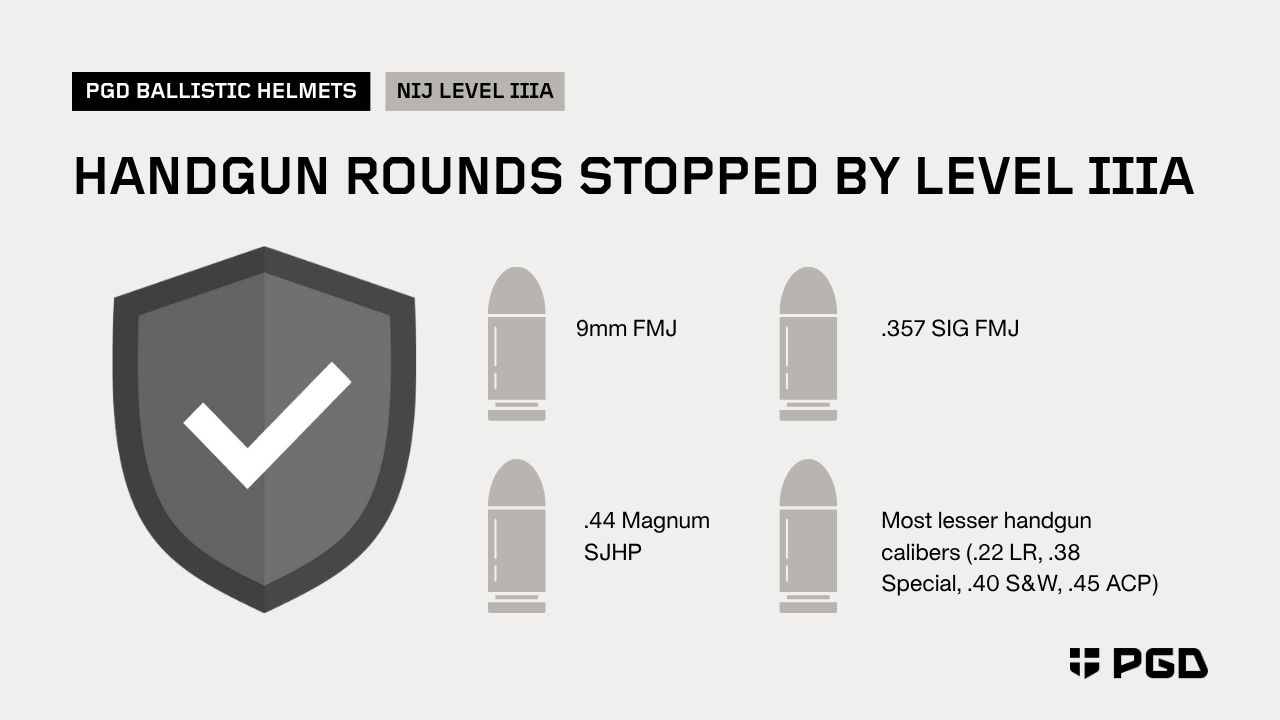
This structure means Kevlar helmets can stop or significantly slow rounds as powerful as 9mm FMJ, .44 Magnum, and fragments, generally meeting or exceeding NIJ Level IIIA standards.
Combat helmets have dramatically evolved:
Today’s best ballistic Kevlar helmets are the result of this continuous innovation – offering tested, flexible protection for the varied threats encountered by military and law enforcement missions.
Kevlar (aramid fibers):
UHMWPE (Ultra-High-Molecular-Weight Polyethylene):
In short, neither material is “better” in every category. Kevlar delivers consistency, heat resistance, and proven toughness, while UHMWPE shines in weight reduction and impact absorption. Choosing between them isn’t about which fiber wins on paper – it’s about matching the strengths of the material to the realities of your mission and environment.
A ballistic helmet isn’t a “buy it once, forget it forever” piece of gear. Like any protective equipment, it has a service life, and factors like heat, UV light, moisture, and daily wear all play a role in how long it stays reliable. Proper care and regular checks are what keep a Kevlar helmet mission-ready when it matters most.
A Kevlar ballistic helmet is built for years of service, but – like all protective equipment – it has a practical lifespan. The typical recommended service life for a certified Kevlar helmet is 5–7 years, consistent with U.S. military and NATO guidelines.
Key factors influencing helmet life:
At Protection Group Denmark, we back our ballistic helmets with a 10-year ballistic warranty on the helmet shell – one of the strongest guarantees in the industry. Why? Because we know the quality of our materials and our process. Every helmet shell is built from certified Kevlar fibers, pressed under strict controls, and inspected at multiple stages to eliminate flaws before it ever leaves our facility. We don’t just rely on lab data – our helmets are drop-tested, heat-tested, and live-fire tested to prove long-term performance. That’s why we can confidently say: a PGD helmet isn’t just tough on day one, it’s built to protect you year after year, mission after mission.
Still, regular inspection is critical to guarantee mission-readiness. Let’s have a look.
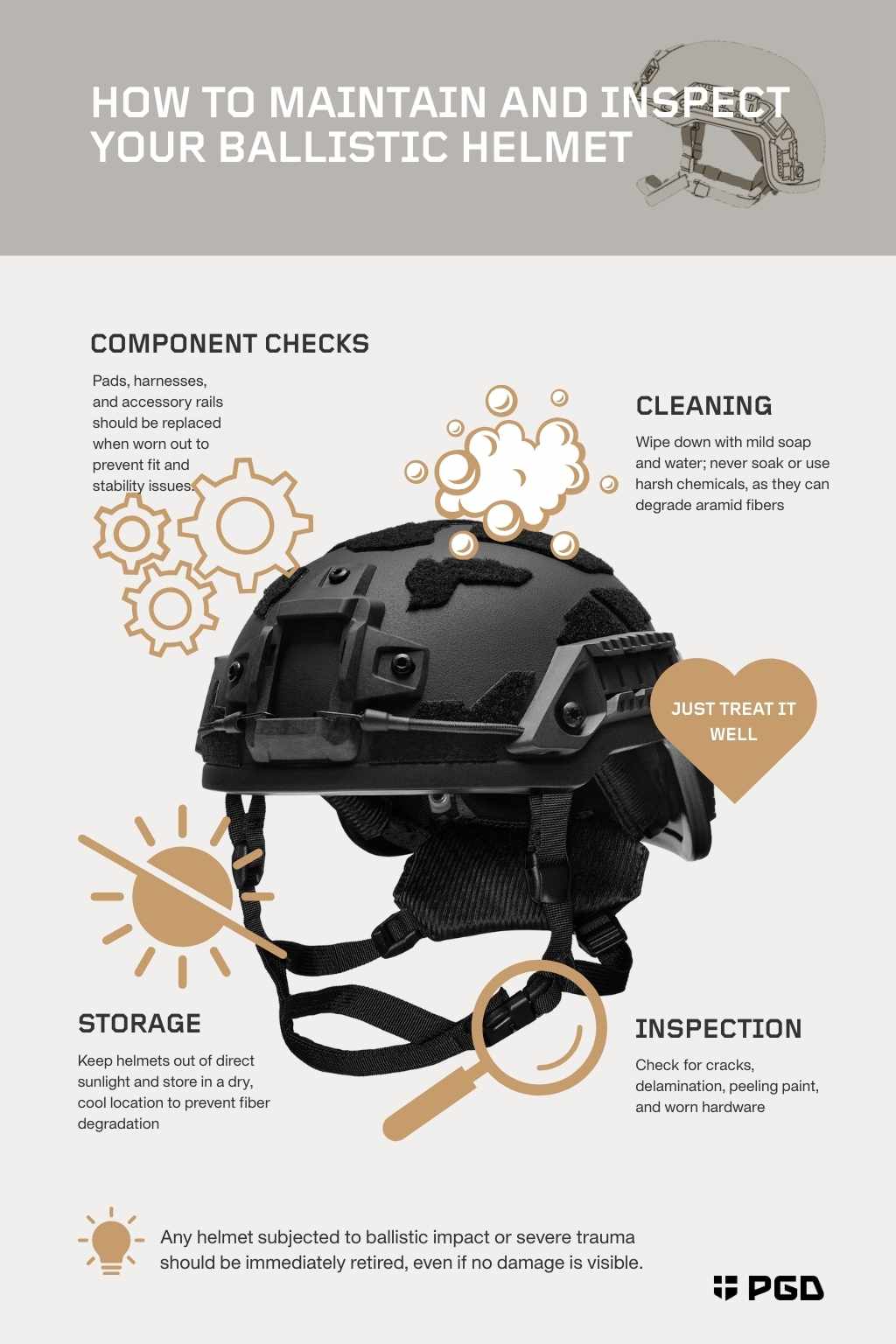
Routine care ensures your helmet protects as intended:
Any helmet subjected to ballistic impact or severe trauma should be immediately retired, even if no damage is visible.
If you are interested in learning more about the environmental durability of modern ballistic helmets, go ahead and read our article “From desert heat to arctic cold: Environmental durability of modern ballistic helmets” on our PGD blog.
Aramid/Kevlar helmets:
Hybrid composite helmets (Kevlar + UHMWPE):
Choosing between all-Kevlar and hybrid comes down to balancing weight, comfort, and assurance of ballistic protection over years of operational use.
Choosing a Kevlar helmet isn’t just about picking the one that looks the coolest – it’s about finding the right balance of protection, weight, and comfort for your mission. Whether you’re military, law enforcement, or civilian, the “best” helmet is the one that matches your threats, environment, and how long you’ll actually be wearing it.
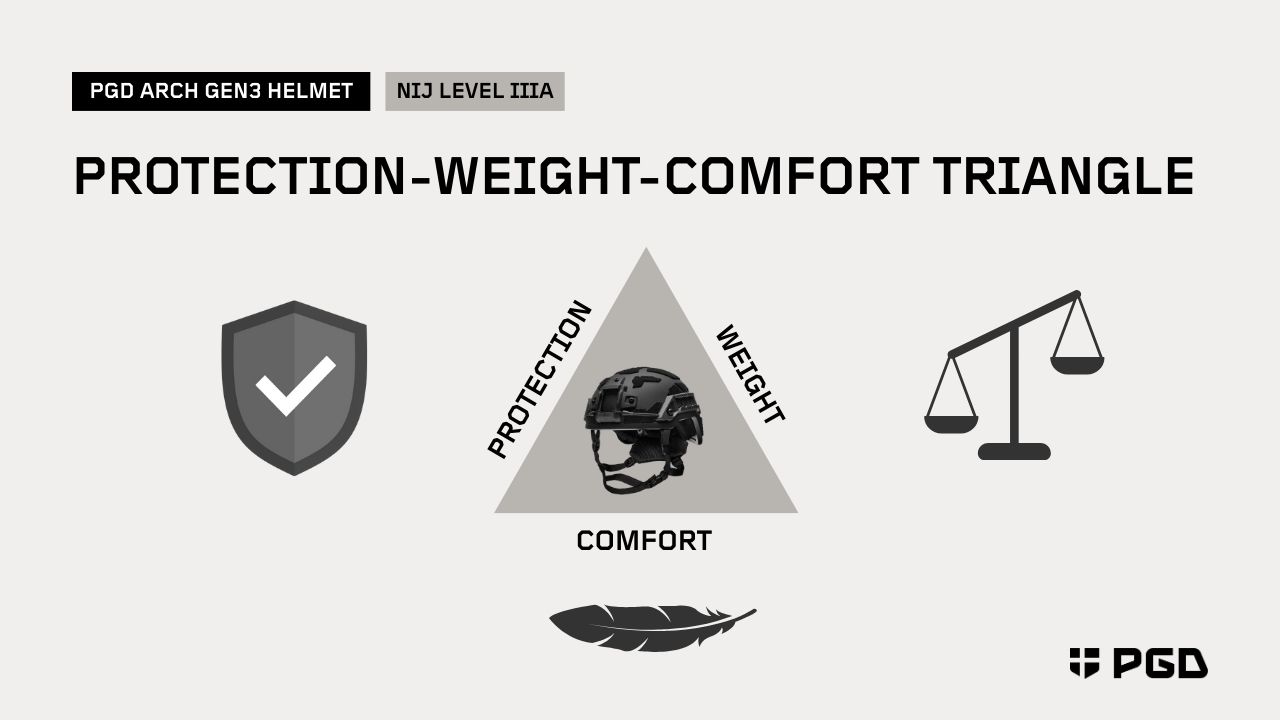
Selecting the best ballistic Kevlar helmet involves trade-offs. Consider these three factors:
A well-chosen helmet hits the sweet spot – delivering military-grade protection, manageable weight, and lasting comfort, especially during high-risk or extended missions.
The PGD ARCH GEN3 Ballistic Helmet is a standout example of modern Kevlar-based protection. What sets it apart?
For professionals seeking the best balance of ballistic protection, reliability, and comfort, the PGD ARCH GEN3 is a top-tier modern combat helmet. Compare the full technical specs and purchase options at PGD ARCH GEN3 Ballistic Helmet.
Today’s battlefield – whether it’s overseas or on the streets – makes one thing painfully clear: nobody wants to catch a bullet, a frag, or a brick to the head. That’s why ballistic Kevlar helmets are still in hot demand.
Modern operators don’t just need protection; they need it without feeling like they’ve strapped a cast-iron skillet to their skull. Survivability only counts if you can actually move, shoot, and see what’s going on around you. Add in the fact that tactical units and rapid-response teams keep finding new ways to make helmets do more than just sit there, and you’ve got a recipe for lighter, smarter, and tougher lids.
In short, military-grade Kevlar helmets remain the brain bucket of choice – trusted, tested, and still the best insurance policy your skull can buy.
The last decade has seen ballistic helmet design move beyond legacy steel and pure Kevlar domes to:
At Protection Group Denmark, innovation doesn’t stop at helmets. We continuously push the boundaries of ballistic protection, developing advanced solutions that combine comfort, reduced weight, and uncompromising protection.
Visit our European webshop and see our products: www.protectiongroupdenmark.com
From our next-generation combat helmets to our extensive range of body armor, every product is built on testing, certified materials, and modern construction techniques.
Our mission is simple: to provide professionals and civilians alike with protective gear that not only meets today’s threats, but anticipates tomorrow’s – a constant cycle of development that keeps PGD at the forefront of ballistic protection.
Absolutely. While new ballistic fibers are under study, Kevlar remains the core material in the world’s best combat and military-grade helmets. Its unique combination of high tensile strength, heat resistance, and proven real-world protection make it irreplaceable, especially when combined with modern hybrid technology.
As threats change, so do helmet solutions. But the essential reasons for trusting in a ballistic Kevlar helmet – field-proven protection, reliability under duress, and durability – keep it highly relevant.
Ready to upgrade your protective gear with the best of modern science and field-tested performance? Explore Protection Group Denmark for the full range of military, law enforcement, and security solutions, or learn more about the advanced PGD ARCH GEN3 Ballistic Helmet – today’s gold standard in ballistic Kevlar helmet design. Your safety, your mission, your future: trust in proven protection.
Absolutely. While new ballistic fibers are under study, Kevlar remains the core material in the world’s best combat and military-grade helmets. Its unique combination of high tensile strength, heat resistance, and proven real-world protection make it irreplaceable, especially when combined with modern hybrid technology.
As threats change, so do helmet solutions. But the essential reasons for trusting in a ballistic Kevlar helmet – field-proven protection, reliability under duress, and durability – keep it highly relevant.
Aramid/Kevlar helmets are known for their durability, generally resisting environmental wear and impact-related aging better than many alternatives. They maintain ballistic integrity over longer periods and are less likely to suffer sudden failure from minor surface scratches. Hybrid composite helmets that combine Kevlar with UHMWPE, on the other hand, offer the advantage of lighter weight, but they require careful construction to ensure the fibers remain evenly distributed over time. In the end, the decision between an all-Kevlar design and a hybrid model comes down to balancing weight, comfort, and the level of long-term ballistic assurance required for the mission.
Routine care ensures your helmet protects as intended:
Any helmet subjected to ballistic impact or severe trauma should be immediately retired, even if no damage is visible.
In almost all cases, no. Standard Kevlar helmets are designed and certified to NIJ Level IIIA, which means they stop handgun rounds up to .44 Magnum and provide excellent protection against fragmentation.
Protect what matters.
We’ve moved our U.S. sales
Protection Group Denmark products are now available in the United States exclusively through our official distributor, Colorado Gun Fighter. This store is no longer accepting new orders — please continue your purchase there.
Already placed an order with us? Don’t worry — all existing orders will be fulfilled as normal.
Shop at Colorado Gun Fighter