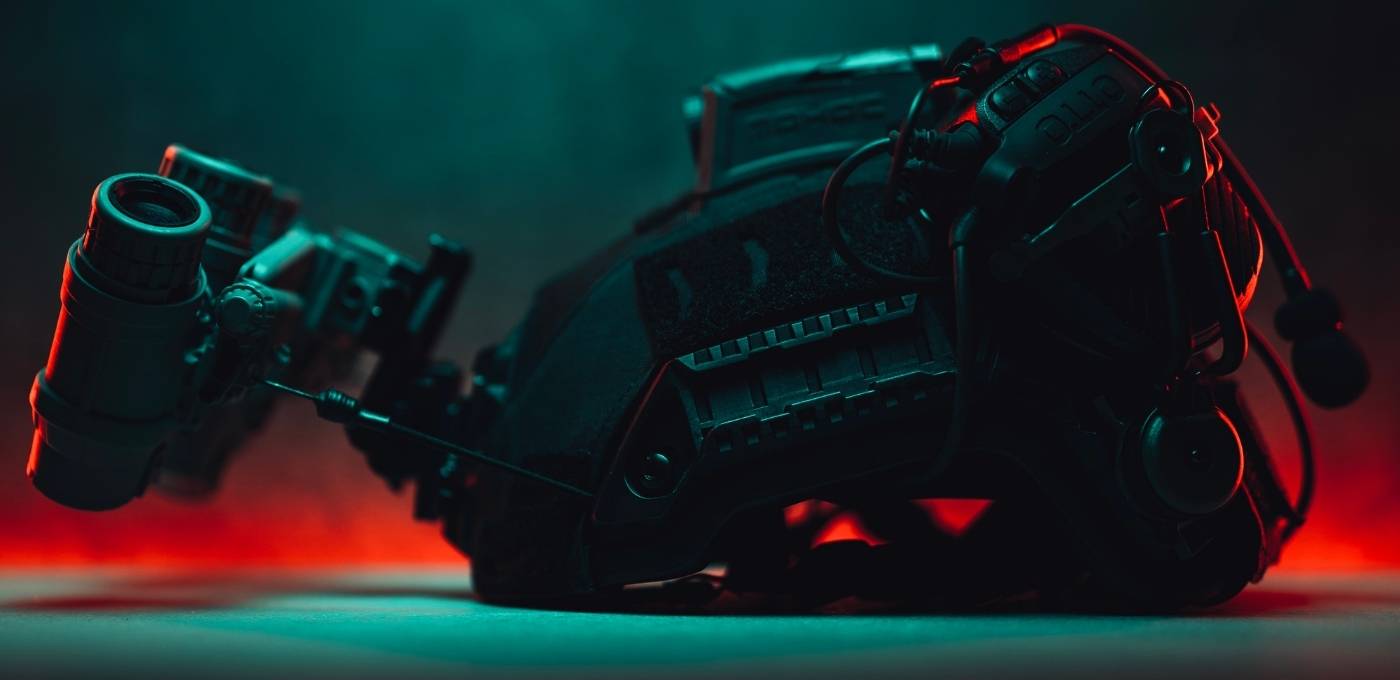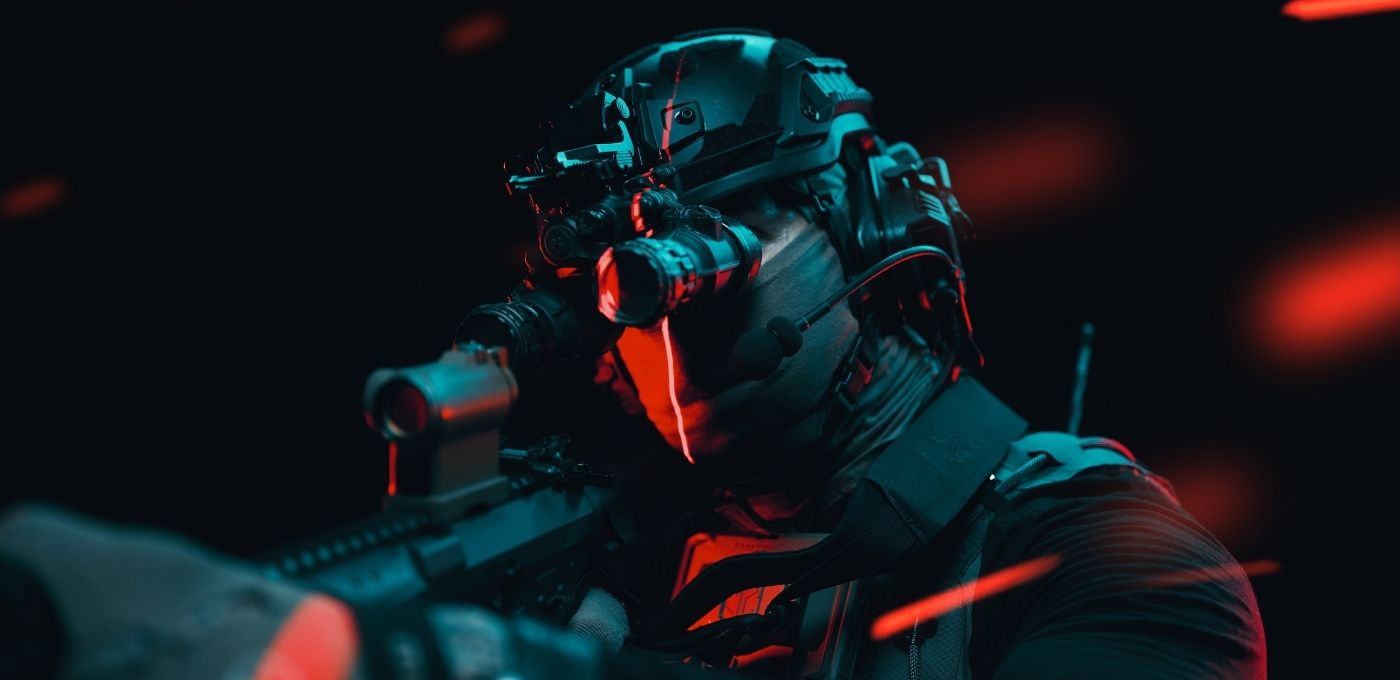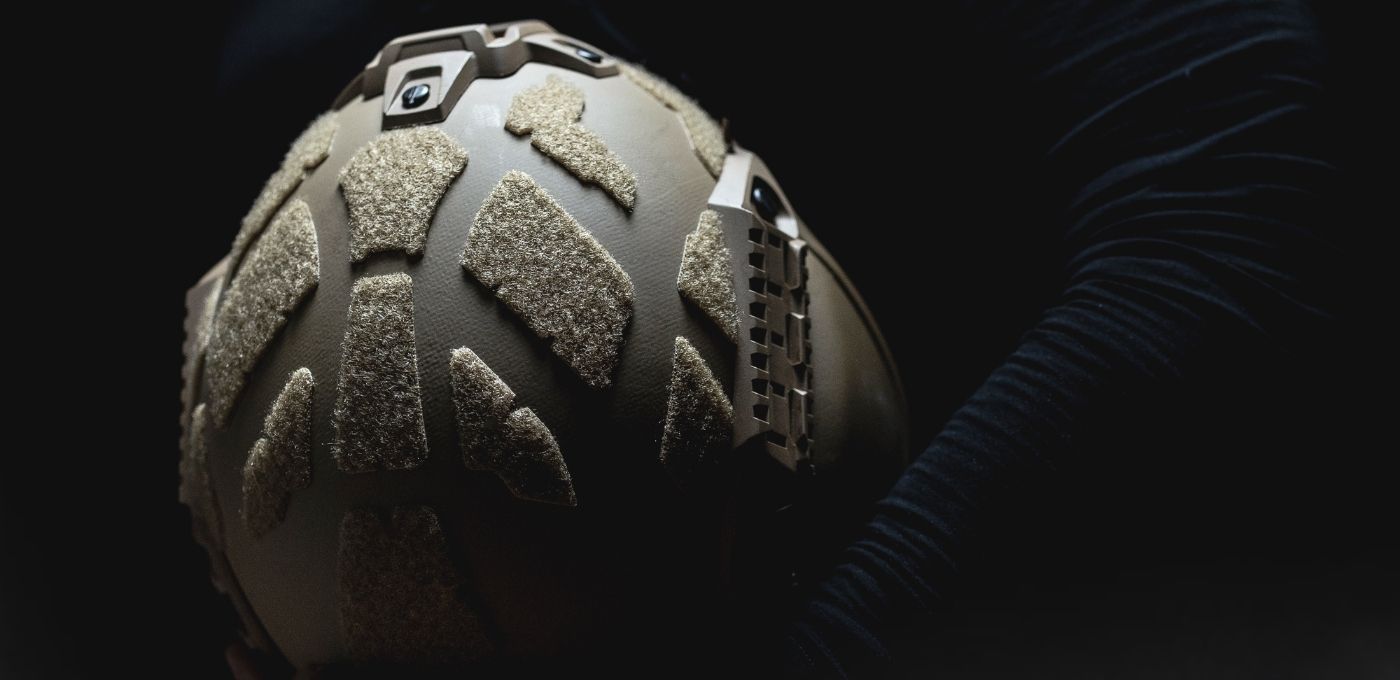
Coyote brown ballistic helmet: Does color really matter for tactical advantage?
If you’ve ever duct-taped a flashlight to your helmet… This article’s for you 😉
Let’s face it – tactical life isn’t all slow-motion door breaches and dramatic nods under night vision. Sometimes it’s mud in your boots, sweat in your eyes, and that one guy in your unit who still hasn’t figured out how velcro works. (Yeah, we see you, Steve.) In this glorious chaos of missions, movements, and malfunctioning headlamps, there’s one piece of gear that should always have your back – or at least, your skull – and that’s your ballistic helmet.
But here’s the problem: helmets take a beating. Whether you’re scraping through tight doorways, crawling through gravel like a tactical crab, or just trying to look cool on patrol (don’t lie), your lid suffers the consequences. And let’s be honest, the last thing you want is to roll into the field looking like you headbutted a cheese grater. That’s where a ballistic helmet cover swoops in to save the day – like Batman, but made of Cordura® and velcro.
We’re all about turning good gear into great gear. And our ballistic helmet cover for our PGD ARCH GEN3 helmet? It’s not just a cover – it’s like a tactical tuxedo for your helmet. Stylish. Tough. Ready for a fight. (And yes, it’ll still make your helmet look cool on Instagram.)
In this article, we’re diving headfirst – helmet first, really – into why you need a ballistic helmet cover, how ours works, and why it’s basically the equivalent of giving your brain bucket a tactical upgrade worthy of a standing ovation from your squad (and maybe even Steve).
So strap in, soldier. You’re about to discover how to protect your dome and look good doing it.
Are you prepared to elevate your tactical gear’s protection? Ballistic helmet covers are practical solutions designed to protect your equipment and enhance its functionality. Discover how these covers can extend the life of your gear and improve operational capabilities.
In military and law enforcement operations, maintaining gear longevity and functionality is essential. Running a ballistic helmet cover is the simplest – (and honestly the cheapest) – way to shield a multi‑hundred‑dollar composite shell from the abuse of daily duty. The outer textile absorbs abrasion from door frames, rail slings, and vehicle racks; it catches the hook side of velcro before those hooks chew into the aramid ; and it prevents UV fade that can embrittle epoxy over years in the sun. When the fabric is shredded you’re out fifty dollars, not a 5-to-10 year ballistic warranty.
In 2025 most premium covers, including PGD’s laser‑cut models, use a hybrid of 500‑denier Cordura® for crown durability and four‑way‑stretch Tweave® for the complex curves around the rails. Cordura shrugs off concrete and hot brass, while Tweave hugs the shell without wrinkling, so you avoid pressure ridges under the pads. All PGD covers add an IR‑defeating urethane back‑coating that tunes the Near‑Infrared (NIR) reflectance to match Multicam uniforms – critical for LE teams working under aviation NODs. Built‑in cable channels keep PTT and battery wires snag‑free, and laser‑cut slots align with ARC rails so you can mount strobes or counterweights without stacking extra velcro. Because a cover weighs under 50 g, the payoff in protection, signature management, and cable routing makes it a must‑have accessory for both civilian defenders and SWAT units.
To sum up, the answer really stands on three key points. Let’s break them down one by one:
1. PROTECTION FROM ABRASION & ENVIRONMENTAL DAMAGE
Ballistic helmets are coated in durable paint, but even the toughest finish takes a beating over time. Rocks, gravel, vehicle interiors, and even velcro from other gear can slowly scuff and wear down your helmet’s surface. A helmet cover acts as a sacrificial layer – like a screen protector for your skull – with one key job: absorb the abuse so your actual helmet doesn’t have to.
This matters because:
2. INTEGRATION AND MODULARITY
Modern helmet covers are essentially load-bearing tactical skins. Most incorporate:
Without a cover, attaching this gear either requires drilling (don’t), adhesives (messy), or relying entirely on shrouds and rails, which adds wear and weight in awkward places.
3. CAMOUFLAGE & SIGNATURE MANAGEMENT
Your helmet is usually the highest point on your body – and the first thing someone sees from behind cover. A bare helmet can reflect light, reveal non-camo surfaces, and absolutely glow under NODs if not properly treated.
Covers help you:
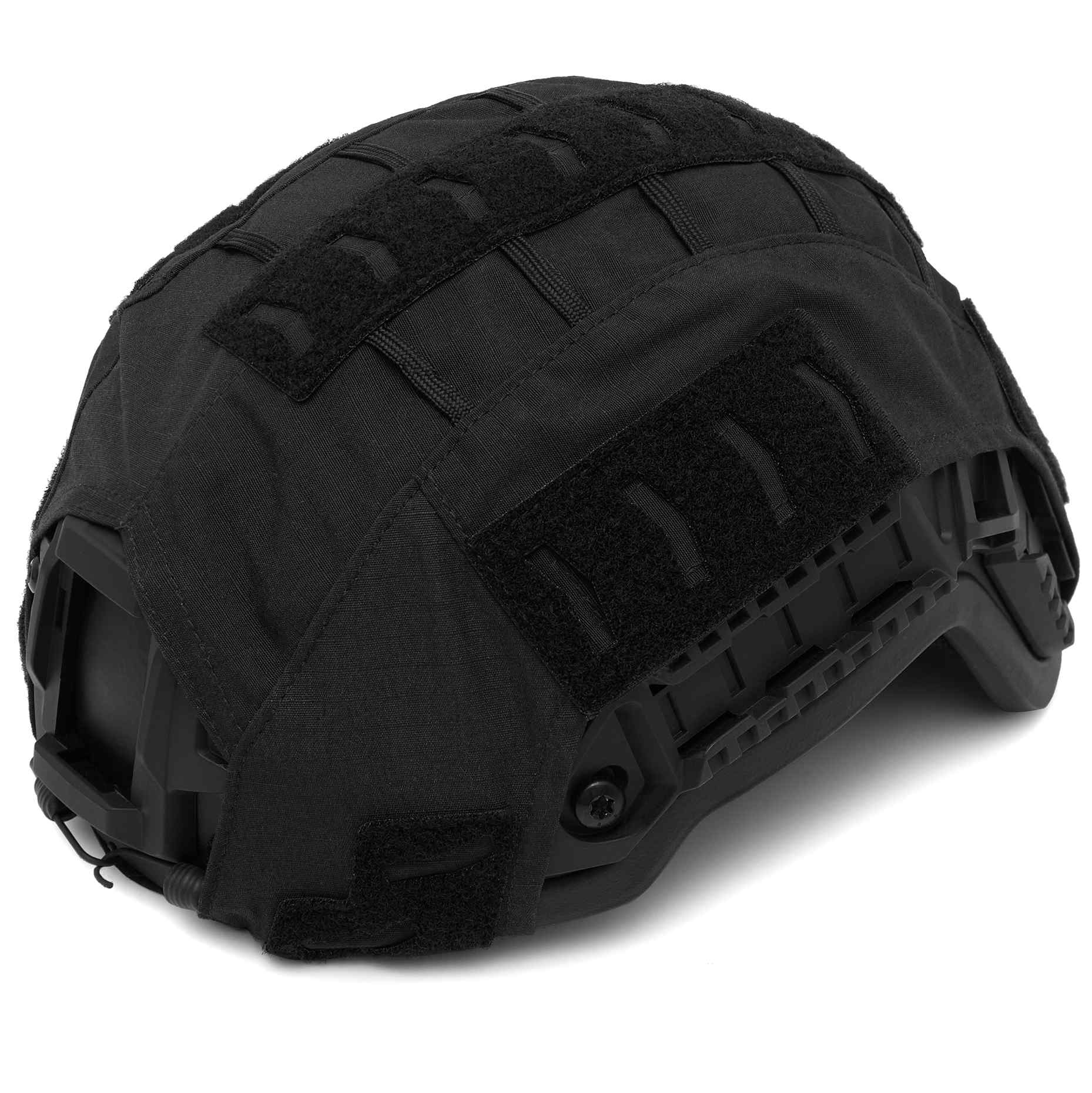
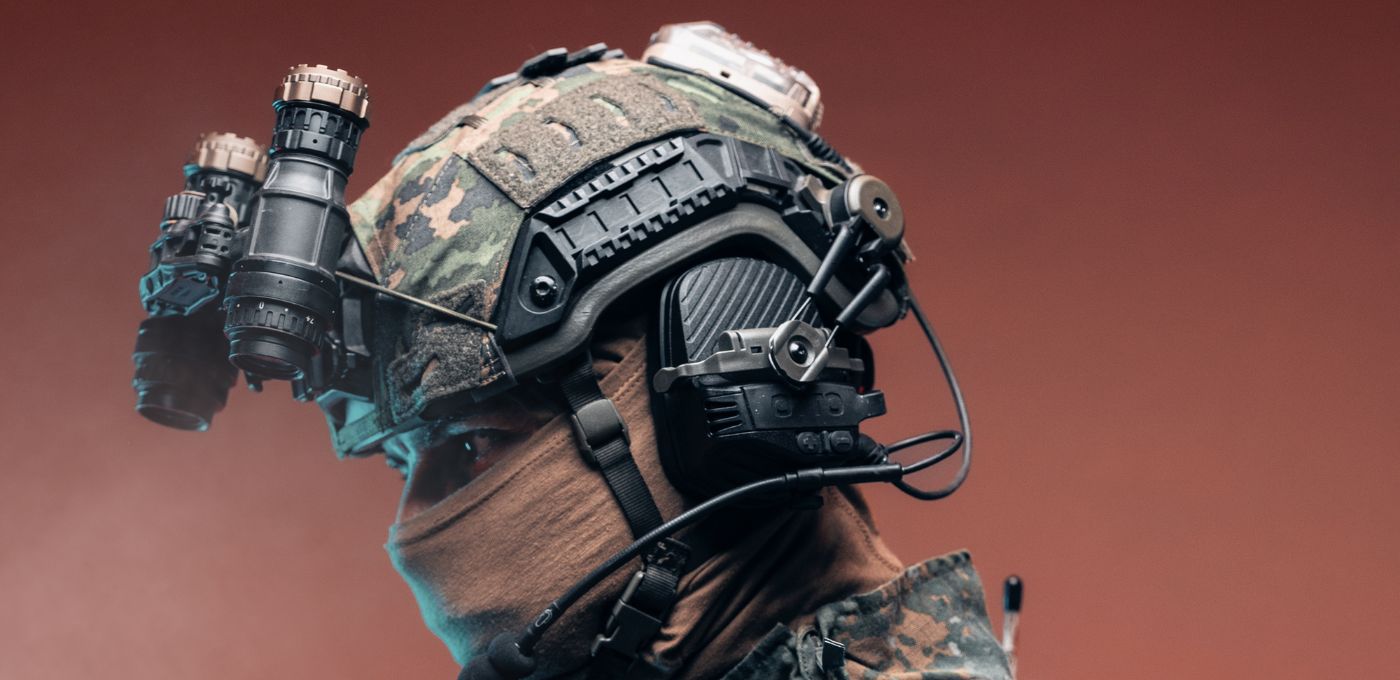
The PGD ARCH GEN3 helmet cover exemplifies tactical excellence, designed to withstand various environments. Made from abrasion-resistant 500D nylon, it integrates with NVG retention systems for secure night vision operations. The inclusion of PALS webbing transforms your helmet into a versatile tactical tool. The hybrid design pairs 500-denier Cordura® with flexible Tweave® for a snug fit. IR-defeating technology ensures stealth during crucial operations.
Whether in urban settings or dense woodlands, our ballistic helmet covers maintain functionality. Each cover meets quality standards, prepared for any operational condition. Our covers adapt to various helmet models and environments, ensuring your gear remains mission-ready. These covers not only prolong equipment life but enhance field performance, where reliability is key.
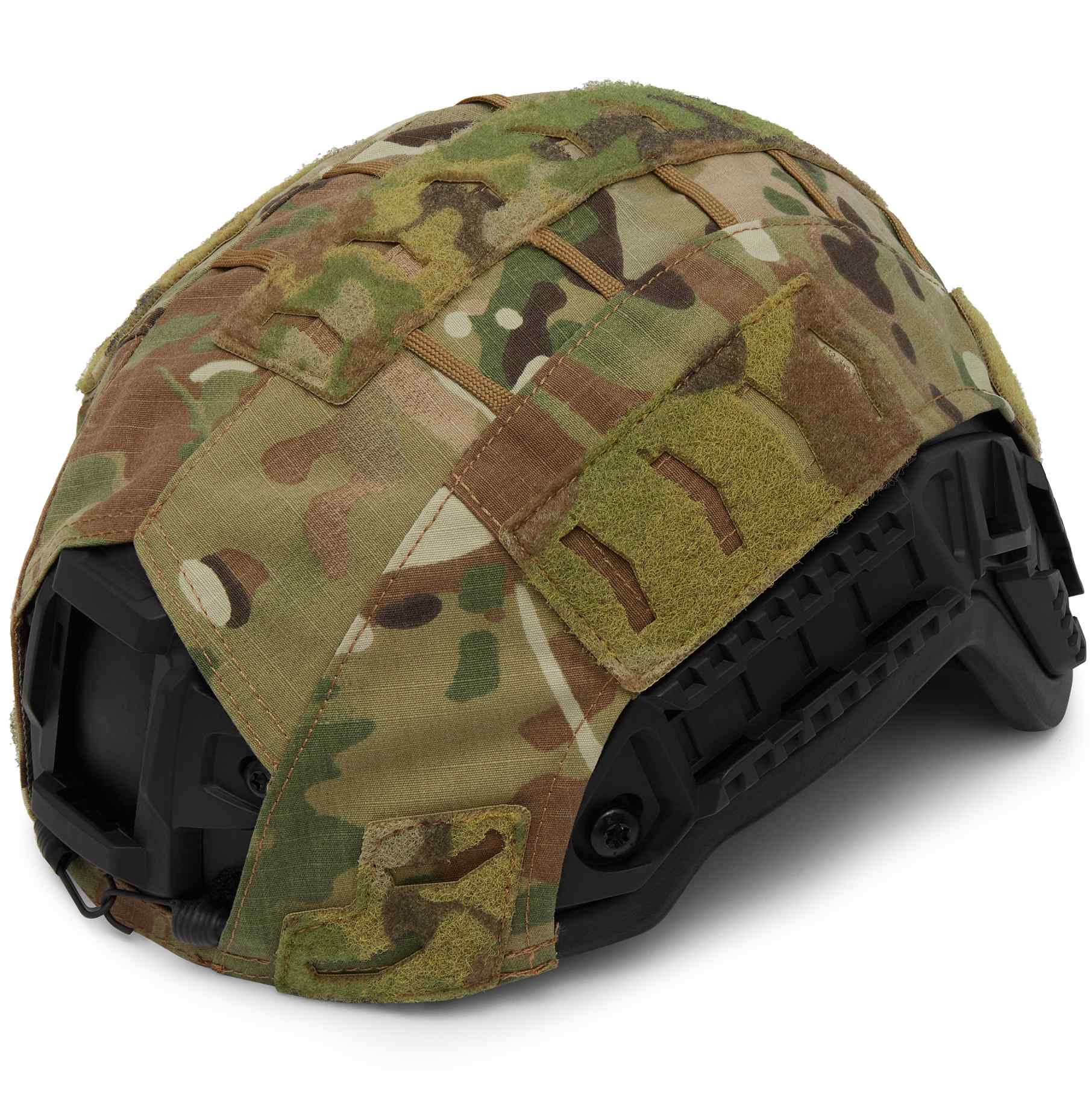
When it comes to helmet covers, not all fabrics are created equal. Here are some great choices and why they matter:
1. 500D Cordura® Nylon
2. Tweave® Durastretch (520E or 518C)
3. Polyester mesh or laminates (laser-cut fabrics)
Now that you know a bit more on the materials, next up is choosing the right size and camo pattern.
The appropriate fit and camouflage patterns are vital for mission success. Identify your helmet type – low-cut, mid-cut, or high-cut. Precision in selecting the right size and style is crucial. Our covers offer patterns like Ranger Green for urban missions and Multicam for outdoor environments. Verify the NIR rating for stealth under night vision, ensuring your tactical effectiveness is uncompromised.
1. SIZING: ONE SIZE DOES NOT FIT ALL
Helmet covers must match your helmet cut, model, and sometimes shell thickness. There is no universal fit because even two high-cut helmets from different brands might have different rail and shroud configurations.
Common cut types:
To get the right size:
Pro Tip: Always measure the helmet’s circumference and cross-check against the manufacturer’s cover spec sheet. Don’t guess.
2. CAMO PATTERN: MISSION AND ENVIRONMENT MATTER
Camouflage isn’t cosmetic – it’s capability.
If you’re choosing a camouflage pattern for your helmet cover, match it to the environment you’ll be operating in:
Also, make sure your cover is NIR compliant. That means it won’t “light up” under night vision due to infrared reflection. Most modern helmet covers from reputable manufacturers (like PGD) are rated for NIR compliance.
Worried a cover might affect performance? Our designs maintain helmet ballistic integrity while addressing heat management. Strategic perforations and mesh laminations dissipate heat, reducing overheating risk during intense operations. Our covers function as moisture-wicking layers, keeping sweat away to maintain comfort and focus.
1. NIJ protection (Short answer: No, but…)
A helmet cover does not interfere with the NIJ ballistic rating of your helmet. The NIJ certification (e.g., 0106.01 or .07 future revisions) applies to the helmet shell, not what’s on top of it. The cover isn’t a ballistic component – it’s protective, but not rated.
However:
In short: A well-designed cover from a trusted company (like PGD) won’t interfere. A cheap airsoft-tier cover from China? Probably not worth the risk.
2. Heat dissipation and comfort (Yes, it matters)
Ballistic helmets are notorious for getting hot – especially under nods or extended wear. A helmet cover can either help or hinder depending on its construction:
How a GOOD cover helps:
How a BAD cover hurts:
Our ballistic helmet cover for our PGD ARCH GEN3 hits the balance by combining abrasion-resistant 500D Cordura with flexible Tweave and breathable mesh panels. The result is a cover that protects, organizes, and helps regulate heat without compromising function.
Of course featuring the PGD ARCH GEN3 including a ballistic helmet cover.
In this video, ItsMillarTime breaks down his updated ARCH Gen3 helmet setup, featuring a new helmet cover, upgraded ear pro integration, and other streamlined additions. He walks through the full buildout, explaining why each component matters in real-world use – whether it’s managing cables, improving comfort, or boosting functionality. If you’re running an ARCH Gen3 or considering one, this is a must-watch for dialed-in, no-nonsense gear setup inspiration.
When stakes are high, choose PGD for innovative gear protection. Our ballistic helmet covers offer durability and adaptability, enhancing value. Easily swap camo covers to preserve helmet appearance and function. Our products cater to military, security, and rescue personnel, ensuring essential reliability in any scenario.
Trust Protection Group Denmark with your mission. Explore our products to redefine your tactical experience. Secure your PGD ARCH GEN3 ballistic helmet cover now to achieve peak readiness by visiting our website. Your mission is our mission – achieve it with PGD by your side.
Protect what matters.
We’ve moved our U.S. sales
Protection Group Denmark products are now available in the United States exclusively through our official distributor, Colorado Gun Fighter. This store is no longer accepting new orders — please continue your purchase there.
Already placed an order with us? Don’t worry — all existing orders will be fulfilled as normal.
Shop at Colorado Gun Fighter