Bulletproof helmet price – why are ballistic helmets so expensive?
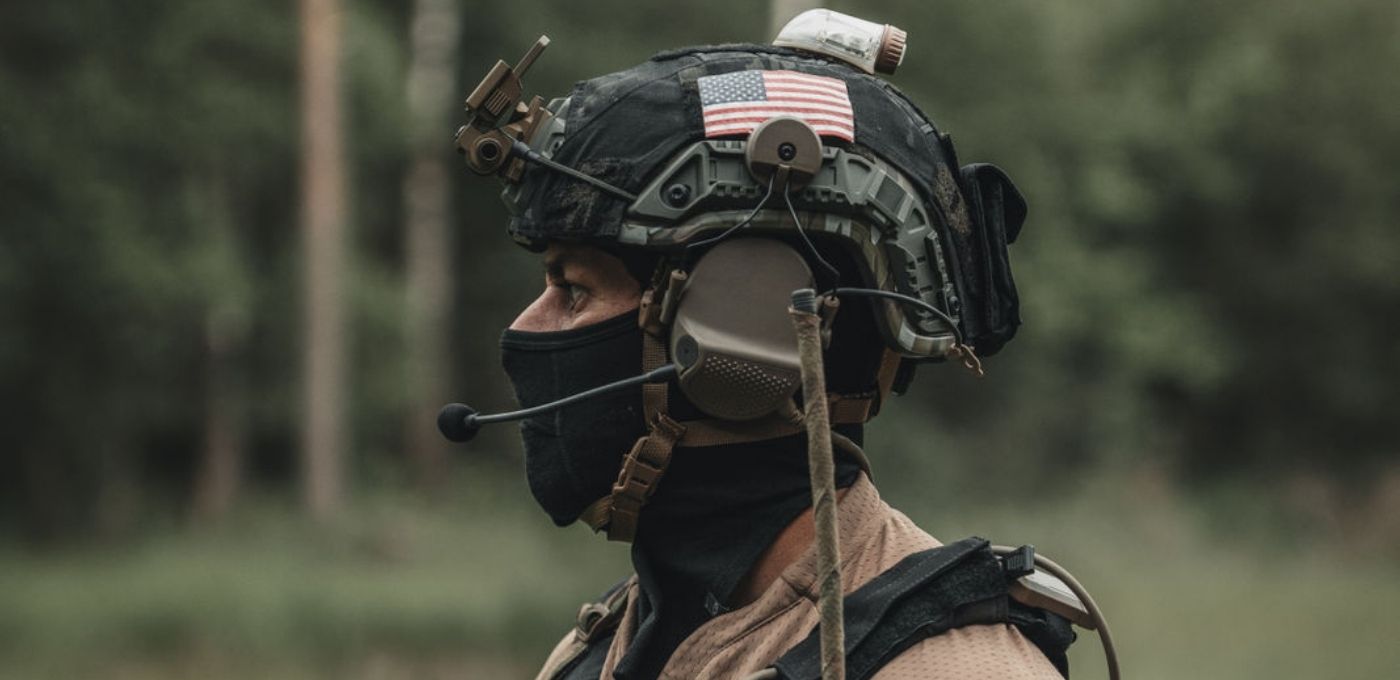
If you’ve ever wondered what’s sitting on top of a U.S. soldier’s head besides determination and a week’s worth of sand, sweat, and caffeine… you’re in the right place. The U.S. Army ballistic helmet has come a long way from the days when “protection” meant hoping the steel pot would deflect both bullets and bad decisions.
The U.S. military currently issues several ballistic helmets, with the IHPS, ECH, and ACH being the primary models. Special operations favor high-cut, modular helmets for flexibility and lighter weight. Materials and protection standards have improved markedly over the past twenty years, resulting in better protection, comfort, and equipment compatibility for soldiers.
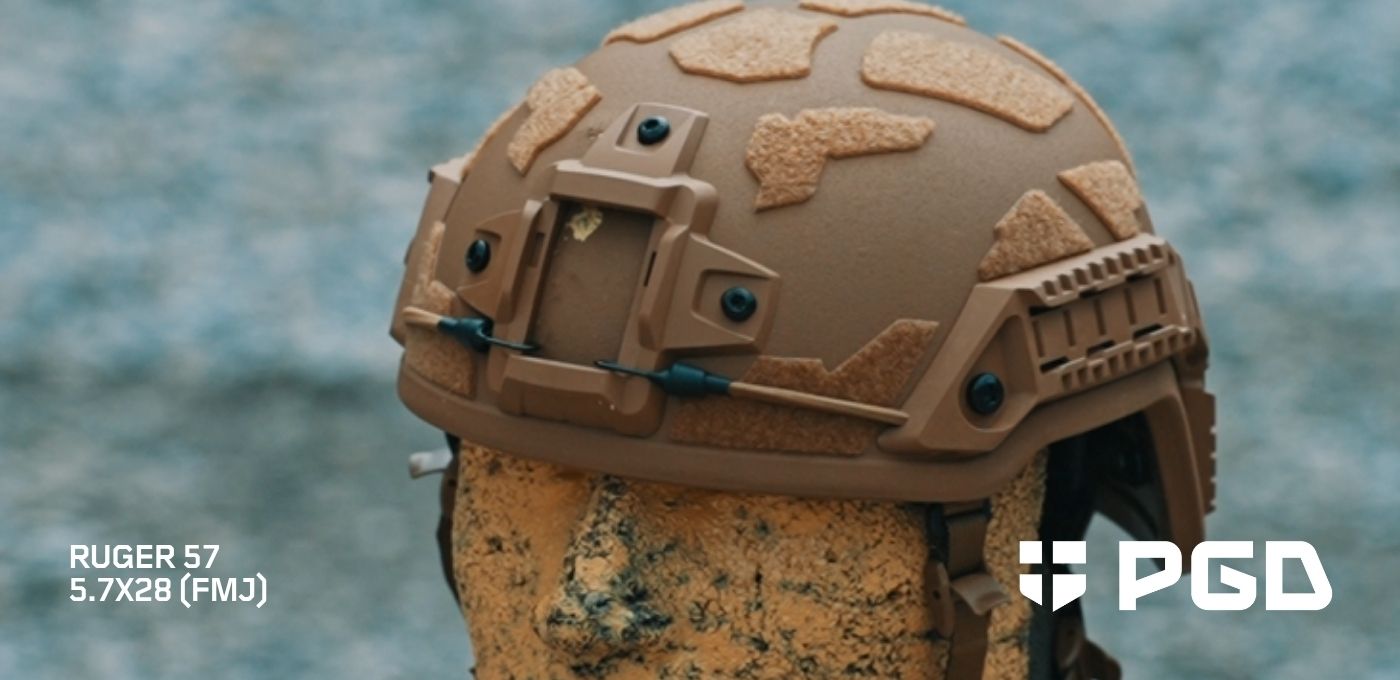
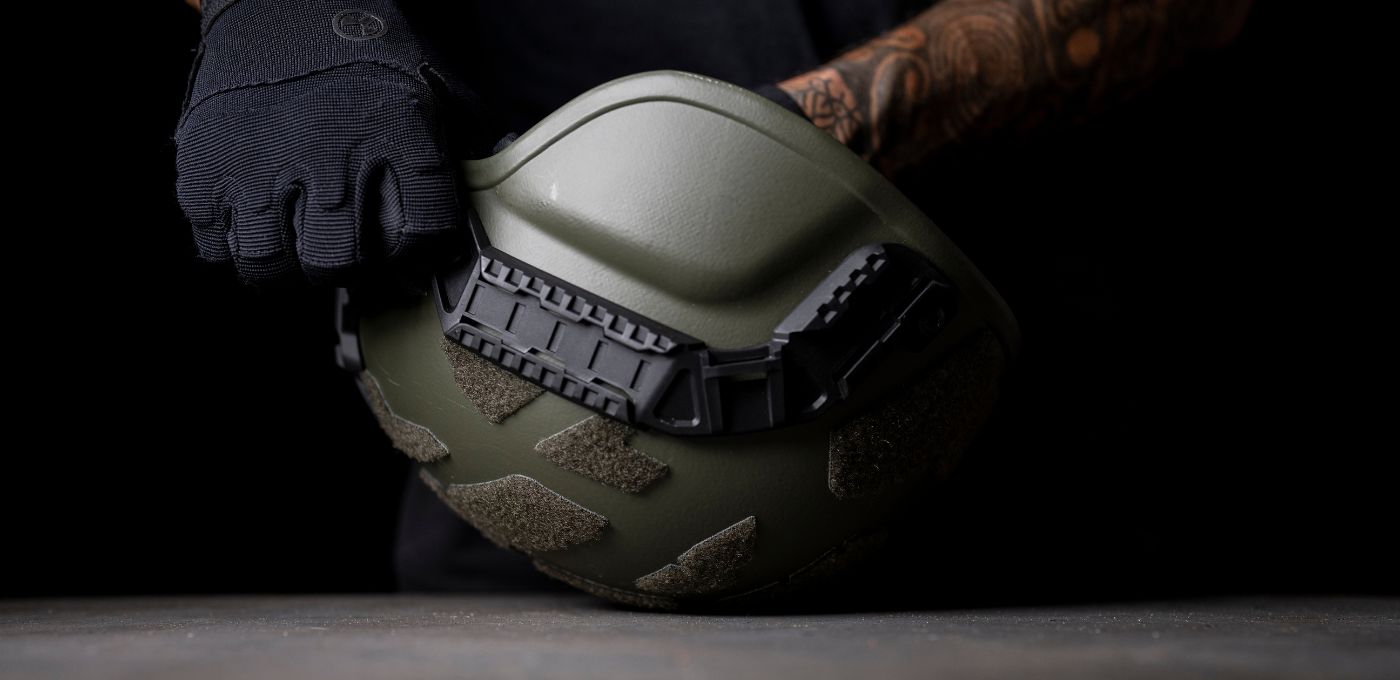
Civilians and professionals can now access helmets that match military specs, including the PGD ARCH Gen 3 Ballistic Helmet, which meets the same standards as NATO military forces but is available for private purchase.
This PGD article covers the evolution of U.S. Army helmets, current models, and how operators outside the military can benefit from similar protection.
Most of us will never jump out of a helicopter at night or shout “Contact left!” – but that doesn’t mean we don’t want to know what kind of helmet those people are wearing.
Understanding which helmet the U.S. Army issues today – and how it differs from Navy, Air Force, and special operations choices – is central to choosing the right protection. Over the last two decades, U.S. Army ballistic helmets have evolved to balance protection, weight, modularity, and operational flexibility.
The three principal helmets currently fielded by the U.S. military are the Integrated Head Protection System (IHPS), Enhanced Combat Helmet (ECH), and Advanced Combat Helmet (ACH). Each helmet reflects advances in both materials and design philosophy.
Here is a comparison of these primary models:
| Helmet model | Service introduction | Material | Protection level | Weight (M size) | Notable Features |
|---|---|---|---|---|---|
| ACH (Advanced Combat Helmet) | Early 2000s | Kevlar | NIJ Level IIIA | ~3.2 lbs | Lower profile, improved comfort, Picatinny rails compatible |
| ECH (Enhanced Combat Helmet) | Early 2010s | UHMWPE* | NIJ Level IIIA | ~3.3 lbs | Greater threat protection, improved blunt impact resistance |
| IHPS (Integrated Head Protection System) | Late 2010s – present | Advanced Polyethylene/Composite | NIJ Level IIIA | ~2.8 lbs | Modular futureproof design, facial and mandible protection, rail systems |
*UHMWPE: Ultra-High-Molecular-Weight Polyethylene
Key facts:
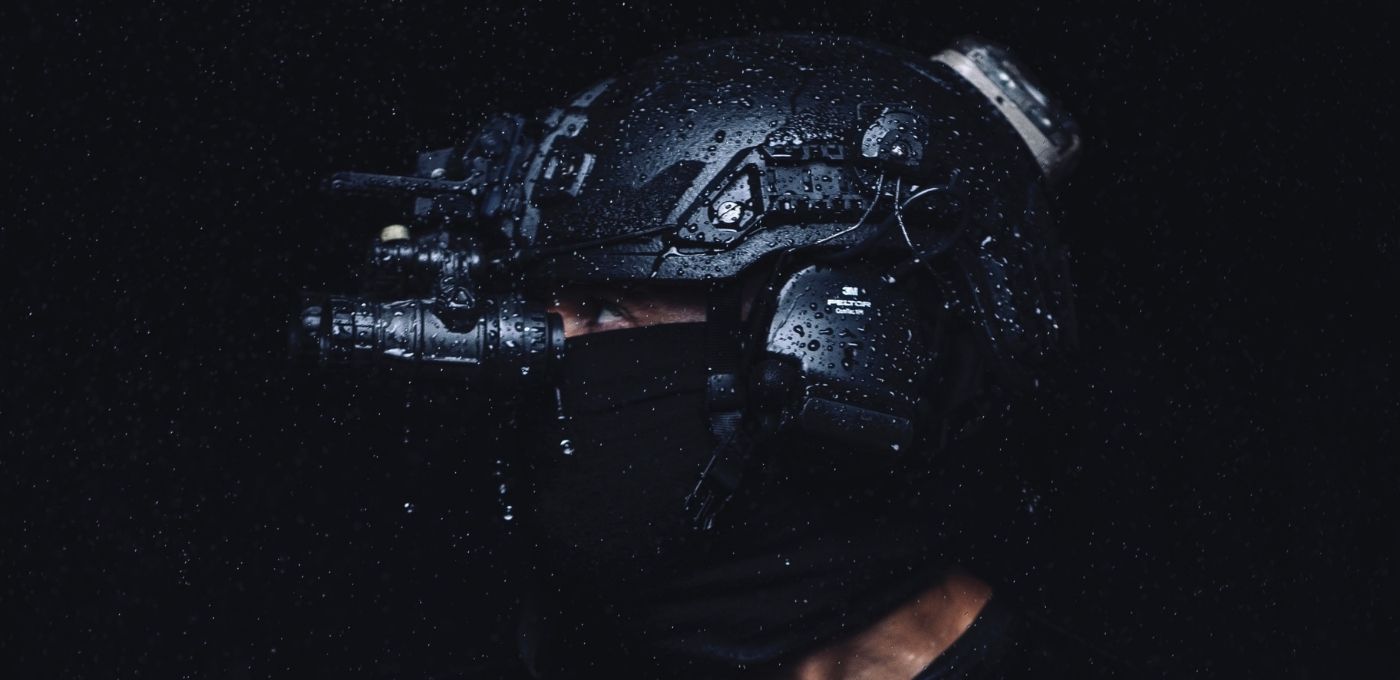
U.S. Special Operations Forces (SOF) prioritize mission-specific adaptability, comfort, and weight savings. While they occasionally use standard Army-issue helmets, most SOF units deploy modular, high cut helmets.
Special operations helmet highlights:
These modern high cut helmets have influenced trends in both military and civilian protective gear.
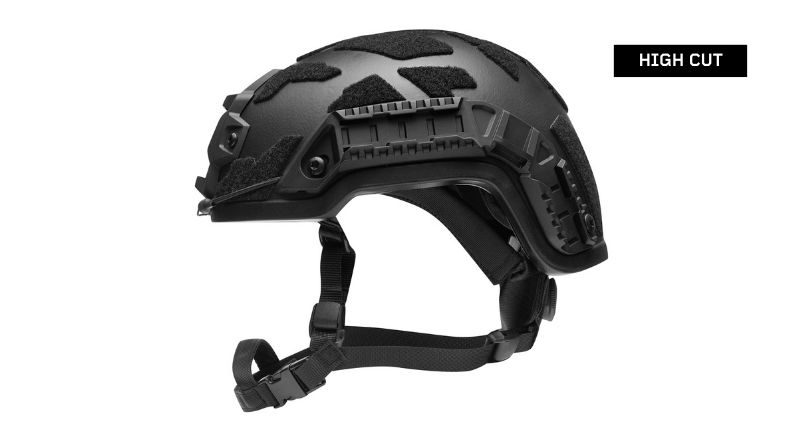
Since the days of steel “pot” helmets, material science has transformed U.S. Army helmet type and capability:
Protection benchmarks:
A quick look at recent history demonstrates rapid advancements in military helmet technology – reshaping fit, safety, and tactical flexibility.
After two decades with the PASGT (“Personnel Armor System for Ground Troops”) helmet – a bulky, heavy Kevlar model – soldiers in the Iraq and Afghanistan conflicts called for lighter, lower-profile helmets that wouldn’t interfere with body armor or tactical gear.
Persistent urban threats, including armor-piercing fragments and high-powered rounds, led to development of the ECH for front-line units.
U.S. Marines and select Army units fielded the ECH for high-risk deployments, often blending components between the ECH and ACH for specific mission profiles.
The Integrated Head Protection System (IHPS) represents the newest phase of improvement for U.S. Army and some SOCOM elements.
Looking Forward: Modern Army helmet models will increasingly fuse ballistic protection with physical and cognitive load-bearing management, threat-adaptive add-ons, and seamless system integration.
Follow the link, if you want to read more about “American military helmet evolution“. The PGD Article explores the evolution in more details.

You can also read the PGD Article “High cut helmet advantages: Why tactical operators choose modern high cut helmet designs” to learn all about the advantages of a high cut helmet.
Ballistic helmet technology isn’t restricted to military use. Recent years have seen a surge in demand from law enforcement, private security, rescue services, and responsible civilians. However, “military-grade” isn’t always accessible, and legal/the regulatory landscape can be a source of confusion.
What’s legal:
What’s restricted:
Summary: Legitimate manufacturers will highlight compliance with U.S. and NATO civilian purchase laws and openly share independent ballistic testing data.
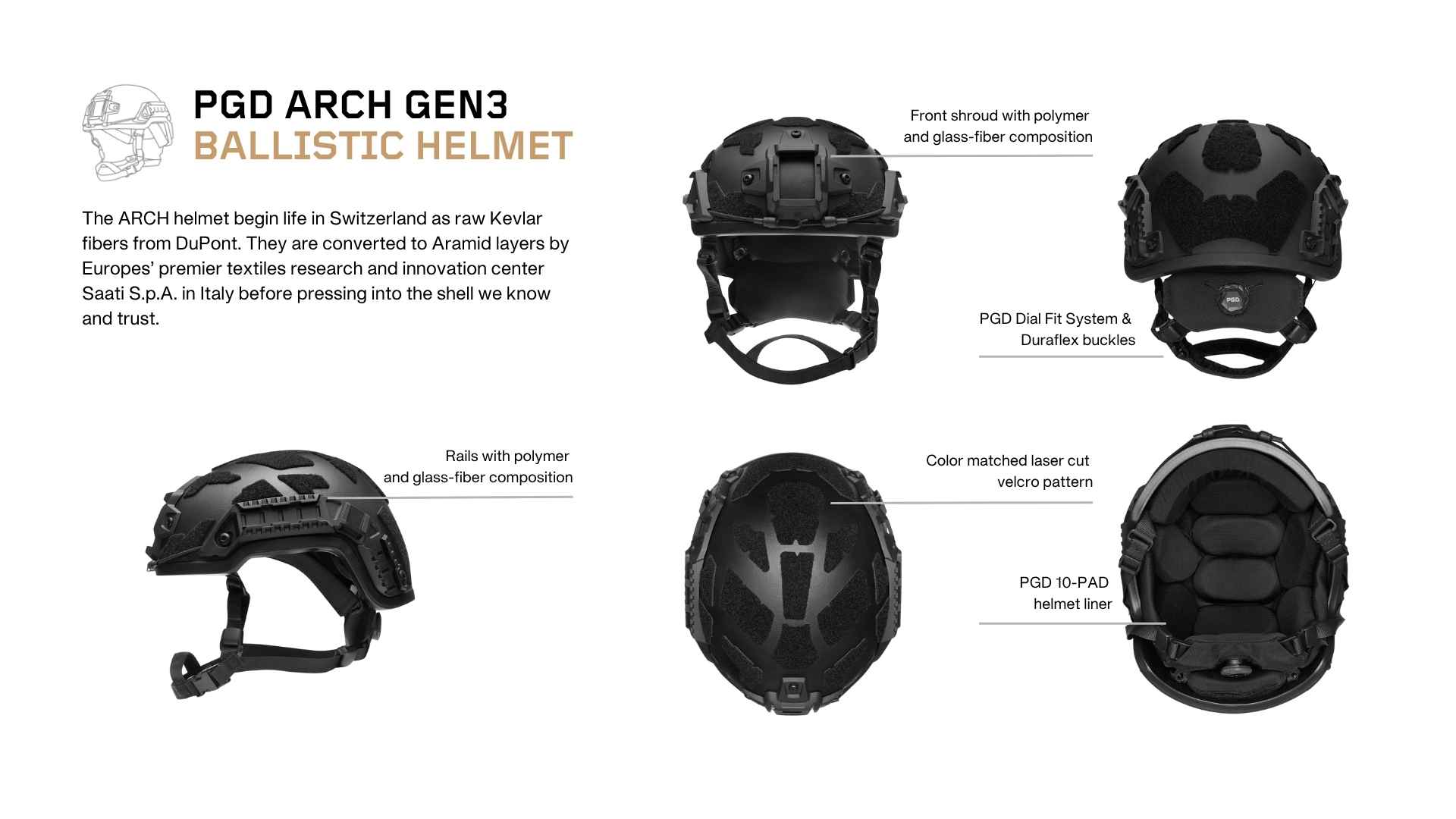
The PGD ARCH GEN3 Ballistic Helmet brings military-level head protection to civilians, police, and tactical professionals previously limited to outdated options.
Why choose the PGD ARCH Gen 3?

Who benefits?
Key takeaway: The PGD ARCH Gen 3 empowers you to field the protection traditionally reserved for active military, removing previous barriers without sacrificing safety or performance.
Understanding how the PGD ARCH GEN3 Ballistic Helmet measures up to current military helmet models is critical for informed selection.
| Feature | PGD ARCH Gen 3 | ACH | ECH | IHPS | SOF high cut helmets |
|---|---|---|---|---|---|
| Shell material | Kevlar aramid | Kevlar | UHMWPE | Composite blend | Composite |
| Cut | High cut | Mid cut | Mid cut | Mid cut | High cut |
| Weight (M size) | ~2.9 lbs | ~3.2 lbs | ~3.3 lbs | ~2.8 lbs | ~2–2.5 lbs |
| Ballistic level | NIJ IIIA | NIJ IIIA | NIJ IIIA | NIJ IIIA | NIJ IIIA |
| Modularity | Full ARC rails, NVG shroud | Rail upgrade | Some rails | Integrated rails | Full ARC rails, shroud |
| Comfort & fit | 4-point harness, 10-pads, adjustable | Good | Good | Improved | Excellent |
| Civilian legal? | Yes | Surplus only | No | No | Rarely (comparable models only) |
| Intended user | Civilian/law enforcement/military | Military | Military | Military | Military/SOF/civilian |
Direct advantages of PGD ARCH Gen 3:
Summary: The ARCH Gen 3 sits at the intersection of proven military protection and open civilian accessibility – giving you uncompromising defense wherever your operations take you.
Whether selecting helmets for a tactical team, quick-response law enforcement unit, or private security detail, using the same evaluation process as the military – and understanding your mission profile – is essential.
1. Patrol/general purpose:
2. Dynamic entry/SWAT/special response:
3. Tactical medical/rescue:
4. EOD/bomb tech:
Key: Always select a helmet cut and accessory configuration based on primary threats (ballistic, fragmentation, blunt impact) and need for ancillary devices (lights, comms, NVG).
1. Protection standards
2. Modularity
3. Fit and comfort
4. Weight
5. Legal/compliance
Selecting the right U.S. Army ballistic helmet alternative for your agency or role demands reliable suppliers and expert guidance.
Actionable steps:
For civil agencies, private security, and proactive citizens – modern military-grade helmets aren’t out of reach. With streamlined procurement processes and mission-matched guidance available from Protection Group Denmark, obtaining proven, high-standard protection is more accessible than ever.
The U.S. Army ballistic helmet has evolved dramatically, moving from heavy, cumbersome shells to lightweight, modular, and high-performance headgear protecting modern soldiers. Today, these technological advancements extend beyond the military, allowing law enforcement professionals, tactical operators, and responsible civilians to equip themselves with helmets meeting the same standards.
The PGD ARCH GEN3 Ballistic Helmet stands out as a civilian-legal, fully modular helmet engineered to NATO specs – delivering protection, comfort, and flexibility on par with the latest Army models. Whether deploying as part of a tactical team or seeking advanced personal defense, you no longer face barriers to top-tier head protection.
For expert guidance and streamlined procurement, contact Protection Group Denmark today and put world-class ballistic safety within your reach.
The three principal helmets currently fielded by the U.S. military are the Integrated Head Protection System (IHPS), Enhanced Combat Helmet (ECH), and Advanced Combat Helmet (ACH). Each helmet reflects advances in both materials and design philosophy. The IHPS is the latest evolution, combining lightweight composites, modular accessories, and built-in compatibility with protection upgrades.
Over the last two decades, U.S. Army ballistic helmets have evolved to balance protection, weight, modularity, and operational flexibility. After two decades with the PASGT helmet—a bulky, heavy Kevlar model—soldiers moved to the Advanced Combat Helmet (ACH) in the early 2000s, which was lighter, lower-profile, and more comfortable. The Enhanced Combat Helmet (ECH), introduced in the early 2010s, provided better protection against rifle-caliber fragments and maintained or reduced weight. The latest Integrated Head Protection System (IHPS) builds on these advancements, offering modularity, optional add-ons, and improved comfort while maintaining high levels of protection. Material science—transitioning from steel to Kevlar to advanced composites—has enabled these improvements, resulting in helmets that are lighter, more comfortable, and offer better protection and equipment compatibility.
In most U.S. states and many allied nations, civilians, law enforcement units, and professional operators may lawfully purchase ballistic helmets that meet or exceed the same standards as military-issued gear. Products equivalent to current military helmet models, including high cut, modular designs, are legal – unless specifically prohibited by sanction (e.g., intended export to embargoed countries). However, helmets with certain integrated military-only electronics, proprietary encryption, or controlled accessories may be restricted to government buyers. Civilian-legal helmets like the PGD ARCH Gen 3 Ballistic Helmet meet the same rigorous standards as NATO military forces and are available for private purchase.
Protect what matters.
We’ve moved our U.S. sales
Protection Group Denmark products are now available in the United States exclusively through our official distributor, Colorado Gun Fighter. This store is no longer accepting new orders — please continue your purchase there.
Already placed an order with us? Don’t worry — all existing orders will be fulfilled as normal.
Shop at Colorado Gun Fighter